
Clavigralla horrida
Clavigralla horrida
Description
How to identify
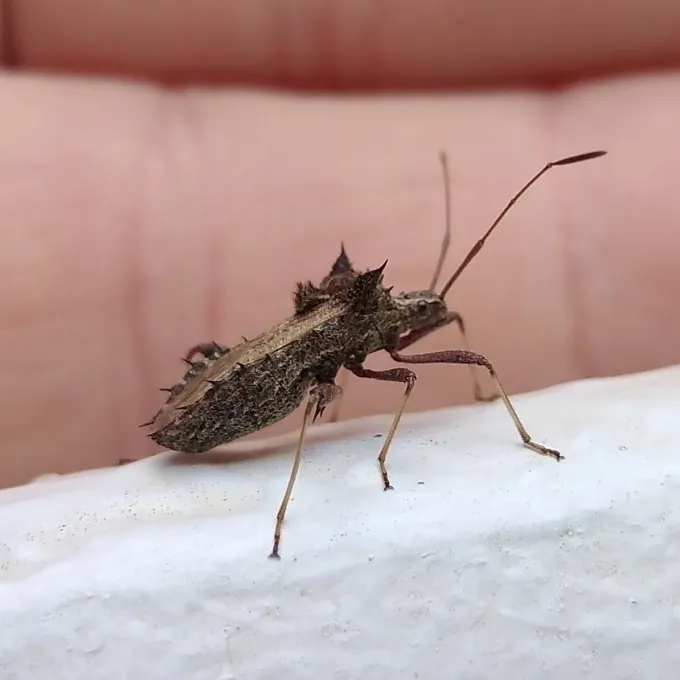
Clavigralla horrida belongs to the family Coreidae in the order Hemiptera. These insects are known as legume pod bugs, characterized by a brownish, bristly body that typically measures between 10 and 12 mm in length.
The pronotum of these insects features distinct, thorn-like projections, which help distinguish them from other species of the Coreidae family. The head is relatively small with well-developed antennae used for sensing the environment.
They possess hind legs with characteristic thickenings. As adults, they have fully functional wings, enabling them to travel long distances in search of suitable host plants, particularly within legume fields.
The life cycle involves incomplete metamorphosis. Nymphs pass through five instars, gradually increasing in size and developing wing pads before reaching the adult stage, where they become fully capable of reproduction.
These pests thrive in tropical and subtropical regions, where climate conditions allow them to complete multiple generations throughout the growing season, posing a constant threat to agricultural production.
What it damages
Clavigralla horrida primarily attacks a wide range of grain legumes, including soybeans, cowpeas, pigeon peas, and beans. The insects show a high preference for reproductive plant parts, which leads to significant losses.
By using their piercing-sucking mouthparts, these bugs extract sap from developing pods and seeds. This feeding process results in shriveled, deformed, and stunted seeds that lose their commercial and nutritional value.
Feeding punctures serve as entry points for secondary pathogens, such as fungi and bacteria, which can cause rotting of the pods and further degrade the quality of the harvested produce.
In cases of high infestation, the damage is not limited to seed quality; it also reduces the overall yield as plants may abort damaged pods or experience stunted growth due to nutrient depletion.
The economic impact is particularly severe during the flowering and pod-filling stages, where the insect population can quickly reach damaging levels that require immediate management actions.
When it appears
The activity of Clavigralla horrida is highly dependent on temperature and host plant phenology. In warm climates, the population can remain active throughout the entire crop growth cycle.
Adult bugs typically invade fields at the beginning of the budding stage. After an initial period of feeding, they begin mating and depositing eggs on the stems and leaves of the host plants.
Nymphs reach their peak population density during the pod-filling phase. This is the period of highest risk, as both nymphs and adults feed intensely on the developing seeds inside the pods.
As the harvest season concludes, the insects disperse from the drying crops toward wild legumes or other alternative host plants, where they eventually find sheltered locations to enter diapause for the winter.
Climate factors such as high humidity and consistent warmth accelerate their developmental rate, potentially shortening the duration of each generation and leading to exponential population growth.
Signs of infestation
The most common sign of infestation is the presence of small, dark, depressed spots on the surface of the pods, which are caused by the feeding punctures of the adult and nymphal stages.
Internally, damaged pods exhibit seeds that are pitted, discolored, or severely misshapen. In severe cases, the entire contents of the pod may appear withered or decayed due to the combined effect of feeding and infection.
Plants heavily infested by these bugs often show signs of overall weakness, including yellowing or wilting leaves, as the insects remove large quantities of plant sap over a sustained period.
Direct visual observation of the plants during early morning or late afternoon often reveals the bugs clustered on the undersides of leaves or directly on the pods.
A foul, pungent odor is often emitted by the bugs when they are disturbed, which serves as a tell-tale sign for agronomists scouting the fields for pest presence.
Control measures
Integrated pest management starts with cultural practices such as crop rotation and the destruction of weeds around the field edges, which help reduce the bug population in the off-season.
Biological control involves the promotion of natural enemies, including egg parasitoids like Telenomus species, which are known to be effective in keeping the pest population under natural control.
Chemical control should be implemented only when the pest density exceeds the economic threshold. Systemic insecticides are generally effective because they reach the sap that the insects feed upon.
The most critical time for applying pesticides is the pod-formation stage, ensuring that the crop is protected during the period when it is most vulnerable to economic yield loss.
- Use of pheromone traps to monitor pest activity and timing of interventions.
- Planting resistant or early-maturing legume varieties.
- Employing entomopathogenic fungi as a biorational alternative to chemical sprays.
Taxonomy
- Latin name
- Clavigralla horrida
- Order
- Hemiptera (bugs, aphids, leafhoppers)
- Family
- Coreidae
- EPPO code
- ACAMHO
Discussion
No discussions yet — be the first.