
Cisseps
Cisseps
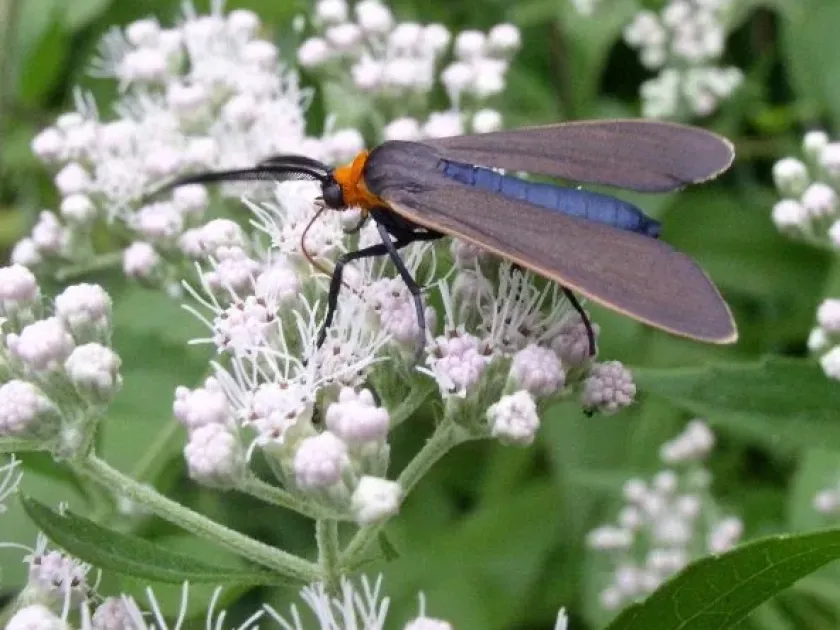
Description
How to identify
Cisseps is a genus of insects belonging to the family Erebidae, formerly classified within the subfamily Arctiinae (tiger moths). Adult moths are typically small and often display dark coloration with distinctive patterns, which act as a warning signal (aposematism) to potential predators.
Systematically, these insects are part of the order Lepidoptera. Their life cycle undergoes complete metamorphosis, consisting of egg, larva (caterpillar), pupa, and imago stages. In an agricultural context, the larval stage is the primary focus, as these caterpillars act as active phytophagous feeders.
The bodies of the caterpillars are often covered in sparse hairs, a common characteristic of many species within this group. Larval coloration can vary significantly depending on the species and developmental stage, providing effective camouflage against the foliage of host plants.
The morphology of the adults features specific wing and antenna structures. Unlike many other lepidopterans, species within this genus may exhibit both diurnal and nocturnal activity, which can complicate field monitoring efforts.
Precise identification of the species usually requires analysis of the male or female genitalia, as external morphological similarities between different Cisseps species can lead to misidentification in the field.
What it damages
Caterpillars of the genus Cisseps are polyphagous, meaning they are capable of feeding on a wide range of herbaceous plants. In agroecosystems, they can damage both weeds and cultivated crops located in the vicinity of their breeding grounds.
The primary damage is caused by the consumption of vegetative plant matter. Caterpillars actively feed on leaves, often starting from the margins or creating holes in the center, which reduces the total photosynthetic surface area of the crop.
During outbreaks, these pests can cause significant defoliation, which severely disrupts the plant's metabolism. This results in stunted growth, reduced biomass accumulation, and a notable decline in overall crop yields.
Seedlings and young plants are particularly vulnerable. Damage to the growth points or total consumption of cotyledons can lead to the destruction of the crop during the early stages of vegetation.
Secondary damage occurs as the plant's immune system weakens due to feeding wounds, allowing opportunistic phytopathogenic fungi and bacteria to enter the plant tissues more easily.
When it appears
The activity of the pest is closely linked to the temperature patterns of the spring and summer seasons. Adult moth emergence typically occurs in late spring or early summer, coinciding with the period of intensive crop development.
The appearance of first-generation larvae usually occurs in the second half of spring. During this phase, they are highly active and require large amounts of nutrients to fuel their rapid growth before pupation.
The number of generations depends on regional climatic conditions. In warmer climates, multiple generations per growing season are possible, significantly increasing the potential damage level to crops.
Overwintering typically occurs in the pupal stage within dense cocoons hidden in the soil, under leaf litter, or within crop residues, which protects the insects from extreme winter conditions.
Monitoring adult populations with pheromone or light traps allows agronomists to determine the timing of mass emergence and forecast larval hatch, enabling timely implementation of control measures.
Signs of infestation
The first visual sign of infestation is the presence of skeletonized or partially consumed leaves. Leaf margins appear irregular, jagged, and show evidence of active biting.
The presence of larval excrement (frass) on the leaf surface or in the plant axils is a clear indicator that a colony is actively feeding in that specific area.
Finding the larvae themselves on the undersides of leaves, particularly during early morning or evening hours, confirms the presence of the population, even if the overall damage remains localized.
Webbing or silk threads found on the tips of shoots may indicate the activity of certain Cisseps species that utilize silk for protection during molting or to create small shelters.
Wilting of individual shoots or a noticeable lag in development across a plant group, despite adequate water and nutrient availability, can serve as an indirect sign of hidden pest activity.
Control measures
Agrotechnical management includes deep autumn plowing (tillage), which destroys pupation sites in the soil, significantly reducing the pest population for the following season.
Rigorous weed management is essential, as many weed species serve as initial reservoirs for Cisseps larvae before they move into cultivated fields.
Biological control methods involve the use of insecticides based on Bacillus thuringiensis, which target lepidopteran larvae effectively while remaining safe for beneficial entomophagous insects.
Chemical control is applied only when the economic threshold of damage is exceeded. It is recommended to use contact-stomach insecticides while strictly adhering to safety regulations and pre-harvest intervals.
Utilizing pheromone traps for monitoring allows for early detection of pest activity, which enables precision-based control and helps minimize the overall usage of pesticides across the field.
Taxonomy
- Latin name
- Cisseps
- Order
- Lepidoptera (butterflies)
- Family
- Erebidae
- EPPO code
- CISSSP
Discussion
No discussions yet — be the first.