
Pine needle miner
Chionodes retiniella
Description
How to identify
The pine needle miner, scientifically known as Chionodes retiniella, belongs to the family Gelechiidae. It is a small moth species that plays a significant role in the defoliation of various pine species in temperate forests.
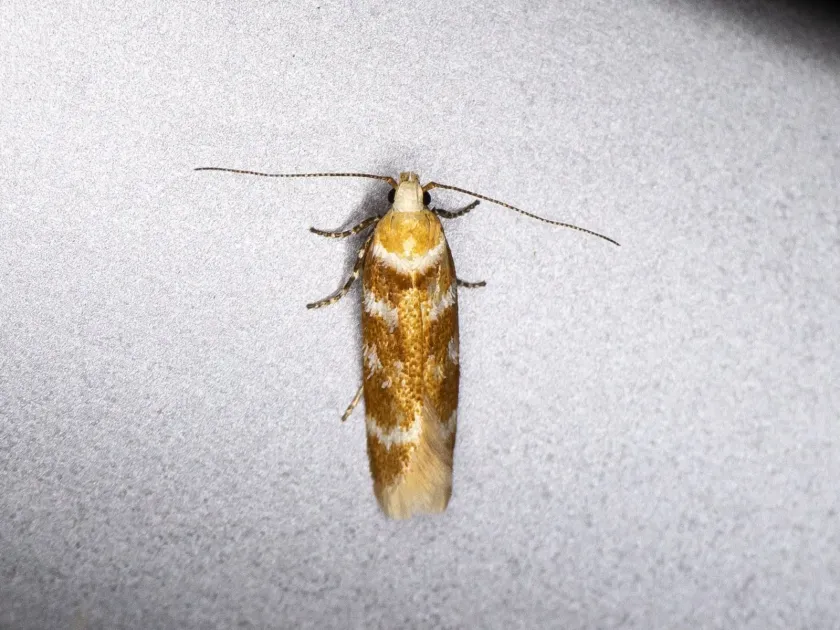
The adult moth features a wingspan of approximately 12-15 mm. Its forewings exhibit a mottled pattern of grey and brown, which provides excellent camouflage against the bark of host pine trees.
The larvae are characterized by a dark head and a body color that matches the pine needles, making them difficult to spot during visual inspections. They are primarily responsible for the damage observed on the trees.
The life cycle typically consists of one generation per year. The larvae overwinter in debris or bark crevices and emerge as temperatures rise to resume feeding on new needles.
Understanding the biology of this pest is crucial for forest managers, as the timing of the moth's emergence and subsequent egg-laying dictates the window for effective chemical or biological intervention.
What it damages
The primary damage is caused by the larvae, which bore into the needles and consume the internal tissue. This activity leads to needles turning yellow, brown, and eventually falling off prematurely.
When infestation levels are high, trees may suffer from significant needle loss, which severely hinders photosynthesis and reduces the overall vigor of the pine trees.
In forest nurseries and young plantations, the pine needle miner can stunt growth and cause structural deformities, potentially leading to the loss of entire seedlings.
The weakened state of the trees makes them more susceptible to secondary infestations by bark beetles and other wood-boring insects, which can further jeopardize the tree's survival.
Economic damage is also significant in landscaping, where the aesthetic quality of ornamental pines is compromised, making them unsuitable for decorative purposes.
Signs of infestation
One of the most obvious signs of infestation is the presence of silk webbing spun by larvae between needles to create protected feeding shelters.
The needles themselves will show characteristic mining tunnels, which are visible as discolored lines or hollowed-out sections when examined closely under light.
Frass (larval excrement) accumulation near the webbing or at the base of the needle clusters is a reliable indicator of active larval presence within the tree canopy.
Premature needle drop and the presence of "flags" (clusters of dead, dry needles held together by silk) are clear indicators that the infestation is well established.
Monitoring the flight of adult moths in the evenings during spring and early summer using pheromone traps can help detect the presence of the species before visible damage appears.
Control measures
Cultural control practices, such as the removal and destruction of heavily infested branches, can significantly reduce the pest population in small-scale plantings.
Chemical control involving systemic insecticides is often necessary in nurseries to provide protection to the needles. These must be applied during the early larval development stage.
Biological control agents, including various parasitic wasps and predatory insects, naturally regulate populations. Maintaining biodiversity in forest stands supports these natural enemies.
Pheromone traps are used not only for monitoring but also for mass trapping in some localized areas to disrupt the mating cycle of the adult moths.
Integrated Pest Management (IPM) strategies, which combine monitoring, biological control, and judicious use of insecticides, are the most sustainable approach for long-term pine health.
Taxonomy
- Latin name
- Chionodes retiniella
- Order
- Lepidoptera (butterflies)
- Family
- Gelechiidae
- EPPO code
- GELELA
Discussion
No discussions yet — be the first.