
Spruce needle miner
Chionodes electella
Description
How to identify
The spruce needle miner (Chionodes electella) is a member of the Gelechiidae family, commonly known as twirler moths or gelechiid moths.
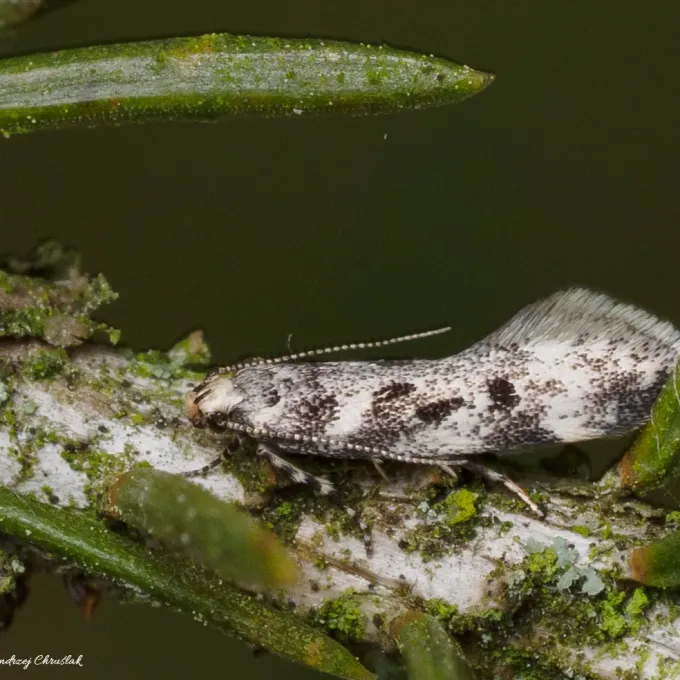
The adult moth has a wingspan of approximately 14–16 mm, with greyish-brown forewings patterned with dark spots and lighter bands for camouflage.
The larvae are small, usually reaching up to 10 mm in length, displaying a yellow-green or brownish color with a darkened head capsule.
This species typically undergoes one generation per year, with the life cycle comprising egg, larva, pupa, and the adult moth stages.
Hibernation usually occurs during the larval stage, where the caterpillars hide within mined needles or protective silken cocoons on the branches.
What it damages
The primary host for Chionodes electella is the Norway spruce, though it can also infest other coniferous species in nurseries and landscape settings.
The larvae are the destructive stage, feeding internally on the soft tissues of the needles, which eventually causes the foliage to lose its integrity.
As the larvae mine the interior, the needles turn chlorotic, yellowish, and eventually brown, leading to premature needle drop and thinning of the tree crown.
Young trees and saplings are particularly vulnerable; chronic infestation significantly stunts growth and compromises the tree's health and structural development.
Heavy infestations can lead to severe defoliation, which ruins the aesthetic value of ornamental spruce trees and makes the trees susceptible to secondary pathogens.
Signs of infestation
Early symptoms include discolored, yellowing needles that appear empty or hollow when inspected closely under magnification or by splitting them open.
Small entry holes at the base of the needles indicate where the young larvae have bored into the foliage to begin their feeding process.
The presence of fine webbing that binds several needles together is a classic sign of the larval activity, as they use it for shelter and protection.
During the spring and summer, a noticeable amount of shed brown needles beneath the branches is a clear indicator of a high infestation level.
The accumulation of small dark frass (larval excrement) at the base of the needles or trapped within the webbing is a definitive diagnostic feature.
Control measures
Chemical control is most effective when targeted at the early larval stages before they have fully protected themselves by mining deep into the needles.
Systemic insecticides are generally preferred as they are absorbed by the tree tissues and provide long-lasting protection against the boring larvae.
Cultural management includes the removal and destruction of infested branches or heavily damaged shoots to reduce the population density of the pest.
Monitoring using pheromone traps is highly recommended to detect the presence of adult moths and to time insecticide applications accurately.
Maintaining healthy tree vigor through adequate irrigation and balanced fertilization helps the tree withstand and recover from minor infestations.
Taxonomy
- Latin name
- Chionodes electella
- Order
- Lepidoptera (butterflies)
- Family
- Gelechiidae
- EPPO code
- KHIOEL
Discussion
No discussions yet — be the first.