
Trapezoid moth
Chilozela trapeziana
Description
How to identify
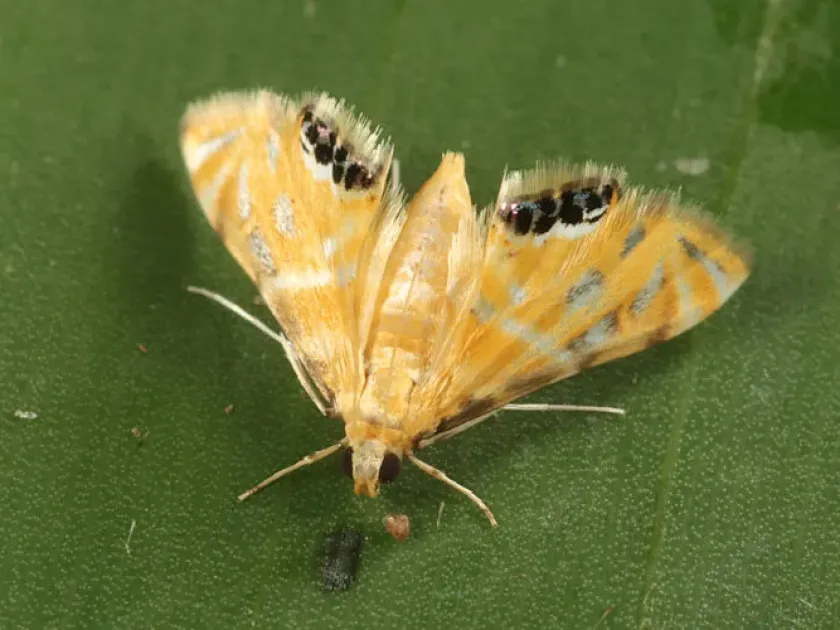
The trapezoid moth (Chilozela trapeziana) is a member of the Crambidae family, known for its distinctive wing patterns shaped like a trapezoid.
Adult moths typically have a wingspan of 20–25 mm. Their coloration is usually a mix of tan, brown, and ochre, providing camouflage on dry foliage.
The larvae are slender caterpillars with distinct color variations and small, dark spots arranged systematically across their segments.
Pupation occurs within sheltered environments, such as rolled leaves or silk-lined chambers, providing high survival rates for the next generation.
This species is well-adapted to various environments, utilizing specific host plants to complete its complex biological cycle.
What it damages
Caterpillars cause extensive damage by feeding on leaves, often stripping the tissue between veins, which reduces the plant's capacity for photosynthesis.
Plants affected by Chilozela trapeziana often exhibit stunted development, reduced vigor, and a decline in overall crop quality and yield.
The larvae create silk structures that pull leaves together, causing physical deformation and interfering with normal plant growth patterns.
Feeding sites serve as entry points for bacterial and fungal pathogens, which can exacerbate the damage caused by the moth larvae itself.
In high-density infestations, the moth can lead to significant defoliation, potentially killing younger or more sensitive plant species.
When it appears
Adult moths typically emerge in late spring or early summer, synchronized with the onset of favorable temperatures and host plant availability.
The larval phase is most active during the peak summer months, when rapid foliage growth provides an abundant food source for development.
Depending on the climatic zone, the trapezoid moth can produce multiple overlapping generations, complicating seasonal management.
Overwintering usually takes place in the larval or pupal stage, hidden within plant debris or protected crevices in the field environment.
The timing of emergence for each generation is strictly controlled by environmental thermal accumulations, making monitoring crucial.
Signs of infestation
The presence of leaf-rolling behavior is the most common indicator, where foliage is pulled together using silk threads to create shelters.
Larval droppings (frass) found on leaf surfaces are a clear sign of active feeding and should trigger immediate inspection of the canopy.
Visible irregular holes in the leaves appear as the caterpillars grow, with younger larvae skeletonizing parts of the leaf tissue.
Wilting of the terminal parts of a plant can sometimes indicate internal damage or heavy infestation by larvae in the upper foliage.
Detecting adult moths near host plants during dusk hours suggests that oviposition may be occurring, signaling the start of a new generation.
Control measures
Cultural control is primary, emphasizing the removal of crop residues and thorough soil preparation to disrupt the overwintering life stages.
Integrated Pest Management (IPM) incorporates biological agents, such as specialized bacteria, to manage population levels effectively.
Chemical interventions should be reserved for periods of peak infestation, using selective insecticides that minimize impact on beneficial insects.
- Implementing pheromone traps for early detection of adults.
- Using crop rotation to reduce local populations of the pest.
- Monitoring the field consistently during the growing season.
Strategic timing of protective measures ensures the highest efficacy while protecting the ecological balance of the agricultural site.
Taxonomy
- Latin name
- Chilozela trapeziana
- Order
- Lepidoptera (butterflies)
- Family
- Crambidae
- EPPO code
- CHLZTR
Discussion
No discussions yet — be the first.