
Chilozela
Chilozela
Description
How to identify
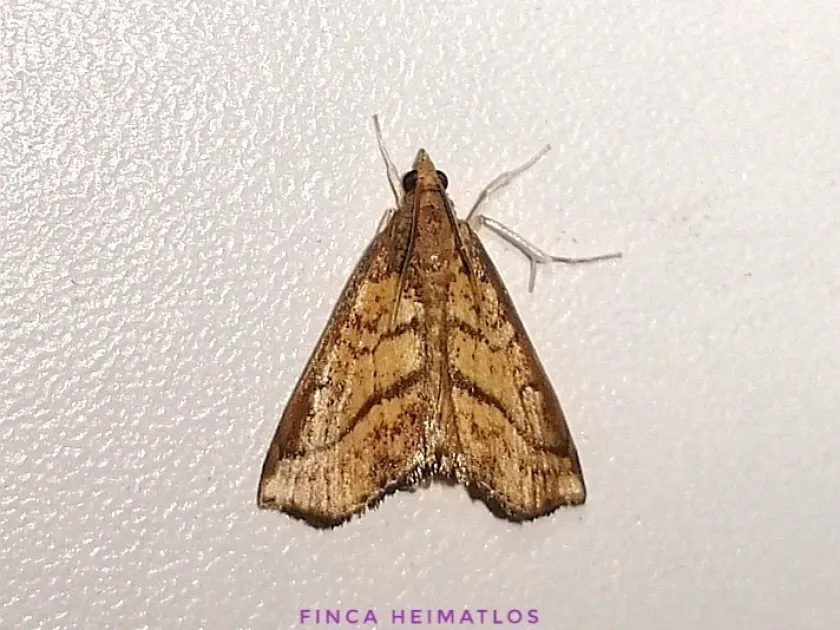
Chilozela is a genus of moths belonging to the family Crambidae. These insects are characterized by their small size and cryptic, brownish coloration, which helps them blend into their surroundings within wetland or agricultural environments.
The life cycle of the insect consists of four stages: egg, larva, pupa, and adult. The larval stage is the most significant in terms of agricultural impact, as the caterpillars possess specialized chewing mouthparts adapted to consume plant tissues.
Precise species identification often requires examination of genital morphology, as external features can be subtle. However, field agronomists can recognize the genus by observing the specific host plant association and damage patterns.
Environmental factors, particularly humidity and temperature, play a critical role in the rate of development. Under optimal conditions, multiple generations can occur within a single growing season, potentially leading to rapid population spikes.
While natural predators and parasitoids typically manage populations, the disruption of agroecosystems through pesticide misuse or habitat alteration can cause these moths to reach levels that require human intervention.
What it damages
Chilozela moths primarily impact plants in aquatic or semi-aquatic habitats. In agricultural systems, they are known to affect crops such as rice and various fodder grasses that thrive in high-moisture conditions.
Larvae feed on leaf parenchyma, creating characteristic "windows" or irregular holes, which severely compromises the plant's photosynthetic capacity. In severe cases, larvae bore into the stems, causing structural damage and death of the plant's growing point.
Damage to the apical meristem is the most critical, as it stops plant growth entirely, resulting in significant yield reduction. Stressed plants are also more susceptible to secondary pathogenic infections.
The severity of the damage depends heavily on larval density. Infestations occurring at early growth stages can be devastating, sometimes requiring immediate action to prevent the loss of entire crop patches.
Beyond physical destruction, the presence of larvae often leads to reduced grain quality, as the plant directs resources towards wound healing rather than reproductive development, leading to shriveled or lightweight kernels.
When it appears
Adult activity typically begins when temperatures consistently reach 15-18 degrees Celsius. The flight period is often protracted, spanning several weeks, which necessitates sustained monitoring by field teams.
Larval feeding is most active during the middle of the growing season. Agronomists should prioritize field inspections during these months to catch early-stage infestations before they spread across the plot.
Overwintering occurs as larvae or pupae, typically sheltered in soil or plant debris. Winter survival rates are highly dependent on the severity of the cold and the availability of protective cover.
The phenology of the pest is tightly synchronized with the development of the host crop. Weather anomalies, such as late spring frosts or prolonged heatwaves, can significantly alter the timing of population outbreaks.
Tracking the seasonal activity through light traps allows for more accurate forecasting of peak egg-laying periods, enabling the application of control measures during the most vulnerable larval life stages.
Signs of infestation
The earliest signs of infestation are light-colored patches on the leaves where the larvae have scraped off the upper tissue layers. As the larvae grow, these patches develop into full-thickness holes.
Frass (larval excrement) found in leaf axils or on the surface of leaf blades is a strong indicator of an active infestation. Larvae often use silk webbing to bind leaves together as a protective enclosure.
Wilted central shoots, commonly known as "dead hearts" in cereal crops, are a classic symptom of stem-boring activity, where the larva has severed the internal vascular tissues of the stem.
Mechanical damage to inflorescences indicates that late-stage larvae have moved to the reproductive parts of the plant, which is particularly detrimental to the grain filling process.
Adult moths are nocturnal and are often caught in light traps positioned near agricultural fields, serving as an early warning signal for potential population build-ups in the coming weeks.
Control measures
Cultural control is the first line of defense against Chilozela. This includes proper crop rotation and the destruction of post-harvest crop residues to eliminate the pest's overwintering sites.
In irrigated agriculture, managing water levels can be highly effective. Periodic draining or temporary flooding of fields can interrupt the larval development cycle and reduce the survival rate of the pest.
Biological control, particularly the application of Bacillus thuringiensis-based pesticides, is highly effective against young larvae while remaining safe for non-target beneficial insects and the environment.
Chemical control should be reserved for situations exceeding the economic threshold. Applying systemic or contact insecticides during the early larval stage is essential for maintaining crop viability.
Integrated Pest Management (IPM) strategies, combining pheromone monitoring with precise insecticide applications, ensure that control is both effective and sustainable, preventing the development of pesticide resistance.
Taxonomy
- Latin name
- Chilozela
- Order
- Lepidoptera (butterflies)
- Family
- Crambidae
- EPPO code
- CHLZSP
Discussion
No discussions yet — be the first.