
Cactus bug
Chelinidea vittigera
Description
How to identify
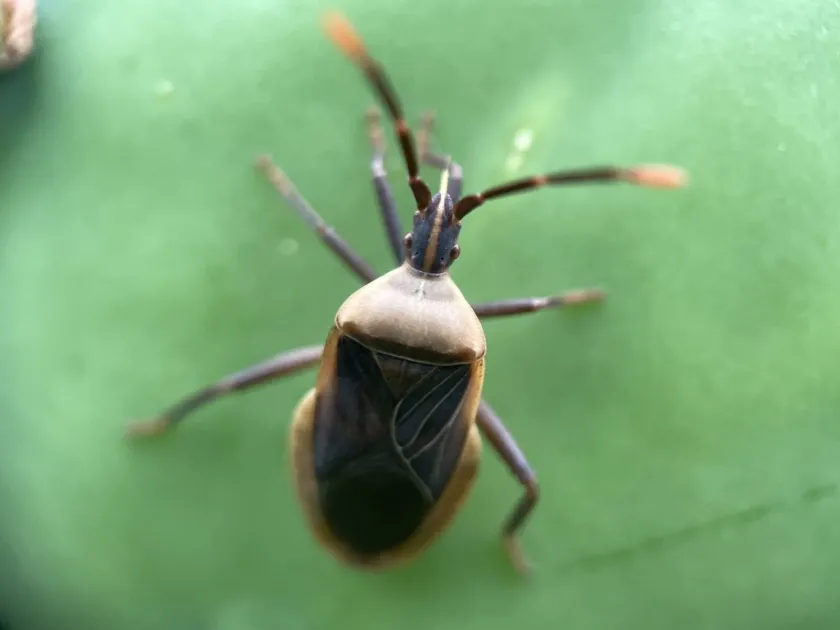
The cactus bug (Chelinidea vittigera) is a member of the Coreidae family (leaf-footed bugs). Adults typically measure between 10 to 15 mm in length and are recognizable by their elongated, oval shape and yellowish-brown or greyish coloration.
Their head features a specialized piercing-sucking mouthpart designed specifically to penetrate the tough epidermis of cactus pads and extract sap. A characteristic dark stripe is often present on the pronotum of adults.
Nymphs resemble smaller, wingless versions of the adults, often displaying lighter, sometimes pale-green or whitish colors with darker legs. They go through several developmental stages before reaching maturity.
The eggs of this bug are cylindrical and are frequently laid in neat rows on the spines or the surface of cactus pads, ensuring that newly hatched nymphs have immediate access to food.
This species is well-adapted to its host plants and has evolved as a specialized predator of various cactus species, primarily those within the Opuntia genus.
What it damages
Cactus bugs are host-specific, primarily feeding on Opuntia (prickly pear) species. Their feeding habits make them significant pests in both natural environments and cactus cultivation.
Both adults and nymphs feed by piercing the surface of the cactus and draining the internal cellular sap. This sap extraction depletes the plant's essential resources and weakens its structural integrity.
Severe infestations can lead to the wilting of pads, poor growth, or even the death of younger plants. The loss of turgor pressure makes the plant look shriveled and unhealthy.
Beyond direct sap loss, the feeding sites create open wounds that serve as entry points for various bacterial and fungal pathogens, potentially triggering rot that spreads quickly throughout the plant.
In managed landscapes, these bugs are considered a nuisance because they can quickly ruin the aesthetic appearance of valuable ornamental cacti through localized tissue necrosis.
When it appears
The life cycle of the cactus bug is highly dependent on climate. Activity typically begins in early spring, as soon as temperatures remain consistently warm, prompting adults to emerge from their overwintering sites.
Peak population numbers occur during the summer months when environmental conditions are optimal for rapid egg-laying and larval growth, often allowing for multiple generations per season.
As autumn temperatures drop, the bugs enter a state of diapause. They seek shelter in plant debris, under garden mulch, or in crevices near the base of their host plants to survive the winter.
In milder, warmer regions, the breeding season can be significantly extended, leading to a nearly continuous threat to cactus populations if not managed properly.
Monitoring for the first generation of nymphs is critical in late spring, as early intervention can prevent the population explosion that typically occurs during the mid-summer peak.
Signs of infestation
The most common symptom of a cactus bug infestation is the appearance of small, yellow or white mottled spots on the surface of the cactus pads, which gradually turn brown or grey as tissue dies.
Close inspection often reveals the presence of small black fecal spots left behind by the bugs, which accumulate near the areas where they have been actively feeding.
The epidermis of the cactus may take on a leathery or hardened texture in severely affected areas, as the plant attempts to seal off the wounds created by the bug's mouthparts.
Gardeners can often spot clusters of nymphs moving across the surface of the plant during the early morning or evening hours, when they are most actively feeding.
In cases of heavy infestation, the pads may lose their rigid shape, develop visible sagging, or show signs of premature shedding due to the severe loss of internal fluids.
Control measures
Managing the cactus bug requires an integrated strategy that combines cultural practices with targeted chemical interventions for effective long-term control.
- Manual removal of adults and nymphs during the cooler parts of the day when they are less active and easier to capture.
- Sanitation by removing heavily damaged pads and clearing away garden debris where the bugs may hide or overwinter.
- Application of systemic insecticides that are absorbed by the plant, providing long-lasting protection against piercing-sucking pests.
- Spot treatments using contact insecticides during the early nymphal stages to break the life cycle before they reach maturity.
- Regular monitoring of cactus collections to detect early signs of infestation and prevent colonization from spreading.
Taxonomy
- Latin name
- Chelinidea vittigera
- Order
- Hemiptera (bugs, aphids, leafhoppers)
- Family
- Coreidae
- EPPO code
- CHEEVI
Discussion
No discussions yet — be the first.