
Cactus coreid bug
Chelinidea tabulata
Description
How to identify
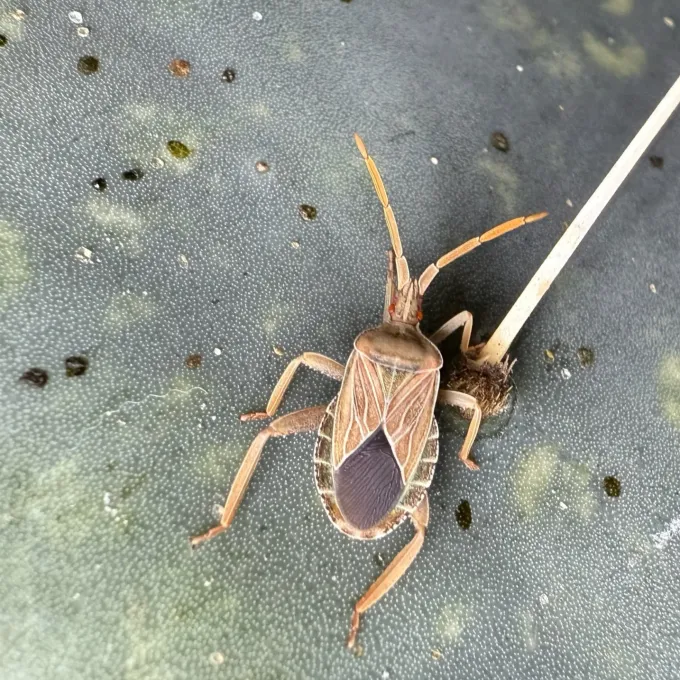
The cactus coreid bug (Chelinidea tabulata) is a member of the Coreidae family within the Hemiptera order. Adult bugs typically measure between 10 to 13 mm in length and possess a flattened, brownish body.
Their head is equipped with piercing-sucking mouthparts, which they use to penetrate the tough epidermis of cacti. They have distinct antennae and wings that cover most of their abdomen.
Nymphs resemble smaller, wingless versions of adults. Their coloration is usually lighter, ranging from pale green to mottled brown, providing excellent camouflage against the cactus skin.
They deposit their eggs in distinct chains, often attached to cactus spines or directly on the surface of the plant stems, making them identifiable upon close inspection.
As specialists in feeding on cacti, these insects have evolved alongside their hosts, allowing them to effectively navigate the spines and store water from the plant tissues.
What it damages
The primary hosts for these pests are various species of Opuntia and other cacti. They use their mouthparts to draw out plant fluids, causing significant stress to the host.
As they feed, the bugs inject salivary enzymes that break down plant cells. This action leads to the formation of chlorotic yellow spots and localized necrotic areas on the cactus surface.
Severe infestations often result in the disfigurement of pads (cladodes), which ruins the aesthetic value of the plants and inhibits their normal growth and development.
The punctures created during feeding act as entry points for various pathogens, including fungi and bacteria, which can cause internal rot and ultimate plant death.
Flowering and fruiting are often compromised in heavily infested populations, leading to a decrease in the reproductive potential of the affected cactus colony.
When it appears
The lifecycle of the cactus coreid bug is highly dependent on temperature. In the spring, overwintering adults emerge from dormancy as temperatures begin to rise consistently.
Depending on the climatic zone, the pest can undergo one or several generations per year. The rate of development is significantly accelerated by warm, dry weather conditions.
Summer months are characterized by the highest population density, as nymphs and adults congregate on succulent tissues to feed throughout the day.
As autumn approaches and temperatures drop, the bugs seek out sheltered areas, such as leaf litter, stones, or crevices at the base of the cacti, to enter their overwintering stage.
Effective monitoring should be conducted throughout the active growing season, starting in early spring to catch the first generation before populations explode.
Signs of infestation
The earliest symptom of infestation is the appearance of small, pale-yellow spots on the cactus skin. Over time, these spots grow and turn into large, sunken necrotic lesions.
The presence of the bugs themselves is the most reliable sign. They are often found in groups, particularly on younger, more tender parts of the cactus pads.
Small, dark, fecal deposits left on the spines or epidermis are clear indicators of a feeding colony, even if the insects are temporarily hidden from view.
- Yellowing and stippling of the epidermis.
- Formation of sunken necrotic spots.
- Presence of nymphs or adults on the stems.
- Exudate from feeding puncture wounds.
- Premature flower drop or fruit abortion.
In cases of high infestation, one might notice a distinctive musty odor produced by the bugs when they are disturbed or threatened by predators or manual removal.
Control measures
Mechanical control is often the safest approach for smaller collections. This involves manual collection and destruction of the bugs in the early morning when they are sluggish.
Good sanitation practices are vital. Clearing away debris and dead plant material from around the base of cacti eliminates the shelters the bugs need for overwintering.
Chemical control may be necessary for large infestations. Contact insecticides are effective, but they must be applied with caution to avoid causing phytotoxic damage to the cactus.
Systemic insecticides can be used in professional greenhouse settings to provide longer-lasting protection, as the chemical is absorbed into the plant's tissues.
Integrated pest management, including the use of sticky traps and monitoring, helps to keep population levels low without the need for excessive chemical use.
Taxonomy
- Latin name
- Chelinidea tabulata
- Order
- Hemiptera (bugs, aphids, leafhoppers)
- Family
- Coreidae
- EPPO code
- CHEETA
Discussion
No discussions yet — be the first.