
Cactus bug
Chelinidea hunteri
Description
How to identify
The cactus bug, known scientifically as Chelinidea hunteri, is a member of the Coreidae family. These insects are specialized feeders that inhabit various species of cacti, particularly within the Opuntia genus.
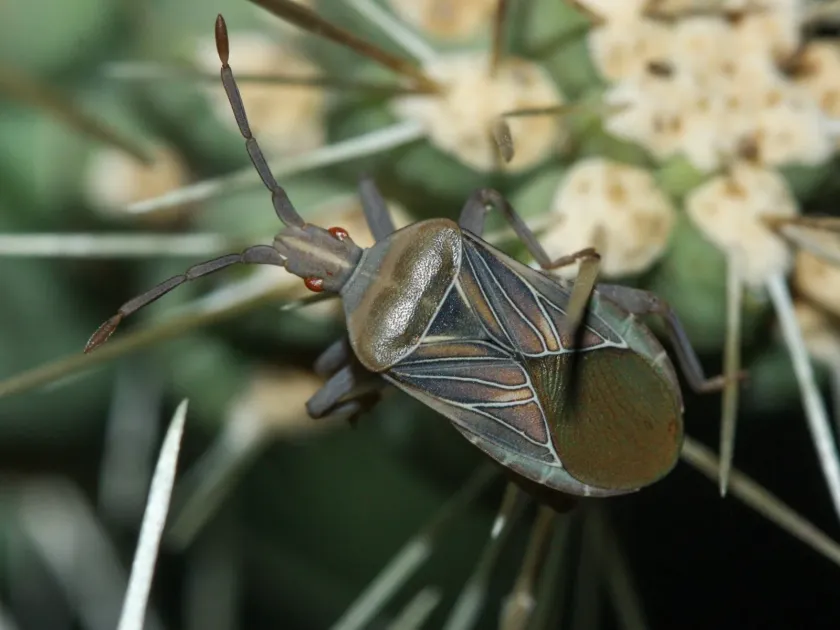
Adults typically measure between 10 and 15 mm in length. They possess an elongated, somewhat flattened body with a color palette ranging from grayish-brown to yellowish-tan, which provides excellent camouflage.
Nymphs go through five distinct developmental stages. They lack fully developed wings and often exhibit a brighter or more varied coloration compared to the adults, making them somewhat easier to spot on the plant surface.
The species is diurnal, meaning it is most active during the day. They are capable fliers, which facilitates their movement between individual cacti and across larger agricultural fields.
The life cycle involves overwintering as adults, usually in protected areas near host plants, followed by mating and egg-laying once temperatures rise in the spring.
What it damages
The primary damage is caused by both nymphs and adults feeding on the succulent tissues of the cactus. They use their piercing-sucking mouthparts to extract cellular sap from the plant's interior.
These feeding punctures leave unsightly whitish or yellow spots on the epidermis. Over time, these spots can become necrotic, turning brown or black as the tissue dies and oxidizes.
Besides direct tissue loss, the wounds created by the cactus bug serve as entry points for various pathogens, including fungi and bacteria, which can lead to localized or systemic rot.
Young, rapidly growing pads are particularly vulnerable. Heavy infestations can lead to stunted growth, significant deformation of the plant, and in severe cases, the death of entire segments.
For growers of prickly pear cactus, this bug is a serious economic pest, as it significantly reduces both the aesthetic quality and the total biomass of the harvestable crop.
When it appears
Cactus bug activity is highly dependent on temperature. They emerge from winter dormancy as soon as the weather becomes consistently warm, usually in late spring.
The summer months constitute the peak period of activity. During this time, multiple generations may occur depending on the local climate, leading to a constant presence of nymphs and adults.
As autumn approaches and day length decreases, the insects begin to seek refuge for the winter. Feeding activity drops as they transition into their hibernation state.
In regions with mild winters, the period of activity is significantly extended, potentially lasting from early spring through late autumn, which increases the pressure on cactus crops.
Hot and dry conditions often exacerbate the damage caused by these insects, as they feed more aggressively to obtain moisture from the plant tissues.
Signs of infestation
The most recognizable sign is the presence of pale, speckled spots on the surface of the cactus pads, which are the direct result of feeding activity by the bugs.
Egg clusters are a definitive indicator of an active infestation. These eggs are laid in neat, single-file lines on the spines or along the edges of the cactus segments.
Clusters of nymphs can often be observed feeding together, especially on the underside of pads or in shaded areas of the plant where they are protected from midday heat.
Small black spots of frass (excrement) left behind on the surface of the cactus are a reliable sign that a colony has been feeding at that specific location for some time.
- Yellowing and chlorosis of the cactus epidermis.
- Stunted or distorted pad development.
- Localized tissue necrosis and decay.
- Presence of bug clusters during daylight hours.
Control measures
Cultural control practices, such as removing debris and dead plant material from around the base of the cacti, are effective at reducing suitable overwintering sites for the bugs.
Mechanical control, which involves hand-picking the insects in the morning when they are sluggish, is a viable solution for small-scale gardens or early-stage infestations.
Chemical control utilizing systemic insecticides is the standard for larger operations. It is important to target the nymphs before they reach maturity to limit reproductive growth.
Biological controls, including the use of entomopathogenic fungi, have shown promise in research but are currently less common in commercial management compared to synthetic solutions.
Regular monitoring of the plantation is essential. Setting up small observation points allows for the detection of the first generation of nymphs, ensuring that treatment is applied at the most vulnerable stage of the pest's life cycle.
Taxonomy
- Latin name
- Chelinidea hunteri
- Order
- Hemiptera (bugs, aphids, leafhoppers)
- Family
- Coreidae
- EPPO code
- CHEEHU
Discussion
No discussions yet — be the first.