
Cactus bug
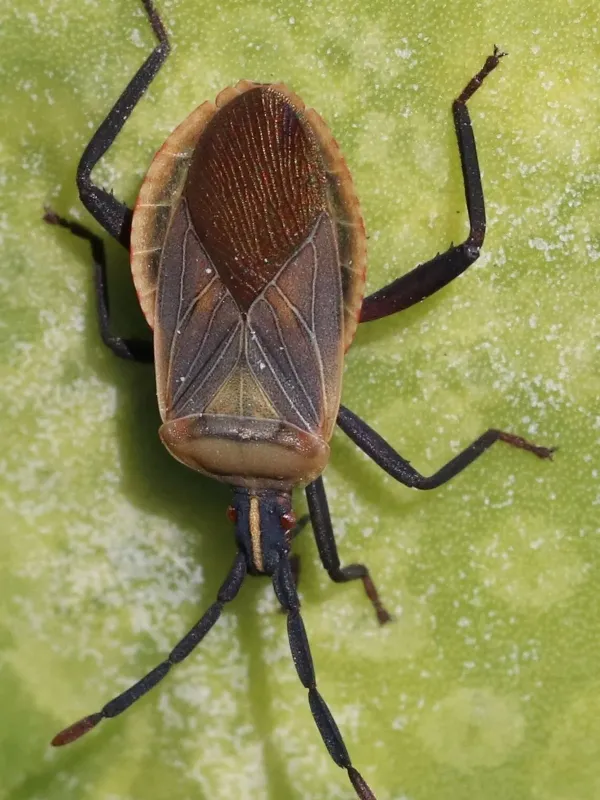
Chelinidea canyona
Description
How to identify
The cactus bug (Chelinidea canyona) belongs to the Coreidae family, commonly known as leaf-footed bugs. These insects typically measure 10–15 mm and have a flat, brownish-to-yellowish body shape.
They possess a specialized needle-like mouthpart called a rostrum, which is designed to pierce the thick, succulent tissues of cacti to extract plant fluids.
Nymphs resemble smaller, paler versions of the adults, often clustered together on the plant surface during their earlier developmental stages.
Eggs are deposited in conspicuous rows along the spines of the cactus pads, which is a key diagnostic feature for early detection by growers.
These bugs are highly adapted to the host environment and are most commonly found on various species within the Opuntia genus, making them a major pest in arid regions.
What it damages
Cactus bugs feed by sucking fluids from the cactus pads, which drains the plant of essential moisture and nutrients. This feeding activity results in severe stunted growth.
Each feeding puncture leaves a visible scar on the plant's surface. These punctures can merge, creating large yellow or white patches that eventually turn into brown, corky necrotic tissue.
The punctures made by the bugs serve as entry points for pathogens. Secondary infections, such as bacterial soft rot or fungal diseases, frequently enter through these wounds, potentially killing the entire pad.
Extensive feeding damage reduces the photosynthetic capacity of the cactus, causing the plant to lose its vigor, produce fewer fruits, and become structurally weak.
Under heavy infestation, the entire plant can become unsightly, losing its market value for ornamental use and significantly reducing its lifespan.
When it appears
Adult cactus bugs overwinter in protected areas, such as leaf litter, cracks in the soil, or dense plant debris near the base of the cacti.
Activity begins in early spring as temperatures rise, signaling the bugs to emerge, feed, and begin the mating process to produce the first generation of the season.
Depending on the regional climate, there may be one to two generations per year. Peak population levels and the highest incidence of damage typically occur during the mid-summer months.
Environmental factors, such as unusually wet summers, can sometimes slow down the development of nymphs, whereas hot and dry conditions generally favor their rapid population growth.
As the weather cools in late autumn, the bugs gradually decrease their feeding activity and seek out overwintering sites, remaining dormant until the following spring.
Signs of infestation
The first signs of infestation are small, pale, circular or irregular spots on the green pads of the cactus, caused by the localized death of cells after feeding.
Observation of small black or brown spots on the cactus surface, which are fecal deposits left by the bugs, is a reliable sign of active infestation.
During the day, you may find clusters of nymphs sheltering in the shade of the spines or on the undersides of the pads, where they are less exposed to direct sun.
As damage progresses, the pads may lose their waxy sheen and become chlorotic. In severe cases, the pads may shrivel and eventually fall off the main plant body.
- Visible rows of eggs on cactus spines.
- Yellowish or whitish necrotic spots on the pads.
- Presence of small dark fecal specks on the plant.
- Clustered colonies of nymphs on succulent tissues.
- Wilting, shriveling, or premature dropping of cactus segments.
Control measures
Physical removal is highly effective for small-scale cactus collections. Manually picking the bugs or using a brush to wipe away egg clusters can prevent large-scale outbreaks.
Systemic insecticides are the preferred chemical method for larger plantations. These products are absorbed by the plant, targeting the bugs when they feed on the sap.
Cultural practices, such as clearing debris from around the base of the plants, effectively remove the overwintering habitats that the cactus bugs rely on for survival.
Biological control methods involve supporting local predatory insect populations that feed on eggs and nymphs, helping to maintain a natural balance in the ecosystem.
Consistent monitoring of the plants throughout the growing season allows for early intervention, ensuring that any localized population of bugs can be eliminated before spreading.
Taxonomy
- Latin name
- Chelinidea canyona
- Order
- Hemiptera (bugs, aphids, leafhoppers)
- Family
- Coreidae
- EPPO code
- CHEECA
Discussion
No discussions yet — be the first.