
Chaetorellia
Chaetorellia
Description
How to identify
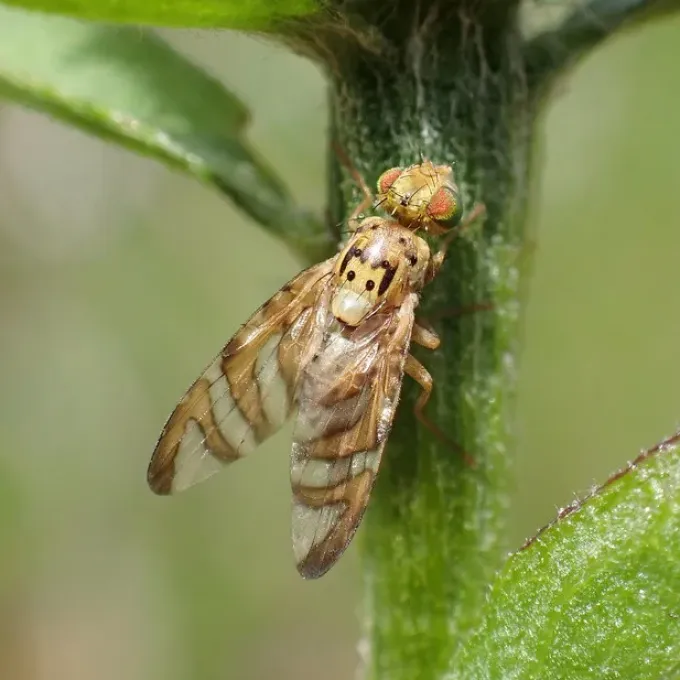
Chaetorellia is a genus of fruit flies belonging to the Tephritidae family. Adult flies are generally small, ranging from 4 to 6 millimeters in length, with a yellowish to brownish body coloration that provides camouflage against the floral structures they inhabit.
A key diagnostic feature of this genus is the distinct pattern of dark crossbands or spots on their transparent wings. This characteristic marking is essential for entomologists to distinguish these flies from other dipterans found in the same agricultural environment.
The larvae are typical of Tephritid flies, characterized by a creamy-white or yellowish, legless, and cylindrical body that tapers slightly towards the anterior end. This body shape is an adaptation for movement within the tight spaces of host flower heads.
Systematically, Chaetorellia falls under the order Diptera. Field identification is primarily conducted by observing adult activity on host plants during the flowering phase and examining flower heads for larval presence.
Precise species identification within the genus often requires microscopic examination of the male genitalia, as many species are morphologically similar despite differences in their ecological niches and host ranges.
What it damages
Chaetorellia species are significant pests of plants in the Asteraceae family, with safflower being one of the most economically impacted crops. The primary damage is inflicted by the larvae feeding inside the flower heads.
Larvae consume the developing seeds and floral tissues within the capitulum. This feeding activity results in the destruction of seeds, significantly reducing the yield and overall weight of the harvested crop.
The damage often facilitates secondary infections by pathogens, such as fungi and bacteria. This can lead to the rotting of the entire flower head, especially under high humidity conditions, causing further qualitative loss.
Moreover, the damage negatively affects the oil content and quality of the seeds. Seeds that survive the larval feeding are often shriveled or underdeveloped, making them unsuitable for commercial processing or future sowing.
In addition to cultivated safflower, these flies readily infest various wild Asteraceae weeds. These wild hosts provide a critical survival bridge for the pest population, ensuring its persistence in the agroecosystem year after year.
When it appears
The life cycle of Chaetorellia is strictly synchronized with the phenological development of its host plants. Adults typically emerge in spring, coinciding with the onset of the plant's bud formation stage.
Following mating, females deposit eggs into the developing flower heads. Larval development occurs during the transition from the budding stage to full bloom, exploiting the nutrient-rich seed embryos as their main food source.
Depending on climatic conditions, the pest may complete one or several generations within a single growing season. Temperature is a major driver of their development rate and the duration of their pupal stage.
Overwintering usually takes place at the pupal stage. The puparia are typically found buried in the soil or within the remnants of host plant debris left in the field after harvest.
Monitoring for adults is most effective during the early flowering phase. Early detection allows for timely interventions, as the pest is most vulnerable before the larvae move deeper into the protected floral tissues.
Signs of infestation
The presence of Chaetorellia can be identified by characteristic puncture marks on the involucre of the flower heads, created by females during oviposition. These small holes are the first indicator of potential infestation.
Visual symptoms include the deformation of flower heads, which may appear stunted, discolored, or prematurely withered. Infested heads often fail to open properly or lose their petals earlier than healthy ones.
Careful dissection of suspected flower heads reveals the presence of larvae or the accumulation of fine, brownish frass, which serves as a clear evidence of internal feeding activity.
- Developmental arrest of flower heads.
- Presence of larvae inside the capitulum.
- Premature decay and discoloration of the inflorescence.
- Deformation and shriveling of seed embryos.
Affected plants often appear weak and chlorotic compared to the rest of the crop. In severe cases, the entire head may turn black or decay if secondary pathogens colonize the damage site.
Control measures
Effective management of Chaetorellia requires a multi-faceted strategy that integrates cultural practices with chemical interventions at critical phenological stages.
The most fundamental cultural control measure is the eradication of wild Asteraceae weeds in and around fields, which eliminates primary reservoirs for the pest and reduces population pressure.
Deep plowing after harvest is highly recommended to bury pupae. By placing them deep in the soil, the emergence of adults in the following spring can be significantly restricted, reducing the initial infestation level.
Chemical control should be targeted during the adult flight and egg-laying period, prior to the larvae penetrating the flower heads. Once larvae are established inside, they are protected from contact insecticides.
Crop rotation and spatial isolation of new safflower plantings from previous infested sites help in breaking the life cycle and preventing the mass colonization of the crop by the emerging adult population.
Taxonomy
- Latin name
- Chaetorellia
- Order
- Diptera (flies)
- Family
- Tephritidae
- EPPO code
- CHLLSP
Discussion
No discussions yet — be the first.