
Olive tarantula
Chaetopelma olivaceum
Description
How to identify
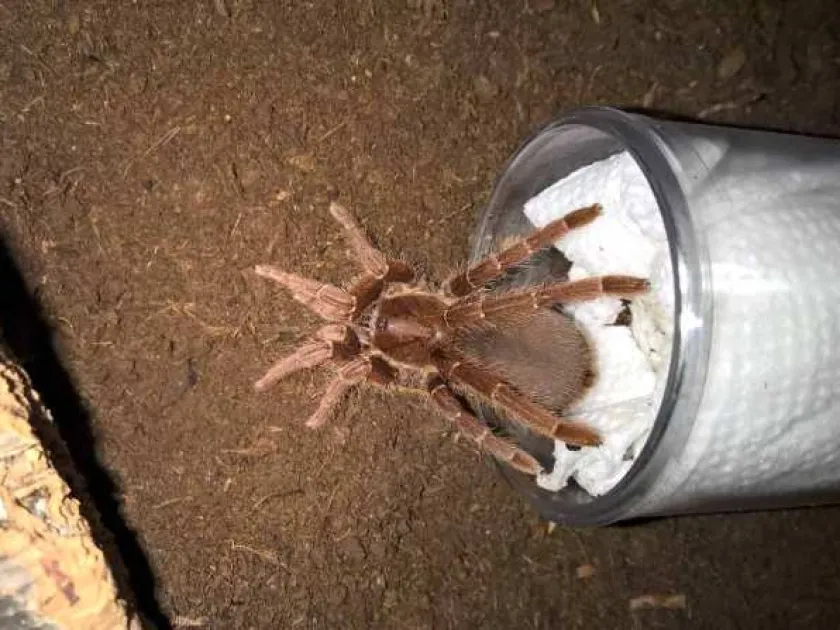
Chaetopelma olivaceum, commonly referred to as the olive tarantula, belongs to the family Theraphosidae. It is one of the few tarantula species native to the Middle East.
Adult spiders are characterized by their olive-brown or deep black coloration, which serves as effective camouflage within the soil and rocky terrain of their habitat.
Females are generally larger, reaching up to 5 centimeters in body length, while males are often leaner and more active, especially during the breeding season.
The body is covered in dense setae, a typical feature for this family. They are primarily nocturnal, spending most of their time in silk-lined burrows underground.
Taxonomically, they belong to the order Araneae. Their presence in agro-ecosystems is often noted due to their burrowing behavior, which can affect soil integrity.
What it damages
The damage caused by the olive tarantula is primarily mechanical, resulting from the construction of deep burrows within the rhizosphere of cultivated plants.
These spiders pose a particular threat to young seedlings and crops in arid environments, where loose, cracked soil provides ideal conditions for digging.
By excavating soil around the root zone, the spider disrupts the plant's ability to uptake water and nutrients, leading to stunted growth or wilting.
Silk webbing used by the spider to fortify the entrance of its burrow can constrict the base of young stems, causing physical deformity as the plant grows.
The resulting root trauma often acts as an entry point for opportunistic soil-borne fungi, potentially leading to secondary infections in the crop.
When it appears
Activity levels for this species are heavily dependent on climatic variables, specifically ambient temperature and soil moisture levels throughout the year.
In spring, as temperatures rise, the spiders become increasingly active, frequently enlarging their burrows or establishing new territories within fields.
During the peak of the dry summer season, the spiders retreat into the deeper, cooler parts of their burrows to avoid desiccation and thermal stress.
Breeding cycles usually occur when soil conditions are optimal, ensuring that offspring can successfully establish their first shelters in the substrate.
An uptick in surface activity is often observed in the autumn as individuals prepare for the winter, making them more visible in irrigated farmland.
Signs of infestation
The most reliable sign of an infestation is the presence of neat, circular burrow entrances, often lined with a thin layer of white silk webbing.
Crop plants near these burrows may show localized wilting or chlorosis, which often serves as a precursor to more severe root damage.
Fresh mounds of loose soil scattered near the entrance of a burrow are clear indicators of recent maintenance or expansion by the inhabitant.
Small leaves at the base of the plant may be incorporated into the spider's webbing, often appearing prematurely withered or discolored.
- burrow openings measuring 15–25 mm in diameter;
- visible silk structures near the plant root zone;
- localized patches of poor crop performance;
- exuviae (shed skins) found near the burrow sites.
Control measures
Deep mechanical tillage of the soil is the most effective method for destroying burrow systems and disrupting the habitat of the olive tarantula.
In cases of high infestation, the application of targeted soil insecticides can significantly reduce spider populations in critical areas.
Maintaining adequate soil moisture through consistent irrigation can render the environment less suitable for these spiders, encouraging them to migrate.
Biological control through the encouragement of native predators, such as spider-hunting wasps, can help maintain population levels below the threshold of economic damage.
Field monitoring should focus on identifying and treating marginal zones where spiders are most likely to establish nests before they migrate into the main crop.
Taxonomy
- Latin name
- Chaetopelma olivaceum
- Family
- Theraphosidae
- EPPO code
- CHEPAE
Discussion
No discussions yet — be the first.