
Zebra tarantula
Aphonopelma seemanni
Description
How to identify
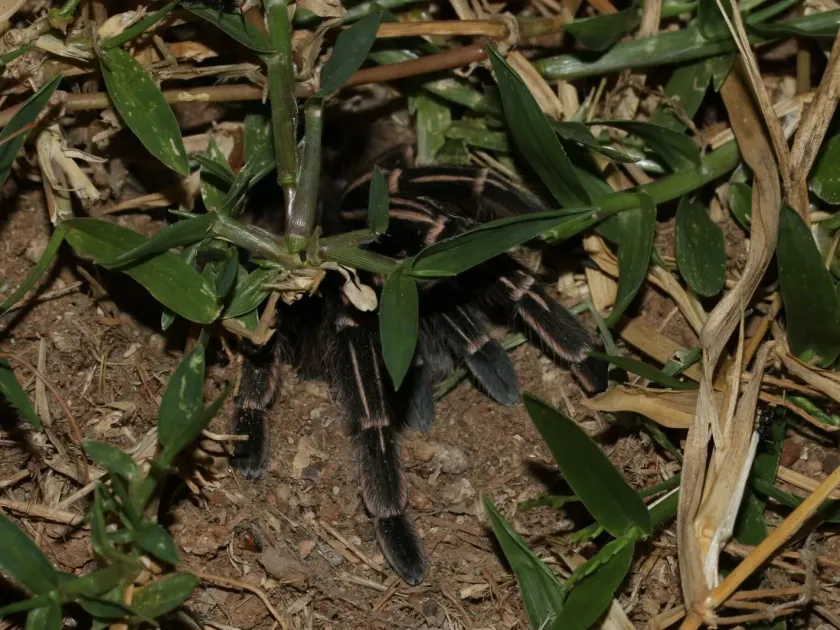
The Zebra tarantula is a large spider belonging to the Theraphosidae family. It is recognized by the distinct white or cream-colored stripes on its legs, which provide its common name.
These spiders typically inhabit deep burrows in the soil, which they use to maintain stable temperature and humidity levels throughout the day.
Taxonomically, the species is placed within the order Araneae and the family Theraphosidae, characterized by their robust size and presence of urticating hairs.
The life cycle involves multiple molts as the spider grows. Females can live for many years, while males generally have a much shorter lifespan.
It is a terrestrial species commonly found in Central America, often residing in areas with specific environmental conditions suitable for burrowing.
What it damages
The Zebra tarantula is not considered a plant pest. It is an obligate carnivore and has no biological mechanism to consume or damage plant tissue.
It does not feed on crops, fruits, or roots, and therefore causes no direct economic damage to agricultural yields or horticultural operations.
In many ecosystems, these spiders act as beneficial predators, keeping populations of small insects and other arthropods in check.
There is no evidence of phytophagy in this species, meaning it does not pose a threat to plant health in greenhouses or field settings.
The presence of such predators should be viewed as an indicator of a healthy, functioning ecosystem within the surrounding agricultural area.
Control measures
No control measures are necessary for the Zebra tarantula in agricultural settings, as it does not pose a threat to crops or plants.
The application of chemical pesticides to control this species is discouraged, as it may negatively impact beneficial biodiversity in the field.
If a specimen is found in an inconvenient location, such as a greenhouse or a storage facility, manual removal is the most appropriate action.
Good agricultural practices that prioritize integrated pest management naturally protect beneficial species like the Zebra tarantula.
Farmers are encouraged to recognize this species as part of the natural control mechanism rather than an enemy to their harvest efforts.
Taxonomy
- Latin name
- Aphonopelma seemanni
- Family
- Theraphosidae
- EPPO code
- APPMSE
Discussion
No discussions yet — be the first.