
Chaetopelma
Chaetopelma
Description
How to identify
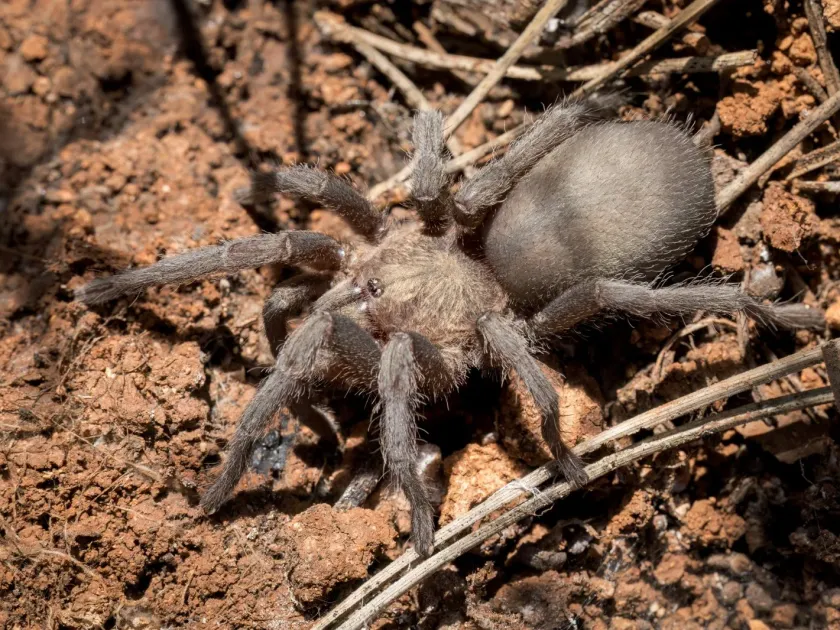
The genus Chaetopelma belongs to the family Theraphosidae, commonly known as tarantulas, within the order Araneae. These are medium-sized spiders covered in dense, sensory hair.
Their coloration ranges from dark brown to black, providing camouflage against the rocky soils and crevices of their natural environment in the Middle East and Cyprus.
A key identifying feature is the structure of their ocular tubercle and the presence of a stridulatory apparatus used to emit sound when they feel threatened.
They are primarily nocturnal animals, spending the daylight hours in deep, silk-lined burrows that help them maintain stability in harsh, arid climates.
These spiders are well-adapted to dry environments and are rarely seen in the open unless they are searching for prey or mates during the active season.
What it damages
Chaetopelma are not agricultural pests; they do not feed on crops, fruits, or any plant tissues, and therefore do not cause direct damage to agricultural production.
As predators, they function as beneficial biological agents by preying on various insects and small invertebrates, helping to regulate populations of ground-dwelling arthropods.
There are no recorded economic losses for farmers due to the activities of these spiders, as their presence usually indicates a healthy, albeit diverse, field ecosystem.
Potential hazards are strictly limited to accidental physical contact, where the spider may deliver a painful bite in self-defense if handled or disturbed.
They play a neutral to positive role in the field by assisting in the suppression of other small crawling insects that might otherwise become agricultural nuisances.
When it appears
The activity patterns of Chaetopelma are strictly dictated by seasonal changes in temperature and the moisture content of the soil.
High levels of activity are typically observed during warmer spring and summer months when metabolic rates are optimized for hunting and mating.
During colder periods, these spiders retreat deep into their burrows to survive, entering a state of dormancy or significantly reduced activity.
The reproductive cycle is usually timed to ensure that offspring emerge during periods of peak prey availability, ensuring a higher survival rate for the next generation.
Field workers are most likely to encounter these spiders during soil preparation activities in early spring or during late summer harvest cycles.
Signs of infestation
The presence of these spiders is usually indicated by the existence of small, well-hidden burrows often reinforced with a thin layer of silk at the entrance.
Skeletal remains of insects, such as chitinous shells of beetles, near the mouth of a burrow are signs of successful nocturnal hunting activity in the vicinity.
When their nest entrance is disturbed, the spider may exhibit a threat posture, rearing up on its hind legs to warn off the intruder.
While no leaf or fruit damage is associated with them, observers can spot clean holes in the ground that serve as entry points to their underground galleries.
If you encounter a spider in the field, it is important to observe it from a distance to avoid defensive aggression, as they are naturally territorial.
Control measures
Since Chaetopelma species are not agricultural pests, there is no need for chemical control measures or eradication programs targeting them in agricultural settings.
Safety during fieldwork should be maintained by wearing appropriate protective equipment, such as sturdy gloves and boots, when moving stones or clearing field debris.
General farm sanitation practices, such as removing excess rocks or heavy vegetation debris from field borders, can naturally discourage spiders from settling near working areas.
Education for field workers on how to identify these spiders and the importance of avoiding manual contact is the most effective way to prevent accidents.
Should a spider need to be relocated, using long-handled tools or a container is recommended to ensure both the worker's safety and the safety of the spider.
Taxonomy
- Latin name
- Chaetopelma
- Family
- Theraphosidae
- EPPO code
- CHEPSP
Discussion
No discussions yet — be the first.