
Fig wax scale
Ceroplastes rusci
Description
How to identify
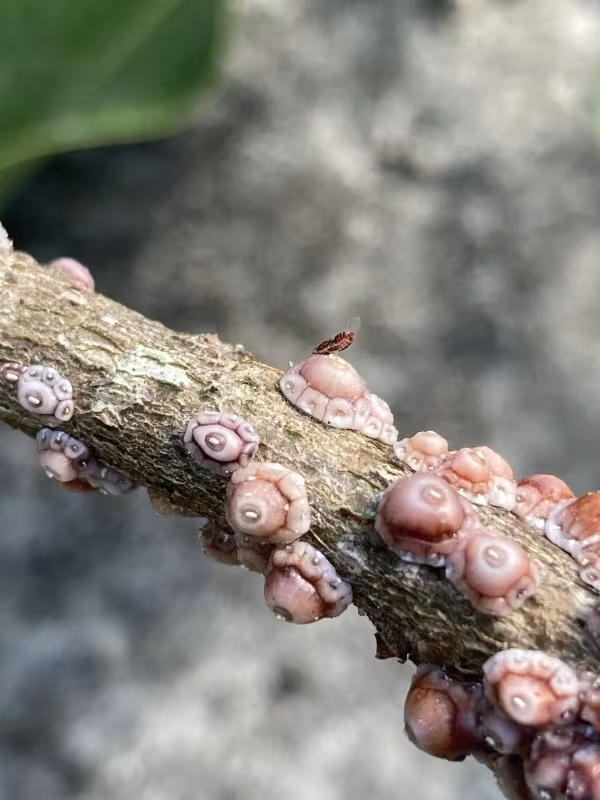
Fig wax scale is a member of the Coccidae family, recognized by the thick, waxy, white or pinkish protective covering that mature females develop.
The adult female is immobile and attaches firmly to the plant stems or the undersides of leaves, looking like small, waxy, hemispherical bumps.
Males of the species are rarely seen and their short lifespan is primarily dedicated to mating, making the females the main target for monitoring.
The first-instar larvae, known as crawlers, are the only mobile stage and play a crucial role in the initial infestation and dispersal across the plant.
As the female matures, the wax layer becomes thicker and harder, providing excellent protection against various environmental stresses and contact pesticides.
What it damages
The primary host for this pest is the common fig (Ficus carica), though it is widely known for damaging a variety of other subtropical fruit trees.
Citrus plantations, including lemons and oranges, are frequently impacted, often leading to reduced fruit quality and overall yield decline.
It also attacks ornamental plants like oleander and bay laurel, often thriving in urban environments where natural predators may be scarce.
By extracting plant sap, the scale insects weaken the host, leading to stunted growth and reduced plant vigor, especially in young saplings.
Heavy infestations lead to leaf yellowing and premature leaf drop, as the pests drain the plant of essential nutrients and fluids.
When it appears
The life cycle of the Fig wax scale is highly dependent on climate, with multiple generations per year in warmer regions where figs are grown.
Overwintering usually occurs as adult females that remain on the branches throughout the colder months, resuming activity once temperatures rise.
Crawler emergence typically aligns with the arrival of late spring and early summer temperatures, representing the most active dispersal phase.
A second generation often develops towards the end of summer, leading to exponential population growth if left unmanaged during the early summer.
Environmental factors, particularly humidity and warmth, play a significant role in the speed of development from egg to adult stage.
Signs of infestation
The presence of honeydew on the leaves and stems is the most obvious sign, creating a sticky residue that quickly collects dust and debris.
Sooty mold frequently colonizes the honeydew, giving the plant a blackened, sickly appearance that interferes with photosynthesis.
Close inspection of the stems will reveal the waxy, irregularly shaped scales, which stand out against the plant's natural bark texture.
Increased ant activity around the tree is a strong indicator of scale infestation, as ants feed on the honeydew and protect the pests from predators.
Distorted, curling leaves and a general lack of vitality in the canopy are classic symptoms associated with long-term feeding by the scale insect.
Control measures
Managing the Fig wax scale requires a combination of cultural practices, mechanical removal, and timely chemical or organic applications.
Pruning and destroying heavily infested branches is one of the most direct and effective ways to reduce the initial pest population on a tree.
Horticultural oils or mineral oils are highly recommended as they smother the insects, effectively controlling them without harsh systemic chemicals.
Application of insecticides should be precisely timed during the crawler stage, as they lack the waxy shield that makes mature scales difficult to kill.
- Monitor the canopy regularly during the growing season.
- Promote natural enemies like ladybird beetles.
- Maintain tree vigor through proper irrigation and nutrition.
- Use ant control measures to limit the protection of scale insects.
- Wash affected areas with insecticidal soap during the early stages of infestation.
Taxonomy
- Latin name
- Ceroplastes rusci
- Order
- Hemiptera (bugs, aphids, leafhoppers)
- Family
- Coccidae
- EPPO code
- CERPRU
Discussion
No discussions yet — be the first.