
Buffalo treehopper
Ceresa basalis
Description
How to identify
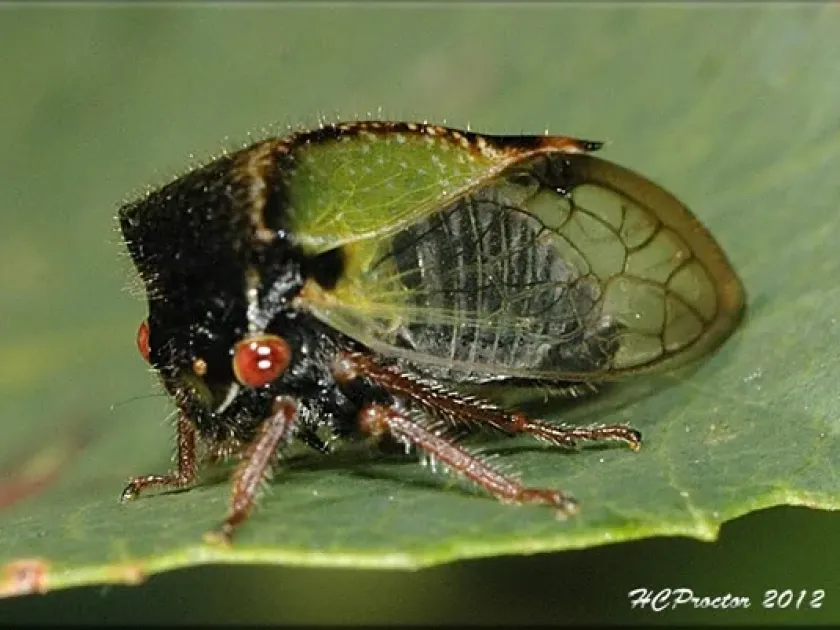
The buffalo treehopper (Ceresa basalis) belongs to the Membracidae family, order Hemiptera. Adult insects are characterized by a highly developed pronotum that forms a hump or horn-like projection, giving them a distinct appearance.
The body of the adult is typically green, yellow, or brown, providing excellent camouflage against leaves and young stems. Adult insects generally measure between 8 and 10 millimeters in length.
A key feature of this species is the presence of sharp lateral projections on the pronotum, pointing outwards rather than backwards, as seen in some other closely related treehopper species. The head is positioned vertically with large, well-developed eyes.
Nymphs differ significantly from adults; they lack functional wings and are often covered with various spines or protrusions, which serve as a defense mechanism against potential predators in the environment.
The life cycle includes the egg stage, five nymphal instars, and the adult stage. This species typically overwinters in the egg stage, which females deposit under the bark of young host plant stems to ensure protection during the winter.
What it damages
This pest is a polyphage, causing damage to a wide range of woody plants and shrubs. It poses a significant threat to young fruit trees grown in intensive orchards and nurseries.
Host plants include pome fruits like apples and pears, as well as stone fruits such as plums, peaches, and cherries. Damage has also been documented on various decorative shrubs and forest tree species.
Both adults and nymphs cause damage. They feed primarily on the sap of young stems and leaves by piercing the epidermis with their piercing-sucking mouthparts, which weakens the overall health of the plant.
The most significant harm is caused by females during oviposition. To place their eggs, they make deep incisions in the bark of young branches, which leads to mechanical damage to the tree's conducting tissues.
Areas where eggs are laid often exhibit bark cracking, tissue death, and necrosis, which provide entry points for secondary infections, including fungal and bacterial diseases of the bark and wood.
Signs of infestation
The primary sign of a buffalo treehopper infestation is specific bark damage on one- and two-year-old shoots. This appears as characteristic paired, linear incisions along the axis of the branch.
At the puncture sites, one often observes yellowing and premature drying of the shoot tips. If the bark is heavily damaged in the oviposition zone, deformation and curling of young twigs may occur, which is visible during crown inspection.
During the summer months, the pest's presence can be detected by the characteristic jumping motion of adults when branches are disturbed. They are highly mobile and quickly move to the opposite side of the stem.
On leaves and young shoots where nymphs feed intensively, chlorotic spots may appear, along with traces of their activity in the form of sticky honeydew, which later attracts sooty mold fungi.
Severe infestations in nurseries result in stunted growth of saplings, loss of aesthetic or market quality, and reduced winter hardiness of the plants due to the compromised integrity of the bark in the cambium zone.
Control measures
Controlling the buffalo treehopper requires a comprehensive approach starting with proper agrotechnical practices. The most important step is to prune and burn heavily infested shoots during the dormant season to eliminate the eggs.
Maintaining a clean garden environment is essential: controlling weeds in orchard rows reduces the site's attractiveness to adults, as many treehopper species require grassy cover to complete their life cycle.
During the growing season, if populations exceed the economic threshold, the application of systemic and contact insecticides may be necessary. The optimal time for treatment is when nymphs emerge from the eggs, as they are most vulnerable at this stage.
Biological control methods include encouraging natural predators, such as egg parasitoid wasps, which effectively parasitize treehopper eggs, significantly reducing population levels without the need for chemical intervention.
Regular monitoring of the orchard using yellow sticky traps allows for the early detection of the start of mass adult emergence, enabling timely adjustments to plant protection schedules.
Taxonomy
- Latin name
- Ceresa basalis
- Order
- Hemiptera (bugs, aphids, leafhoppers)
- Family
- Membracidae
- EPPO code
- CEREBA
Discussion
No discussions yet — be the first.