
Natal fruit fly
Ceratitis rosa
Description
How to identify
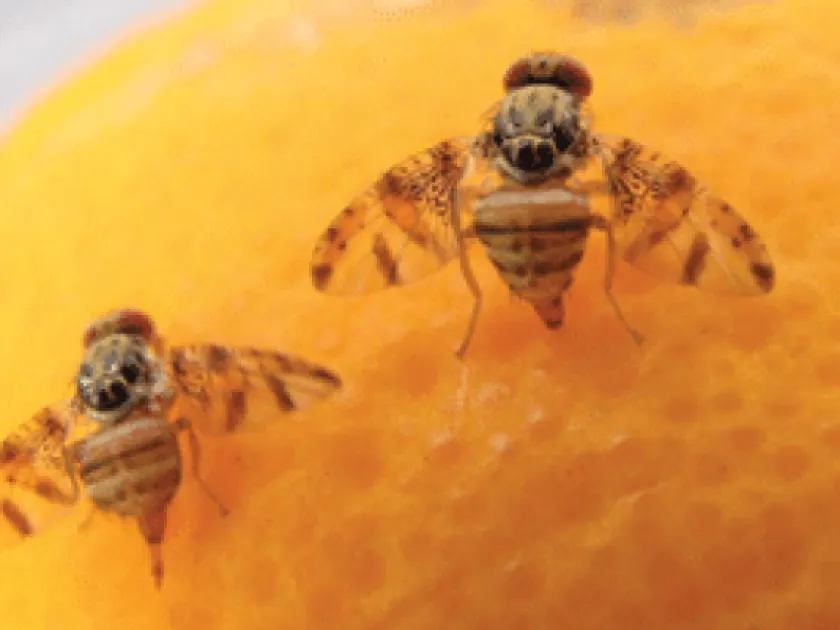
The Natal fruit fly (Ceratitis rosa) is a member of the Diptera order and the Tephritidae family. The adult insect is characterized by a yellowish-brown body with distinct patterns on the abdomen and thorax.
Its wings are transparent and feature a specific pattern of dark spots and bands, which is a classic diagnostic feature for fruit flies in this taxonomic group. Females are equipped with an ovipositor designed to pierce fruit skin.
Larvae are legless, cylindrical, and usually creamy-white. They go through three larval stages while feeding on the internal tissues of the host fruits.
The pupal stage occurs in the soil, where the insect develops a barrel-shaped puparium. The pupae are typically light to dark brown, serving as the main overwintering stage for the species.
It is an important economic pest that requires strict identification protocols, often mistaken for other related species, which makes accurate monitoring essential for effective management.
What it damages
The Natal fruit fly is a highly polyphagous pest with a vast host range. It infests a wide variety of stone and pome fruits, as well as citrus, mangoes, papayas, and avocados.
Commercial peach, nectarine, and apricot orchards are particularly vulnerable to its attack. The fly can destroy a high percentage of the harvest, making it a major economic threat.
Larval feeding causes the interior of the fruit to collapse into a soft, rotten mass. This damage renders the produce completely unsuitable for fresh market sale or industrial processing.
Secondary infections by pathogens often follow the larval infestation, leading to rapid decay. This makes the affected fruits an eyesore and a potential source of infection for healthy crops nearby.
High fecundity allows the population to explode under favourable climatic conditions, causing severe outbreaks that can jeopardize the profitability of fruit farming operations.
When it appears
The life cycle and activity of the Natal fruit fly are strongly dictated by local weather patterns. In tropical and subtropical areas, it may breed throughout the entire year.
In temperate climates, adult flies emerge from the soil in spring when temperatures become consistently warm. The timing of their activity usually coincides with the fruit setting and maturation phases.
Generation time varies depending on the ambient temperature and humidity; faster development occurs in warm, moist weather, leading to multiple generations per season.
As temperatures drop in autumn, reproductive activity declines, and the population enters a phase of reduced activity or diapause, typically remaining in the soil or protected debris.
Monitoring programmes using lures and traps should begin well before fruit ripening to detect the arrival of the first generation and initiate control measures in time.
Signs of infestation
The earliest signs of infestation are small puncture marks on the fruit skin, often referred to as "stings". These may show slight discoloration or indentations as the eggs are laid.
As the larvae hatch and burrow into the flesh, the fruit may show early ripening or uneven coloration. This is often followed by the appearance of soft, rotting spots on the surface.
When the fruit is opened, the presence of larvae and internal tissue decay is obvious. In many cases, the fruit may drop from the tree prematurely, a key indicator of severe infestation.
Sticky secretions or fruit juices leaking from the puncture holes are common, which further attract other insects, creating secondary issues in the orchard.
The presence of adult flies in traps is a definitive sign of an active threat, requiring immediate assessment of the fruit maturity stage and potential damage levels.
Control measures
Integrated Pest Management (IPM) is the most effective approach for controlling the Natal fruit fly, relying on a combination of cultural, biological, and chemical methods.
Sanitation is paramount: regular collection and proper disposal of fallen, infested fruit is essential to break the life cycle by killing larvae before they pupate in the soil.
- Deployment of pheromone traps for monitoring and mass-trapping males.
- Use of food-based attractant baits to target and kill females.
- Orchard management practices such as pruning to ensure good airflow and light penetration.
- Application of authorized insecticides during the high-risk periods of fruit development.
- Utilization of biological control agents and beneficial insects to naturally regulate populations.
Strict adherence to quarantine regulations is necessary to prevent the accidental spread of Ceratitis rosa to non-infested geographic regions via infested produce transport.
Implementing these strategies helps minimize reliance on heavy chemical applications and ensures a more sustainable and productive fruit growing environment.
Taxonomy
- Latin name
- Ceratitis rosa
- Order
- Diptera (flies)
- Family
- Tephritidae
- EPPO code
- CERTRO
Discussion
No discussions yet — be the first.