
Five-spotted fruit fly
Ceratitis quinaria
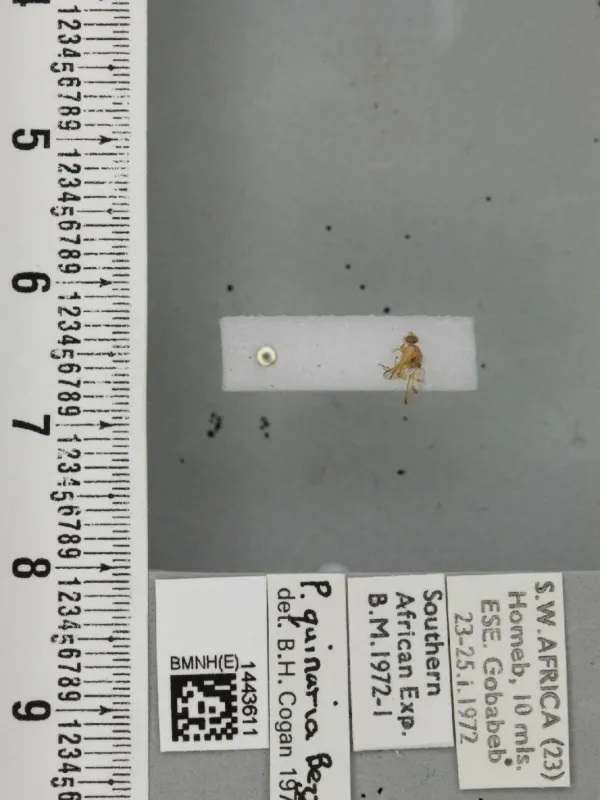
Description
How to identify
The Five-spotted fruit fly (Ceratitis quinaria) is a member of the Tephritidae family. It is distinguished by its unique wing patterns, which feature specific spots that are diagnostic for the species when observed under magnification.
Adults possess a robust body, a mobile head, and large compound eyes. They are relatively small compared to other common orchard pests, making them difficult to detect without specialized trapping equipment.
The larvae are typical of the fruit fly family: cylindrical, legless, and white or yellowish in color. They are specialized for life within the fleshy tissues of fruits, where they are protected from environmental extremes.
To identify the presence of this fly in an orchard, entomologists use pheromone-baited traps or food attractants. Visual field identification is challenging and usually requires confirming the wing vein patterns in a laboratory setting.
Understanding the specific morphology of this species helps distinguish it from the Mediterranean fruit fly (Ceratitis capitata), ensuring that the appropriate management strategies are implemented.
What it damages
This pest affects a wide range of host plants, primarily focusing on orchard crops such as peaches, apples, and pears. In infested regions, it represents a significant risk to the marketability of the produce.
Damage begins when the female pierces the skin of a fruit to deposit eggs. These puncture wounds serve as entry points for rot-causing fungi and bacteria, leading to the rapid decay of the fruit flesh.
The internal feeding of the larvae causes the most severe damage. They tunnel through the fruit, destroying the structure and rendering it unmarketable. Frequently, secondary infections follow the larvae, causing premature fruit rot.
Infested fruits often fall prematurely, which complicates harvest procedures and forces growers to implement rigorous sanitation protocols to prevent the larvae from completing their life cycle in the soil.
Economic losses arise not only from the loss of yield but also from the regulatory restrictions that often follow the detection of this fly in previously uninfested areas.
When it appears
The activity of the Five-spotted fruit fly is highly temperature-dependent. Warm, humid conditions are ideal for their development, reproduction, and survival, leading to higher activity in late spring, summer, and early autumn.
Emergence typically begins when the daily average temperatures rise sufficiently to trigger the development of overwintering pupae. The synchronization of fly activity with fruit development is the primary factor driving infestation levels.
Multiple generations can occur within a single growing season. In warmer climates, the fly can complete several cycles, meaning the risk to the fruit crop persists for several months during the year.
As temperatures drop during the autumn, the flies move toward the soil or find sheltered locations in debris to pupate and overwinter. This stage is crucial for population reduction strategies.
Monitoring throughout the season is essential for timely intervention. By tracking the phenology of both the fruit and the pest, growers can apply protection measures during the most vulnerable stages of fruit growth.
Signs of infestation
The most common sign of infestation is the presence of tiny, pin-prick marks on the skin of the fruit, often surrounded by a small discolored area. Sometimes, a droplet of sap may be visible at the site of the puncture.
Internal symptoms include softened, discolored tissues within the fruit. In later stages, the fruit might feel spongy, and the internal flesh may show visible browning and cavities caused by larval activity.
Premature ripening and dropping of fruit from the tree is a classic symptom. If these fallen fruits are examined, they often contain larvae or exit holes through which larvae have already emerged to pupate in the soil.
Using yellow sticky cards or bait traps will reveal the presence of adult flies in the orchard. A steady increase in the number of trapped flies indicates the need for immediate control actions.
- Small puncture marks on the fruit skin.
- Browning and decay around the egg-laying sites.
- Soft or mushy spots on the fruit.
- Presence of larvae upon cutting the fruit.
- Premature fruit drop in the orchard.
Control measures
An Integrated Pest Management (IPM) approach is required to control the Five-spotted fruit fly. This includes cultural, mechanical, and, as a last resort, chemical control measures.
Sanitation is the most critical cultural practice. Collecting and destroying fallen fruits prevents the next generation of flies from emerging, as the pupation phase is interrupted by proper disposal.
Mass trapping using food-based lures or pheromones can significantly reduce the adult population in the orchard. This method is environmentally friendly and helps monitor pest density throughout the season.
When chemical treatment is necessary, insecticides must be applied according to the manufacturer's label, focusing on the period before the eggs are deposited into the ripening fruit.
Biological control, utilizing beneficial insects or entomopathogenic organisms, is an area of ongoing research. Promoting natural predators in the orchard can help suppress populations below economic injury levels.
Taxonomy
- Latin name
- Ceratitis quinaria
- Order
- Diptera (flies)
- Family
- Tephritidae
- EPPO code
- CERTQU
Discussion
No discussions yet — be the first.