
Ceratitis pedestris
Ceratitis pedestris
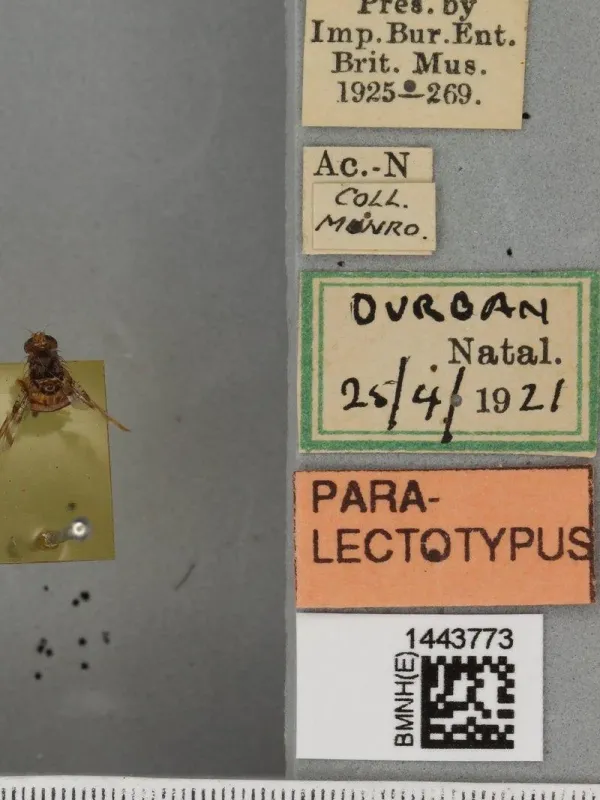
Description
How to identify
Ceratitis pedestris belongs to the order Diptera and the family Tephritidae. It is a known fruit-infesting insect that can cause significant damage to horticultural crops if left unchecked.
The adult insect is characterized by distinctive wing patterns consisting of bands and spots, which aid in camouflage within the foliage of host trees. The body is typically robust with specific markings.
Larvae are legless, whitish maggots adapted for tunneling through fruit tissue. They possess specialized mouth hooks used to feed and break down the internal structure of the fruit.
The life cycle involves egg, larva, pupa, and adult stages. Understanding the duration and requirements of each stage is critical for implementing effective monitoring and control strategies.
Identification is often conducted by specialized entomologists using morphological keys. In the field, growers rely on traps and visual observation to detect the presence of the pest.
What it damages
This pest attacks a variety of fruit-bearing plants, causing direct loss to the yield. Both stone and pome fruits are susceptible to infestation by this dipteran species.
Larval feeding creates tunnels within the fruit, leading to rapid decay and a decrease in fruit quality. Infested fruits often become soft and unmarketable shortly after the larvae begin their development.
Secondary infections, such as fungal or bacterial rots, often follow the initial damage caused by the larvae, leading to further crop degradation and premature fruit drop.
In high-density populations, this pest can compromise a significant portion of the harvest, causing economic hardship for orchard owners and commercial farmers.
Infestation generally intensifies as fruits reach maturity, making it a critical threat during the ripening season when the fruit is most vulnerable to egg-laying.
When it appears
The seasonal activity of Ceratitis pedestris is closely linked to climatic conditions. Adults emerge as temperatures rise, signaling the beginning of the breeding season.
Multiple generations can occur throughout the growing season, depending on the local climate and availability of suitable host fruits for the larvae to complete their development.
Flight activity continues through the warm months until autumn temperatures trigger dormancy. The pest typically overwinters as a pupa in the soil beneath host trees.
Monitoring the flight period using attractant traps is essential for timing insecticide applications accurately and minimizing the impact of the pest on the orchard.
In warmer regions, the life cycle may be extended, increasing the pressure on the fruit crops and requiring more rigorous management throughout the year.
Signs of infestation
Early signs of infestation include tiny punctures on the fruit surface, which are marks left by the female during egg deposition. These spots may exude liquid or darken over time.
Internal damage manifests as soft, discolored, and decaying areas within the fruit flesh, which can be easily detected upon slicing the fruit open.
Premature fruit fall is a significant indicator of an active infestation. Fruits found on the ground before they are fully mature often contain larvae preparing to pupate in the soil.
A foul odor or an unpleasant taste in the fruit pulp is a result of larval feeding and the subsequent breakdown of tissue, making the fruit completely unsuitable for consumption.
- Visible punctures on the fruit peel.
- Soft and discolored spots on fruits.
- Presence of larvae within the fruit flesh.
- Early fruit drop from the tree.
Control measures
Cultural control is the first line of defense, involving the prompt collection and destruction of fallen or infested fruit to remove larvae before they pupate.
Chemical control involving the use of targeted insecticides during periods of adult activity can help suppress populations before significant egg-laying occurs.
Attractant traps are highly effective for monitoring pest levels and can also serve as a method of mass trapping to reduce the adult population density in the orchard.
Phytosanitary measures, including the strict regulation of fruit movement, are necessary to prevent the accidental introduction of this pest into new growing areas.
Biological control, such as the use of natural predators or beneficial parasitoids, is increasingly integrated into pest management programs to promote sustainable orchard health.
Taxonomy
- Latin name
- Ceratitis pedestris
- Order
- Diptera (flies)
- Family
- Tephritidae
- EPPO code
- CERTPE
Discussion
No discussions yet — be the first.