
Mediterranean fruit fly
Ceratitis oraria
Description
How to identify
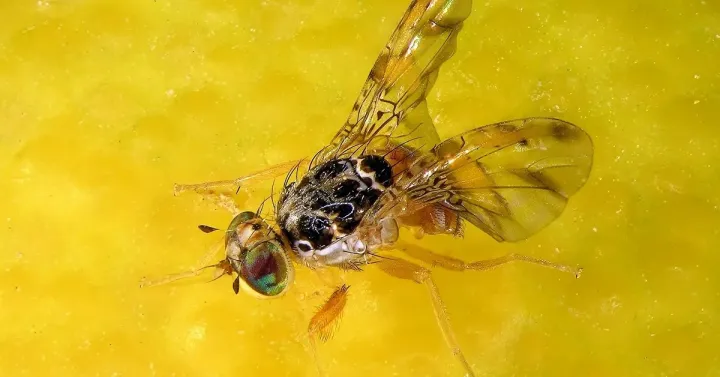
The Mediterranean fruit fly (Ceratitis capitata), a member of the Tephritidae family, is one of the most destructive agricultural pests globally. Measuring 4–5 mm, the adults are easily identified by their mottled, colorful wings with distinct brown and yellow patterns.
The body is yellowish-brown with a characteristic black pattern on the thorax. The head features prominent, iridescent greenish-blue eyes, which serves as a key diagnostic indicator for field inspections.
Females possess a needle-like ovipositor used to pierce the skin of fruits and deposit eggs deep within the pulp. Once hatched, the larvae are cream-colored, legless maggots reaching up to 9 mm in length.
The pupal stage occurs in the soil, protected by a hard, barrel-shaped puparium. This protective layer ensures survival during fluctuating environmental conditions, making the pest highly resilient.
This species is highly adaptable to various climates and is officially recognized as a major quarantine pest in many countries across the globe due to its rapid spread and devastating impact.
What it damages
As a polyphagous insect, the Medfly attacks over 200 species of fruits and vegetables. Citrus, peaches, apricots, figs, grapes, and tomatoes are among the primary crops at high risk of infestation.
The larvae feed voraciously on the interior of the fruit, creating internal galleries that break down the tissue. This feeding process results in rapid rot and renders the fruit entirely unmarketable.
Infested fruits typically drop from the tree prematurely, leading to massive yield losses that can reach up to 100% in untreated orchards during peak seasons.
Beyond the direct consumption of fruit tissue, the puncture wounds created by the females serve as entry points for secondary infections like fungal and bacterial pathogens, exacerbating the decay.
The pest's high reproductive rate allows for multiple generations per year, creating a continuous pressure on crops and making management a season-long challenge for growers.
When it appears
Activity typically begins when soil temperatures rise above 12–14 degrees Celsius. In subtropical regions, the Medfly can remain active throughout the year if the climate stays mild.
The population reaches its peak in late summer and early autumn when a wide variety of fruit crops enter the ripening stage, becoming highly attractive for oviposition.
The life cycle is highly temperature-dependent. During hot summer months, the entire cycle from egg to adult can be completed in as little as 20 to 30 days, causing a rapid population surge.
Wintering usually occurs as a pupa buried in the upper soil layers under host trees. However, in warmer climates, adults may survive in protected areas or continue slow development.
Adult flies are strong fliers and can migrate significant distances in search of suitable host plants, necessitating community-wide cooperation in management and monitoring efforts.
Signs of infestation
The primary symptom of infestation is the presence of tiny, pin-prick punctures on the surface of the fruit. Over time, these marks develop into darkened, sunken spots indicating larval activity.
Upon slicing an infested fruit, you will find internal tunneling and decay, often accompanied by the presence of white maggots. The fruit will frequently have a bitter taste and a mushy texture.
- Premature yellowing and fruit drop.
- Soft or sunken patches on the fruit skin.
- Exit holes where mature larvae have emerged.
Monitoring using pheromone-baited traps or food-based lures is the most effective method for detecting the early arrival of adult flies before significant damage occurs.
Regular inspection of fallen fruit is essential, as larvae often stay inside the dropped fruit until they are ready to crawl into the soil to pupate.
Control measures
Integrated Pest Management (IPM) is crucial for controlling the Medfly. This includes a combination of sanitation, biological agents, and, when necessary, chemical interventions.
Rigorous orchard sanitation, specifically the collection and destruction of all fallen fruit, is the most important cultural practice to break the reproductive cycle of the pest.
Insecticide applications are used during peak flight periods, though they must be carefully timed to adhere to pre-harvest intervals and protect non-target beneficial insects.
Biological control methods involve the use of parasitoid wasps or entomopathogenic fungi, which can significantly suppress larval populations within the soil and fruit.
International and domestic quarantine regulations require fruit to undergo cold treatment or fumigation to ensure that exported products are free from all developmental stages of the pest.
Taxonomy
- Latin name
- Ceratitis oraria
- Order
- Diptera (flies)
- Family
- Tephritidae
- EPPO code
- CERTOR
Discussion
No discussions yet — be the first.