
Malagasy fruit fly
Ceratitis malgassa
Description
How to identify
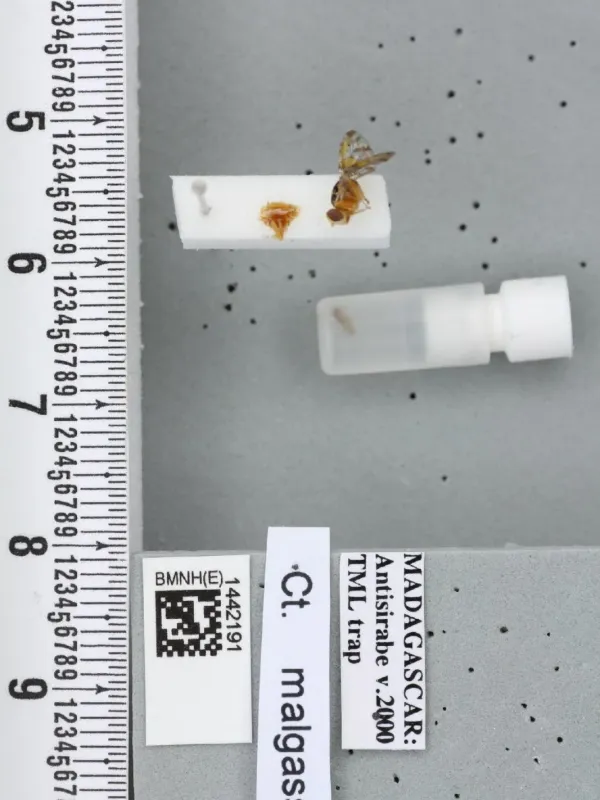
The Malagasy fruit fly (Ceratitis malgassa) is a member of the Tephritidae family, known for its intricate wing patterns. It is a significant pest in several tropical and subtropical regions.
Adults exhibit a distinct appearance, with a body length typically ranging from 4 to 6 mm. Their thorax is often marked with specific patterns, which are vital for taxonomic identification.
The sexual dimorphism is evident, especially in the structure of the abdomen and ovipositor in females. These features are used by specialists to distinguish this species from other fruit flies.
Larvae are typically white or cream-colored, cylindrical, and lack legs. They possess specialized mouth hooks that allow them to consume the pulp of host fruits efficiently.
Eggs are small, elliptical, and are inserted under the fruit skin by the female. Due to their small size, they are extremely difficult to detect without microscopic examination of the host tissue.
What it damages
Ceratitis malgassa affects a wide range of fruit-bearing plants, causing substantial economic losses in agricultural sectors. Common hosts include citrus, mangoes, and coffee plants.
The damage is caused primarily by larvae tunneling through the fruit flesh, rendering it completely inedible and reducing the market value of the produce.
Oviposition punctures created by the female serve as entry points for various secondary pathogens, including bacteria and fungi, which trigger rapid decay of the fruit.
The infestation leads to premature fruit drop, which significantly decreases the overall yield of the affected orchard if left unmanaged.
This species is of great quarantine concern, as its presence can restrict the trade and export of fruits from infested regions to non-infested areas.
When it appears
The life cycle of the Malagasy fruit fly is highly dependent on ambient temperature. Activity typically peaks during the warm, ripening seasons of host fruits.
Multiple generations can occur within a single year, allowing the population to build up rapidly in areas with suitable climate conditions.
Development from egg to adult takes approximately three to six weeks, depending on the environmental conditions like temperature and humidity levels.
Overwintering usually occurs in the pupal stage, with pupae staying in the soil or protected within fallen fruits until the following season.
Adults emerge and begin mating when the conditions are favorable, focusing their activity on young, developing fruits that are suitable for egg-laying.
Signs of infestation
Small, pin-prick size punctures on the fruit surface are the earliest indicators of an infestation, often accompanied by slight discoloration around the puncture site.
Premature ripening and the softening of the fruit flesh are typical signs that larval development is occurring inside the fruit.
Visible decay spots and "weeping" of juice from the fruit surface can appear as internal tissue breakdown progresses due to larval feeding.
The presence of larvae inside a fallen or cut fruit is a definitive sign of an active infestation, confirming the need for immediate pest control measures.
Monitoring with adult-specific attractant traps is the most reliable way to detect the presence of the flies long before visible damage appears on the crop.
Control measures
Effective management of Ceratitis malgassa requires an integrated pest management (IPM) strategy that combines monitoring, cultural, and chemical controls.
Sanitation is a critical cultural practice; collecting and destroying all fallen, infested fruit prevents the larvae from pupating in the soil.
- Deploying pheromone-based traps to monitor and reduce adult populations.
- Tilling the soil beneath the canopy to expose and destroy pupae.
- Using biological agents like parasitoid wasps for long-term population control.
- Targeted insecticide applications during peak activity periods, following regulatory safety guidelines.
- Implementing strict quarantine regulations for the movement of fruit from infested zones.
The use of biological controls offers a sustainable way to suppress populations while minimizing the impact on the local ecosystem and beneficial insects.
Farmers are encouraged to coordinate their pest management activities with neighbors to create buffer zones, which effectively limits the spread of the fly between farms.
Taxonomy
- Latin name
- Ceratitis malgassa
- Order
- Diptera (flies)
- Family
- Tephritidae
- EPPO code
- CERTMA
Discussion
No discussions yet — be the first.