
Mediterranean fruit fly
Ceratitis lentigera
Description
How to identify
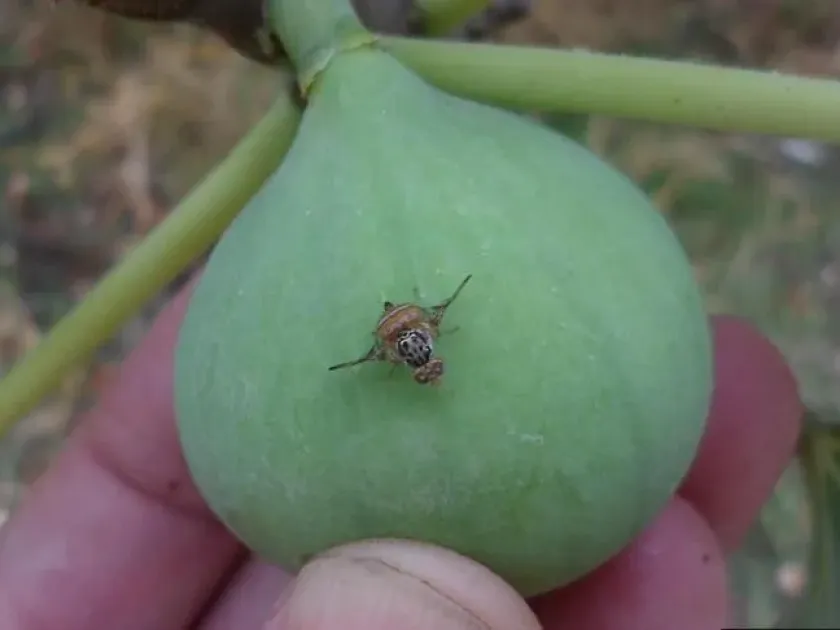
The Mediterranean fruit fly (Ceratitis capitata) is a highly destructive quarantine pest belonging to the family Tephritidae. Adult flies are approximately 4 to 5 mm long, making them slightly smaller than a standard housefly.
The adult body exhibits a distinctive yellow-brown coloration with a complex pattern of black markings on the thorax. Its wings are transparent and marked with yellowish and brownish bands, which are characteristic diagnostic features.
The female fly is equipped with a specialized ovipositor, enabling it to penetrate the skin of fruits to lay eggs deep inside the pulp. The larvae are creamy white, legless, and reach up to 9 mm in length at maturity.
The pupal stage occurs in the soil, protected by brown, barrel-shaped puparia. Depending on environmental conditions, the life cycle of one generation can last from 20 to 45 days, allowing for several generations per season.
Adult flies are primarily diurnal and thrive in temperatures above 16°C. They are most active during the day and prefer the shade of the tree canopy, where they feed on nectar and honeydew.
What it damages
This species is a notorious polyphage, known to infest over 200 species of plants, including a wide array of stone and pome fruits. Citrus, peaches, apricots, figs, and pears are among the most susceptible hosts.
While orchards are the primary target, the fly can also attack vegetable crops such as tomatoes and peppers if they are planted in proximity to infested trees. In uncontrolled environments, it can destroy up to 100% of the crop.
The larvae are responsible for the damage, as they consume the fruit tissue, leading to a breakdown of internal structures. This destruction results in premature fruit ripening, softening, and dropping of the fruit from the tree.
Infested fruit is usually invaded by secondary pathogens, such as fungi and bacteria, causing rapid rot and mold growth. This renders the produce entirely unsuitable for fresh consumption or commercial sale.
Economic damage is twofold: direct loss of harvest and the massive costs associated with quarantine compliance and international trade restrictions. Infested areas are often barred from exporting fresh produce to pest-free regions.
When it appears
The flight season begins as soon as fruits reach the stage of susceptibility, which usually occurs from early summer through late autumn. The presence of the pest depends heavily on local climate conditions and host availability.
Ideal conditions for rapid development are warm, humid weather with temperatures between 20°C and 30°C. Prolonged heatwaves or cold spells can interrupt development or reduce the activity level of the flies.
Overwintering typically happens as a pupa in the upper layers of the soil or as a larva inside hanging or fallen fruit. In greenhouses or tropical regions, the insect can continue its reproductive cycle throughout the entire year.
In warmer Mediterranean climates, the pest can produce 8 to 10 generations annually. This high reproductive potential makes constant surveillance and timely intervention absolutely critical for orchard health.
Integrated monitoring programs use pheromone or food-based traps to track adult fly populations. Once the first flies are detected in the traps, growers must immediately begin implementing established control protocols.
Signs of infestation
The first external signs of infestation are small, dark puncture marks on the fruit skin, which mark the sites where eggs were laid. These spots often develop into small, sunken lesions as the tissue begins to decay.
Upon slicing an infested fruit, one will typically find numerous internal galleries carved by feeding larvae. The pulp will appear watery, discolored, and show clear evidence of rot, often accompanied by a foul odor.
Massive premature fruit drop is a strong indicator of an ongoing infestation. Many of these fallen fruits appear healthy from a distance, but internal inspection will reveal the presence of active larvae.
Adult flies are occasionally visible on leaves or fruit surfaces, but due to their wary nature, they are difficult to observe directly. Growers often rely on trapping data rather than direct sightings to confirm the pest's presence.
- Small dark puncture sites on fruit skin.
- Soft, watery texture of the pulp.
- Premature ripening and fruit drop.
- Presence of creamy white larvae inside the fruit.
- Secondary rot and mold appearing on the surface.
Control measures
The most important control measure is the systematic removal and destruction of all fallen fruit. Burying fallen produce at least 50 cm deep prevents larvae from completing their life cycle and emerging as adults.
Mass trapping using food baits or pheromones is a highly effective way to reduce the local population of flies. This method is environmentally friendly and helps prevent heavy reliance on chemical pesticides.
When infestation levels exceed the economic threshold, targeted insecticide applications are necessary. These must be timed correctly to kill adults before they have the chance to lay eggs inside the fruit.
Biological control methods include the release of parasitic wasps, such as braconids, which specifically target the larval stages. Utilizing such natural enemies can significantly lower pest pressure in sustainable orchards.
Cultural practices, such as tilling the soil beneath trees in the autumn, can help expose overwintering pupae to predators and colder temperatures, thus increasing mortality rates and reducing the initial population for the next season.
source: -
Taxonomy
- Latin name
- Ceratitis lentigera
- Order
- Diptera (flies)
- Family
- Tephritidae
- EPPO code
- CERTLE
Discussion
No discussions yet — be the first.