
Edwards fly
Ceratitis edwardsi
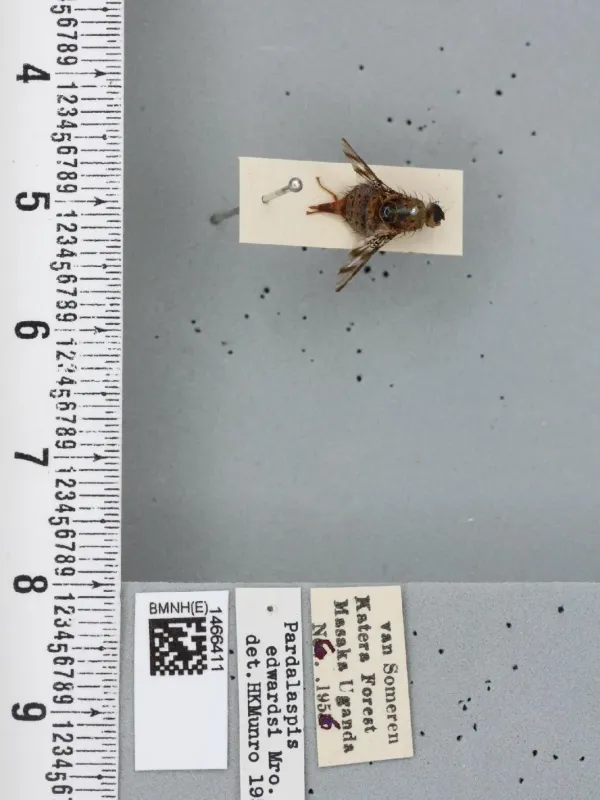
Description
How to identify
The Edwards fly (Ceratitis edwardsi) is a member of the Tephritidae family, also known as fruit flies. These insects are characterized by their patterned wings and specialized behavior related to their life cycle.
Adult flies possess a distinct body structure that allows them to navigate foliage effectively. Their wings feature intricate dark markings, which are a hallmark of the species and help them blend into the environment.
The larvae, which cause the primary damage, are small, legless, and white-to-yellowish in color. They are adapted to feed within the flesh of fruits, making them difficult to detect during the early stages of infestation.
Accurate identification of this species is critical, especially in international trade. Due to their close resemblance to other Ceratitis species, experts often rely on microscopic analysis of morphological features.
Their biological success is largely due to their high reproductive rate and the ability of the adults to feed on various organic sources, including nectar and fruit juices, before finding a suitable site to oviposit.
What it damages
The Edwards fly is a serious agricultural pest known to attack a variety of tropical and subtropical fruit crops. It is highly opportunistic and targets fruits that are approaching maturity.
The damage is primarily caused by the larvae, which burrow into the fruit pulp, rendering the produce inedible. This leads to substantial economic losses for farmers and orchard owners.
Secondary damage often occurs as the puncture wounds made by the female fly provide an entry point for bacteria and fungi, causing rapid decay and rot of the fruit flesh.
Once infested, fruits are often discarded or rejected during the sorting process, which significantly reduces the marketable yield of an entire orchard.
The economic impact extends beyond crop loss, as the presence of this pest triggers strict quarantine protocols, potentially halting the export of fruit from the affected regions.
When it appears
The activity of the Edwards fly is highly dependent on temperature and climate conditions. Warm and humid weather provides the optimal environment for their growth and reproduction.
The life cycle can span several weeks, and during a single growing season, the pest can produce multiple successive generations, leading to exponential growth in population.
Eggs are laid just beneath the skin of the fruit, where they hatch into larvae that immediately begin feeding. This process is fastest during peak summer months when temperatures are highest.
The pupal stage occurs in the soil beneath the host plant, allowing the insect to survive in a dormant state during less favorable weather conditions until the next cycle begins.
Effective management requires tracking the peak activity periods to ensure that control measures are applied when the flies are most vulnerable and active in the canopy.
Signs of infestation
The earliest sign of an infestation is the presence of tiny, dark pin-prick spots on the surface of the fruit, where the female has deposited her eggs.
As the larvae develop, the area around these punctures may begin to soften or show signs of depression. In advanced stages, the fruit may exhibit premature yellowing or discoloration.
A telltale sign of heavy infestation is the premature drop of fruit from the tree. These fallen fruits often contain active larvae that are preparing to exit and enter the soil for pupation.
Monitoring traps placed within the orchard canopy are essential for detecting the presence of adults, which serves as an early warning sign for growers.
If you suspect an infestation, cutting open a fruit often reveals internal cavities and tunnel-like pathways filled with larvae and decay, which confirms the presence of the pest.
Control measures
Control strategies for the Edwards fly should be integrated and proactive. Reliance on a single method is rarely effective; a combination of cultural and chemical practices is necessary.
Sanitation is a cornerstone of control. Regularly collecting and disposing of fallen, infested fruit is vital to breaking the life cycle and preventing the next generation of flies from emerging.
- Installation of specialized lures and bait traps to reduce the population of adult flies.
- Applying biological control agents, including beneficial insects or fungi, to suppress larvae.
- Targeted use of insecticides during the period of maximum adult activity to protect the maturing fruit.
Cultivating the soil beneath the trees can help destroy pupae, which are vulnerable to environmental disruption while dormant in the ground.
Strict adherence to biosecurity and quarantine regulations is essential to prevent the spread of this pest into non-infested areas, ensuring the longevity of local agriculture.
Taxonomy
- Latin name
- Ceratitis edwardsi
- Order
- Diptera (flies)
- Family
- Tephritidae
- EPPO code
- CERTED
Discussion
No discussions yet — be the first.