
Fruit fly Ceratitis ditissima
Ceratitis ditissima
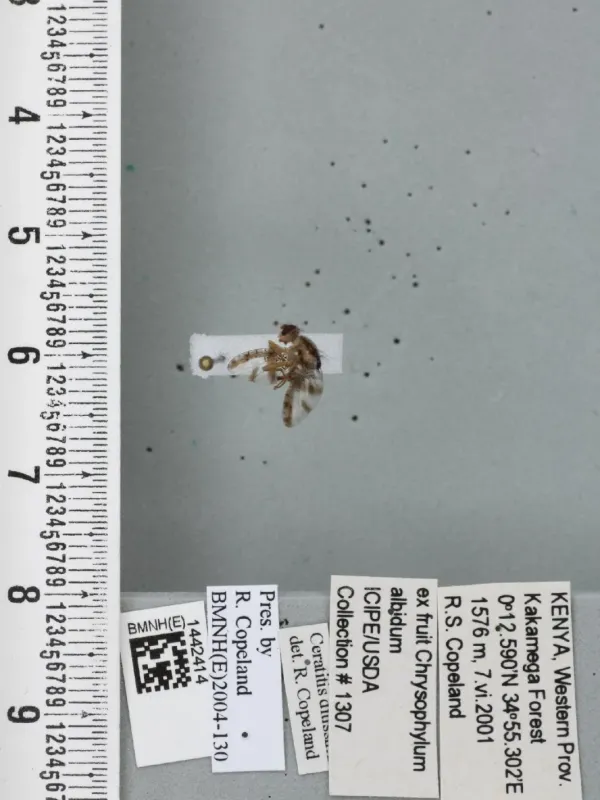
Description
How to identify
Ceratitis ditissima is a member of the Tephritidae family, also known as fruit flies. These insects are easily recognized by their distinct wing patterns and specialized ovipositors, which are adapted for puncturing fruit skin.
The adult flies possess a complex wing venation pattern and body coloration that are vital for diagnostic purposes in field surveys and laboratory identification. They are highly active during warm periods of the year.
Larvae are typically legless and creamy-white, featuring a specific cephalopharyngeal skeleton used to feed on plant tissue. They go through three larval instars before exiting the fruit to pupate.
The life cycle encompasses four main stages: egg, larva, pupa, and adult. Pupation generally occurs in the soil beneath the host plant, making the ground an important reservoir for population survival.
The species exhibits significant plasticity regarding its environment, allowing it to survive in various climatic conditions, which poses a serious challenge for international agricultural trade.
What it damages
Ceratitis ditissima infests a variety of horticultural crops, targeting succulent fruits. It is considered a major economic pest in many regions due to its ability to ruin entire harvests.
Adult females puncture the ripening skin of fruits to lay eggs. Once the larvae emerge, they consume the pulp, causing extensive internal damage that leads to premature ripening and fruit drop.
Beyond direct feeding damage, the larvae facilitate the entry of secondary fungi and bacteria, leading to rot and rendering the produce completely unsalable for the fresh market.
The economic losses are significant, involving both the loss of yield and the high costs associated with quarantine treatments required to prevent the spread of the insect to new areas.
Orchards left untreated can suffer nearly total crop failure as the pest population builds up rapidly throughout the season, affecting both early and late varieties.
Signs of infestation
The most visible signs of infestation are small puncture marks on the skin of the fruit, often surrounded by a dark, discolored halo caused by local tissue softening.
Internally, the fruit shows signs of larval tunneling, where the pulp has turned into a mushy, decomposing mass. This is often accompanied by a distinct, unpleasant fermented odor.
Premature color change, where a single fruit ripens while the rest of the branch remains green, is a strong indicator of larval infestation within that specific fruit.
Small exit holes on the surface of fallen fruit indicate that the mature larvae have already emerged to pupate in the soil, marking the end of the current development cycle.
Increased fruit drop, particularly when the fruit is still firm or only partially ripe, serves as a warning that the orchard requires immediate inspection for fly activity.
Control measures
Effective management of Ceratitis ditissima requires an integrated approach that focuses on population suppression and the prevention of new infestations.
- Utilizing pheromone-based traps to monitor population density and time control efforts correctly.
- Sanitation practices, such as the daily removal and burial of fallen infested fruit, are crucial for stopping the development cycle.
- Application of selective insecticides at specific stages of the fly's life cycle, respecting pre-harvest safety intervals.
- Implementing biological control measures by releasing specialized parasitoids that target the larval stage of the fruit fly.
Soil management, including tillage around the base of trees, helps disrupt the pupation process and exposes the pupae to environmental stress or predation by soil insects.
Strict adherence to phytosanitary regulations is necessary during the transportation of fruit to prevent the accidental introduction of this pest into non-infested regions or countries.
Taxonomy
- Latin name
- Ceratitis ditissima
- Order
- Diptera (flies)
- Family
- Tephritidae
- EPPO code
- CERTDT
Discussion
No discussions yet — be the first.