
Cuthbertson fruit fly
Ceratitis cuthbertsoni
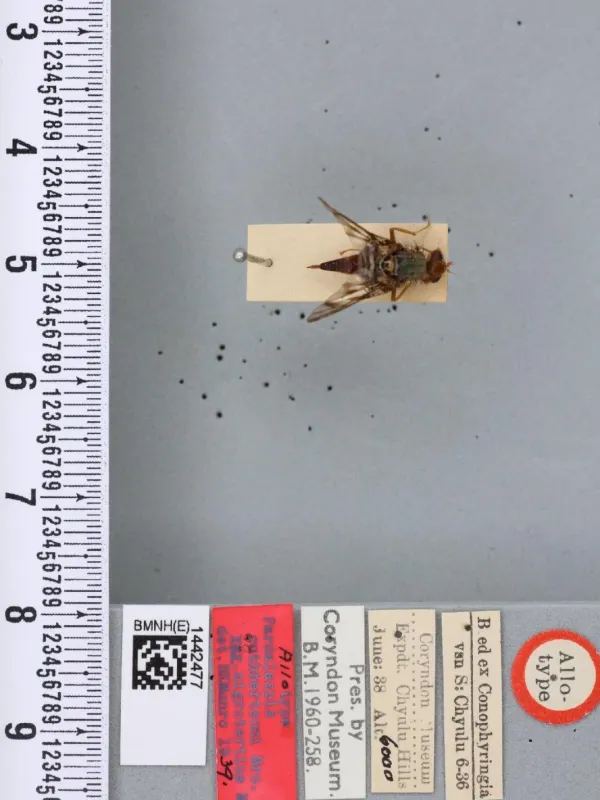
Description
How to identify
The Cuthbertson fruit fly (Ceratitis cuthbertsoni) belongs to the Tephritidae family, a group of true fruit flies known for their complex wing patterns. These markings are essential for distinguishing this species from other related fruit flies.
Adult flies are relatively small, typically measuring between 4 to 6 millimeters in length. Their coloration, ranging from yellowish to brownish, allows them to blend into the foliage and fruit surfaces of host plants.
The life cycle encompasses egg, larval, pupal, and adult stages. Females possess an ovipositor, an organ used to pierce the skin of ripening fruits and deposit eggs directly into the flesh.
Larvae are cream-colored, legless, and cylindrical. They undergo three instars within the fruit, feeding extensively on the pulp, which leads to the structural decay of the infested agricultural product.
Pupation primarily occurs in the soil beneath the host plant, though it can also take place inside mummified fruit if the environment is suitable. This stage is critical for the survival of the population during unfavorable conditions.
What it damages
Ceratitis cuthbertsoni primarily infests various fleshy fruits, causing significant yield losses. The feeding activity of the larvae destroys the inner tissue of the fruit, rendering it inedible.
Infested fruits frequently soften and show symptoms of rot due to the breakdown of cellular walls and the subsequent introduction of secondary microbial pathogens. This often leads to total crop loss.
Premature fruit drop is a common symptom. Fruits fall to the ground before maturity because of the internal damage caused by larval feeding, making them commercially unviable for harvest or storage.
The economic impact of this pest includes reduced yield, increased labor costs for sanitation, and potential trade restrictions on fruits exported from infested areas.
Given the reproductive potential of the Cuthbertson fruit fly, a single infestation can escalate rapidly during the growing season if monitoring and control measures are not implemented promptly.
When it appears
The activity of these flies begins in the spring when temperatures rise sufficiently. The emergence of adults often coincides with the setting of early fruit crops in the orchard.
Multiple generations can occur throughout the growing season, particularly in warm regions. This extended period of activity necessitates ongoing monitoring to protect developing crops.
Peak infestation risk occurs during the ripening stage of fruits. High sugar content in the fruit makes them highly attractive to ovipositing females, leading to increased pressure on orchards.
Environmental factors like humidity and heat significantly influence the development rate of each generation. Stable, warm climates generally support higher populations of the pest.
As winter approaches, the flies enter a dormant phase. Pupae overwinter in the soil, ensuring the persistence of the species into the next growing cycle.
Signs of infestation
The earliest signs of infestation are minute puncture wounds on the fruit skin, known as sting marks. These are often accompanied by subtle skin discoloration or slight depressions in the fruit surface.
When the fruit is sliced open, the presence of larval tunnels is clearly visible. The surrounding pulp usually turns brown and emits a distinctive odor associated with decay.
Excessive premature fruit drop is a strong indicator of an active infestation. If fallen fruits are inspected, one can usually find larvae or emergence holes where mature larvae have exited the fruit.
In cases of severe infestation, the fruit becomes deformed and soft to the touch. The internal integrity is compromised, and the fruit may collapse under light pressure.
Monitoring with pheromone or bait traps is a reliable way to detect the presence of adult flies. Early detection is crucial, as it allows for the implementation of control tactics before widespread egg-laying begins.
Control measures
Orchard sanitation is the primary defense. Collecting and disposing of fallen fruit prevents larvae from reaching the soil to pupate, effectively disrupting the pest's life cycle.
Pheromone traps serve as an essential tool for both monitoring populations and mass trapping adults to reduce the overall number of flies capable of reproducing in the orchard.
Chemical control involving approved insecticides can be utilized during peak activity periods. It is critical to strictly follow labels and pre-harvest intervals to ensure safety.
Biological control options, including the use of entomopathogenic fungi or beneficial insects, can help suppress populations without the heavy reliance on broad-spectrum chemical treatments.
- Implementing soil cultivation to disrupt pupation sites
- Using protective exclusion netting on fruit trees
- Regular pruning to improve spray coverage and air circulation
- Adhering to strict quarantine protocols for fruit movement
Taxonomy
- Latin name
- Ceratitis cuthbertsoni
- Order
- Diptera (flies)
- Family
- Tephritidae
- EPPO code
- CERTCU
Discussion
No discussions yet — be the first.