
Marula fruit fly
Ceratitis cosyra
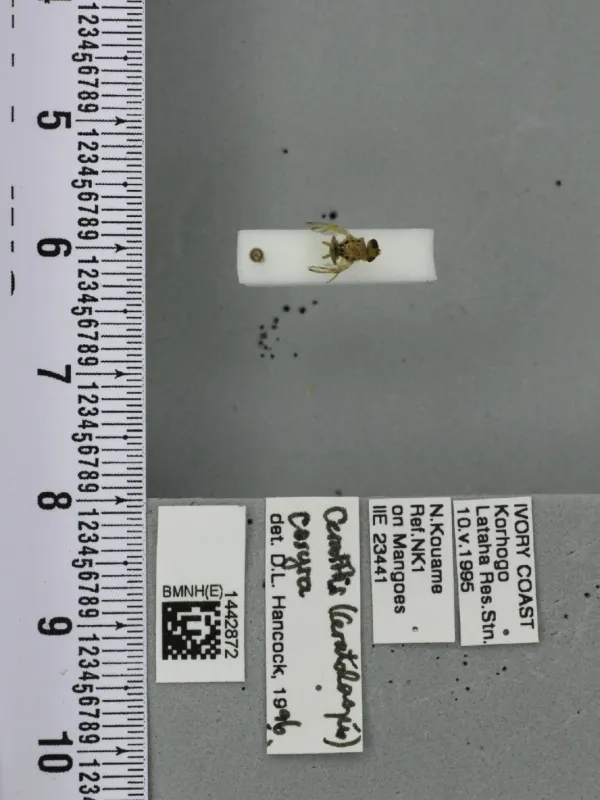
Description
How to identify
The marula fruit fly (Ceratitis cosyra) is a member of the Tephritidae family within the order Diptera. Like other fruit flies, it is characterized by intricate, patterned wings that serve as a primary identification feature.
Adult flies typically measure 5–6 mm in length. Their appearance is distinct due to the specific color patterns on the thorax and the abdominal markings, which allow trained professionals to differentiate them from the Mediterranean fruit fly.
The larvae are typical of the family: legless, cylindrical, and cream-colored. They live and feed exclusively within the pulp of the host fruit, progressing through several larval stages before pupation.
Pupation generally occurs in the soil beneath the host tree. The puparia are hard, brown, and barrel-shaped, providing protection against environmental fluctuations and some predatory insects.
The life cycle is closely synchronized with the ripening period of host fruits, allowing the species to exploit seasonal abundance in tropical and subtropical regions effectively.
What it damages
The primary crop damaged by this pest is mango. In many African countries, the marula fruit fly is a major economic threat that significantly restricts the international trade of mangoes.
Besides mangoes, the fly targets the fruit of the marula tree, which serves as a natural host. It may also infest various other tropical fruits when preferred hosts are scarce.
Economic damage is severe because the fly can infest nearly 100% of the fruit crop if management practices are neglected, rendering the entire harvest unsellable and unfit for consumption.
Damage symptoms include internal rotting and breakdown of the fruit tissue caused by larval feeding, which facilitates the entry of secondary fungi and bacteria.
Due to its high invasive potential, it is classified as a quarantine pest in many regions, necessitating rigorous inspection protocols for all fresh fruit exports from affected areas.
Signs of infestation
The most common sign of infestation is the presence of small puncture marks on the fruit skin, known as oviposition stings. These marks are often surrounded by localized tissue necrosis.
As larvae feed, the interior of the fruit turns into a soft, decaying mass. Premature fruit drop is a reliable indicator that an infestation has reached a critical stage.
Cutting open a suspect fruit will reveal the presence of larvae tunneling through the flesh, often accompanied by the darkening of the interior tissue.
Adult monitoring traps, baited with food-based lures or specific pheromones, are the primary diagnostic tool used in orchards to detect the presence and population density of the flies.
Secondary signs include the appearance of larvae emerging from fallen fruit to enter the soil, which should alert growers to the immediate need for sanitation measures.
Control measures
Orchard sanitation is the cornerstone of control. Regularly collecting and destroying fallen or infested fruit prevents the next generation of flies from emerging from the soil.
Bait sprays, which combine a protein-based attractant with a low-dose insecticide, are highly effective as they target both males and females while minimizing broad-spectrum chemical use.
Physical protection, such as bagging individual fruits on the tree, provides an effective barrier against female flies attempting to lay eggs, particularly in smaller orchards.
Maintaining strict quarantine protocols is essential to prevent the spread of the fly into uninfested areas through the movement of contaminated fruit.
- Deployment of pheromone-based monitoring traps.
- Strict removal and disposal of infested fruit.
- Use of protein bait stations.
- Biological control using entomopathogenic fungi.
Taxonomy
- Latin name
- Ceratitis cosyra
- Order
- Diptera (flies)
- Family
- Tephritidae
- EPPO code
- CERTCO
Discussion
No discussions yet — be the first.