
Cola fruit fly
Ceratitis colae
Description
How to identify
The Cola fruit fly (Ceratitis colae) belongs to the order Diptera and the family Tephritidae. It is a highly specialized pest that has evolved specifically to infest fruits of the Cola genus.
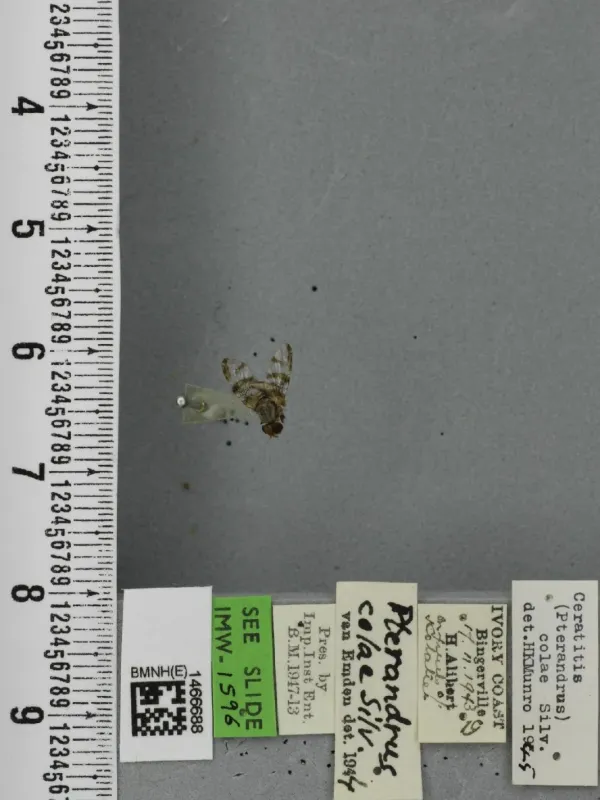
Adult insects are characterized by a colorful, patterned wing structure typical of fruit flies, which aids in camouflage within the dense foliage of kola trees.
The biological cycle of this fly is strictly synchronized with the fruiting phenology of kola trees, ensuring the larvae have a consistent food source throughout their developmental stages.
Females possess a sclerotized ovipositor, which allows them to penetrate the tough outer pericarp of kola nuts to deposit eggs directly into the nourishing pulp.
Accurate identification of Ceratitis colae requires expert morphological analysis, as it can often be confused with other related tephritid species in the same ecological niche.
What it damages
The primary hosts of this pest are economically significant species such as Cola nitida and Cola acuminata, which are staples in various tropical agricultural systems.
Larvae are responsible for the direct damage; they create complex internal galleries while feeding on the seeds, effectively rendering the kola nuts useless for commercial export or local consumption.
Secondary infections, such as fungal pathogens and bacterial rots, often infiltrate the feeding sites created by the larvae, leading to rapid tissue decay and total loss of fruit quality.
In neglected orchards, the infestation levels can be devastating, causing yield losses that can exceed 75% of the total annual harvest if not managed properly.
The damage often remains hidden until the later stages of larval development, making early detection a major challenge for plantation managers.
Signs of infestation
The earliest sign of infestation is the presence of minute oviposition scars on the surface of the kola nut, indicating where the female has inserted her eggs.
As larvae develop, external signs such as soft, discolored spots on the skin of the fruit begin to appear, reflecting the decay of internal tissues.
Premature fruit drop is a strong indicator of an active infestation, as infested nuts often abscise earlier than healthy ones due to the internal physiological stress caused by larval feeding.
Dissection of suspect fruits typically reveals extensive tunneling and the presence of larvae or their frass, which confirms the diagnosis of Ceratitis colae.
Observing a high number of flies resting on the fruit surface during the early morning or late afternoon suggests a period of active breeding and impending risk of damage.
Control measures
Strict orchard sanitation is the most effective control strategy, involving the regular collection and disposal of fallen or infested fruits to break the life cycle of the pest.
Implementing a monitoring program with food-based traps or synthetic attractants is crucial for timing chemical interventions, which should be applied before the eggs are laid.
Biological control methods, focusing on the use of parasitoid wasps and entomopathogenic fungi, are becoming increasingly popular for sustainable kola nut production.
Soil management practices, such as clearing debris under tree canopies, can disrupt the pupation process, as many larvae drop to the ground to undergo metamorphosis.
- Regular monitoring using McPhail traps.
- Prompt destruction of infested plant materials.
- Targeted application of insecticides according to local agricultural regulations.
Taxonomy
- Latin name
- Ceratitis colae
- Order
- Diptera (flies)
- Family
- Tephritidae
- EPPO code
- CERTCL
Discussion
No discussions yet — be the first.