
Fruit fly Ceratitis caetrata
Ceratitis caetrata
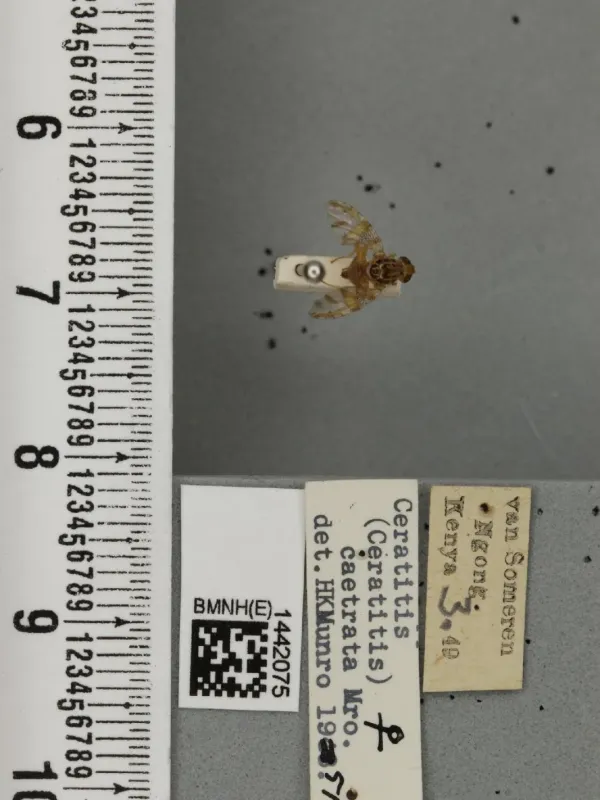
Description
How to identify
Ceratitis caetrata is a member of the Tephritidae family within the order Diptera. This fruit fly species is characterized by its specific morphological traits, adapted to life in tropical and subtropical orchard ecosystems.
The adult fly is small, typically measuring between 5 and 7 mm in length. Its wings feature a distinctive pattern of dark brown or black spots and bands, which serve as camouflage against the skin of host fruits.
The head is highly mobile with large, iridescent compound eyes. The body color ranges from yellowish-brown to dark brown, allowing the insect to blend into the bark and foliage of host trees.
The larvae are typical of the order: cylindrical, legless, and white or cream-colored. Reaching up to 10 mm in length, they possess specialized mouth hooks to feed on fruit pulp.
Pupation occurs primarily in the soil, where the insect develops inside a hard, barrel-shaped puparium. This structure provides significant protection against environmental fluctuations and soil-dwelling predators.
What it damages
This species is a significant polyphagous pest, capable of infesting a wide array of fruit crops. Its economic impact is substantial due to its ability to spoil fruit quality before harvest.
Common hosts include citrus fruits, mangoes, peaches, and various stone fruits. Larvae burrow into the fruit, creating internal tunnels and destroying the succulent tissue.
Infestation usually leads to rapid fruit rot, as the damage caused by larvae facilitates the entry of secondary pathogens like fungi and bacteria. The affected fruit eventually drops from the tree prematurely.
In cases of severe infestation, the pest can ruin a large percentage of the harvest. The economic burden includes lost fruit production and the cost of necessary eradication measures.
The persistence of the pest in an orchard environment makes it a serious threat to fruit production. Continuous monitoring is required to prevent widespread outbreaks that could lead to complete crop failure.
When it appears
The life cycle of Ceratitis caetrata is highly dependent on ambient temperature and humidity. In favorable climates, the fly can complete multiple generations within a single season.
The female uses her ovipositor to insert eggs beneath the skin of ripening fruit. This behavior ensures that larvae have immediate access to food upon hatching, which takes only a few days.
Larval development takes about 2 to 3 weeks. After reaching maturity, the larvae exit the fruit and drop into the soil to pupate, completing the cycle in approximately one month.
Overwintering typically takes place in the pupal stage, buried in the soil or protected under debris. The emergence of adults in spring is closely synchronized with the flowering and fruiting cycles of host trees.
Warm, humid conditions accelerate the growth rate of the population, making summer months the most dangerous period for orchards. Cold weather can significantly curb reproduction and population growth.
Signs of infestation
The first indication of an infestation is the appearance of small, needle-like punctures on the surface of the fruit skin, known as sting marks. These are created by the female during oviposition.
Internal damage is manifested by softened, watery spots on the fruit surface. Cutting open an infested fruit often reveals tunnels filled with larval excrement and decaying pulp tissue.
Premature ripening and premature fruit drop are clear indicators of larval activity. Fruits that appear healthy on the outside may be hollowed out and infested internally.
Adult flies can sometimes be observed resting on tree leaves or attracted to food sources. However, they are easily startled and often difficult to spot without the use of specialized bait traps.
Foul odors emitted from fruit hanging on the tree are common signs of advanced decay. This odor often attracts other opportunistic insects to the site of the damage.
Control measures
Strict quarantine and phytosanitary regulations are the first lines of defense. Preventing the movement of fruit from infested zones is essential to protect uninfected areas.
Sanitation practices, such as the regular collection and deep burial of fallen fruit, are highly effective. Burying waste at least 50 cm deep kills developing larvae and breaks the life cycle.
The deployment of pheromone-based or food-based traps is a standard method for monitoring and suppression. These traps help estimate the pest density and significantly reduce the adult population.
Chemical control using systemic or contact insecticides is often necessary in high-pressure scenarios. Applications must be timed according to the lifecycle stages and respect safety harvest intervals.
Integrated Pest Management (IPM) incorporates biological agents such as parasitic wasps that target the larvae. Using natural enemies contributes to a sustainable balance within the orchard ecosystem.
Taxonomy
- Latin name
- Ceratitis caetrata
- Order
- Diptera (flies)
- Family
- Tephritidae
- EPPO code
- CERTCE
Discussion
No discussions yet — be the first.