
Anona fruit fly
Ceratitis anonae
Description
How to identify
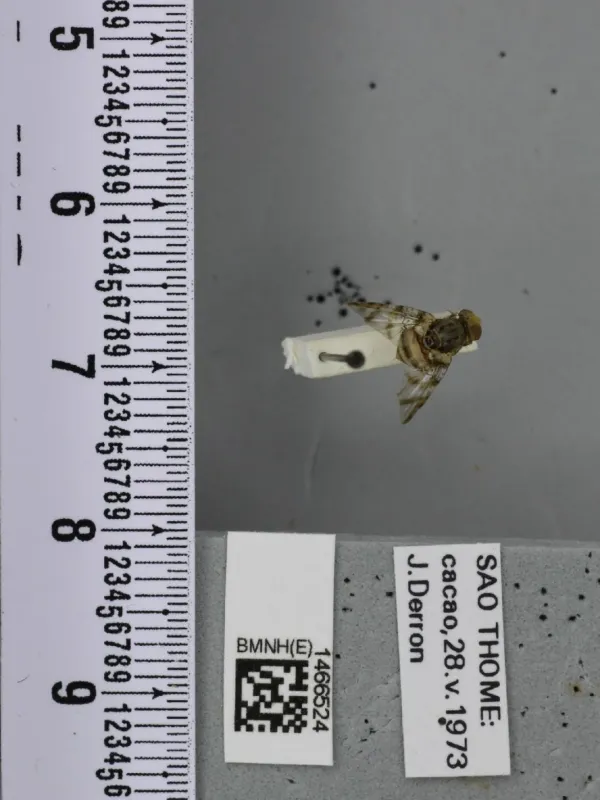
The Anona fruit fly (Ceratitis anonae) is a member of the Tephritidae family, also known as the fruit fly family. It is a highly significant agricultural pest that is morphologically similar to other Ceratitis species but can be distinguished by specific wing patterns and thoracic markings.
The adult fly typically measures about 4–6 mm in length. Its body is yellowish-brown, and the wings display a distinct reticulated (net-like) pattern. This camouflage helps it blend into the foliage and fruit surfaces, making it difficult to spot in the field.
The female fly is equipped with a sharp, elongated ovipositor. This organ allows her to penetrate the skin of ripening fruits and deposit eggs directly into the soft tissue, where the emerging larvae will have immediate access to food.
Larvae are legless, creamy-white maggots that go through three larval instars. As they feed, they grow in size and move deeper into the fruit, causing significant internal damage that is often invisible from the outside until the infestation is advanced.
Pupation typically occurs in the soil beneath the host tree. Once the larvae complete their development, they exit the fruit and drop to the ground, where they burrow into the top layers of soil to transform into the pupal stage.
What it damages
Ceratitis anonae is a polyphagous pest, meaning it attacks a wide variety of plant hosts. It is particularly notorious for damaging members of the Annonaceae family, such as custard apples and soursops.
Beyond annonaceous fruits, this fly can infest other tropical and subtropical crops, including mango, coffee, and certain citrus varieties. Its ability to switch hosts allows it to maintain populations throughout the year in favorable climates.
The primary economic damage is caused by the larvae feeding inside the fruit. This process destroys the pulp, leading to fruit decay and rendering the produce unmarketable for both domestic consumption and international trade.
Infested fruits often exhibit premature ripening, softening, and eventually dropping from the tree. Even if a fruit appears healthy, the presence of larvae inside triggers rapid degradation, making the produce highly perishable.
Secondary damage occurs when the entry and exit wounds created by the fly become focal points for fungal and bacterial infections. This leads to complete fruit rot, which can spread to adjacent healthy fruits in the cluster.
Signs of infestation
The earliest signs of infestation are tiny, pinprick-like holes on the surface of the fruit where the female has inserted her ovipositor. Sometimes, these spots may show localized discoloration or small depressions.
As the larvae feed, the fruit structure begins to break down. If pressed gently, the skin over the infested area may feel spongy or sunken. Internal rotting often produces a sour smell due to fermentation.
When the larvae are ready to pupate, they create exit holes in the fruit skin. These small, circular holes are a definitive indicator of an active or recent infestation, signaling that the larvae have left the fruit to enter the soil.
Premature fruit drop is a strong warning sign for growers. If numerous young, unripe fruits are found under the tree canopy, it is highly likely that a fruit fly infestation is currently occurring.
Monitoring traps using specific attractants can detect the presence of adult flies before visible symptoms appear on the fruit. This allows for proactive management to protect the upcoming harvest.
Control measures
Sanitation is the most critical step in managing the Anona fruit fly. Regularly collecting and disposing of all fallen, damaged, and infested fruit helps break the lifecycle by preventing larvae from pupating in the soil.
Attractant-based trapping systems are used both for monitoring populations and as a direct control method. By using protein-based baits or specific pheromones, growers can significantly reduce the number of breeding adults.
Chemical control, when necessary, involves bait sprays. These target the adults by combining a low-dose insecticide with an attractant, which reduces the amount of pesticide needed and protects beneficial insect populations.
Biological control involves the use of parasitoid wasps that lay their eggs inside the fly larvae. Encouraging these natural predators in orchards can help keep fly populations below the economic injury level.
- Prune trees regularly to improve airflow and expose soil to sunlight.
- Bag individual fruits with protective mesh or paper to prevent egg-laying.
- Maintain strict quarantine protocols for moving fruit out of infested areas.
- Rotate host crops or mix with non-host species to disrupt pest cycles.
Taxonomy
- Latin name
- Ceratitis anonae
- Order
- Diptera (flies)
- Family
- Tephritidae
- EPPO code
- CERTAN
Discussion
No discussions yet — be the first.