
Horned treehopper
Centrotus cornutus
Description
How to identify
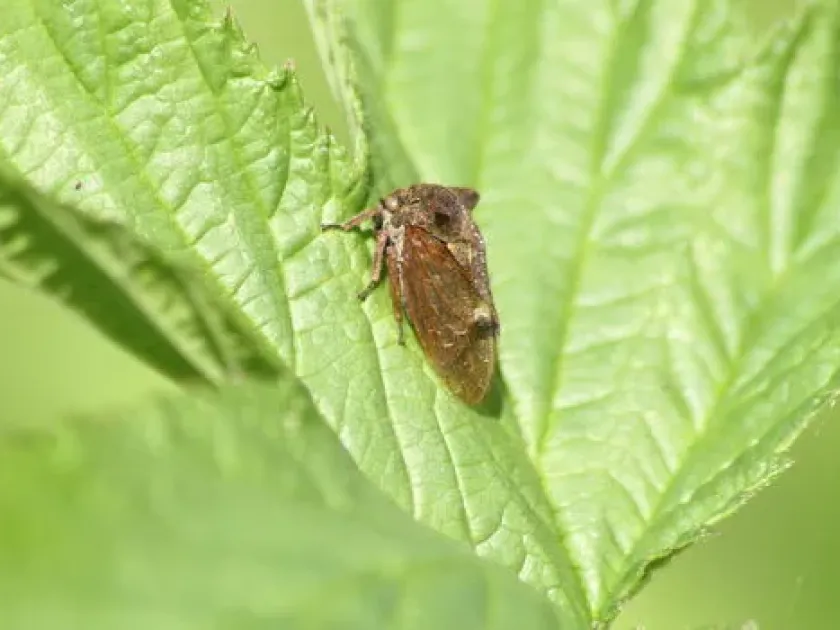
The horned treehopper (Centrotus cornutus) belongs to the order Hemiptera and the family Membracidae. This insect is easily recognized by the large, horn-like projection on its pronotum, which extends backward over the scutellum.
The adult insect is typically dark brown or black in color, covered with short, fine hairs. It possesses strong hind legs, allowing for quick, powerful leaps when disturbed, which makes them difficult to capture.
Adults have fully developed wings and are capable of active flight, moving between host plants during the summer months to feed and reproduce, often favoring sunny, warm locations.
The life cycle involves egg, nymph, and adult stages. Nymphs often lack the pronounced dorsal horns seen in adults and are less mobile, typically staying on specific parts of the host plant.
These insects are highly adapted to woody plants and are frequently found on the edges of forests or in orchards where they can find sufficient sap resources to thrive throughout the season.
What it damages
The horned treehopper feeds on a wide range of fruit and ornamental woody plants. Key hosts include apple trees, pears, plums, and various species of berry shrubs that are common in home gardens.
Wild shrubs such as hawthorn, wild rose, and blackberry serve as primary reservoirs, allowing the pest to persist in the environment and migrate to commercial or private fruit crops.
Both nymphs and adults feed by inserting their mouthparts into the bark of young shoots to extract sap. This feeding process causes localized tissue damage and can lead to structural weakening of the twigs.
The plant's reaction to this constant sap extraction includes stunted growth, curling of leaves, and a general decline in the vitality of young, developing branches throughout the spring and summer.
In severe cases, the damage caused by these insects can render young saplings susceptible to secondary infections, such as fungal pathogens, which further degrade the tree's overall health and productivity.
Signs of infestation
The most reliable sign of a treehopper infestation is the presence of small puncture marks on the bark of young shoots, which may eventually develop into visible scars or localized necrosis.
Plants affected by these insects often display signs of stress, such as yellowing leaves or premature leaf drop, particularly on the shoots where the insects have been feeding extensively.
Ants are frequently observed on branches infested with treehoppers, as they are attracted to the honeydew produced by the nymphs, acting as a clear indicator of the presence of sucking insects.
When inspecting trees, one can often spot the adults resting motionless on the stems, where their shape and color allow them to blend in perfectly with the surrounding bark.
A reduction in annual shoot growth, coupled with visible distortions in the branches, is a strong indicator that the population density of the pest has reached a level requiring intervention.
Control measures
Integrated pest management strategies are essential for controlling the horned treehopper. Sanitizing the garden by pruning and destroying infested twigs is a primary step in reducing the population.
Maintaining clear surroundings by removing weeds in the orchard floor prevents these insects from finding alternative food sources, effectively limiting their ability to survive and reproduce.
When necessary, systemic insecticides applied during the peak period of nymph activity can provide effective control by neutralizing the insects while they feed on the sap of the host plants.
Encouraging natural predators such as ladybugs, lacewings, and insectivorous birds can help maintain the population of treehoppers at a manageable level without relying solely on chemical treatments.
Early season monitoring and preventative spraying before bud break are crucial for minimizing the risk of a widespread outbreak and protecting the vigor of the garden plants throughout the year.
Taxonomy
- Latin name
- Centrotus cornutus
- Order
- Hemiptera (bugs, aphids, leafhoppers)
- Family
- Membracidae
- EPPO code
- KNTRCO
Discussion
No discussions yet — be the first.