
Blackcurrant gall mite
Cecidophyopsis
Description
How to identify
The blackcurrant gall mite (Cecidophyopsis ribis) is a microscopic pest classified within the family Eriophyidae. These mites are so small that they are invisible to the naked eye, measuring only 0.2–0.3 mm in length.
They have a worm-like, translucent, or whitish body and possess only two pairs of legs, which distinguishes them from larger spider mite species.
Due to their microscopic size, identification is primarily based on the specific symptoms they cause on the host plant rather than observing the mites themselves.
These pests are highly specialized, spending almost their entire life cycle protected inside the buds of the host plant, which provides them with a stable microclimate.
The mite reproduces rapidly within the bud, forming large colonies that eventually cause the characteristic swelling associated with their presence.
What it damages
Blackcurrant (Ribes nigrum) is the primary host for this pest. While other species like red or white currants can be affected, they show much higher resistance.
By feeding on the tissues inside the buds, the mites disrupt normal plant growth, preventing the formation of healthy leaves and flower clusters.
The mite is the sole vector for the reversion virus, a serious disease that renders the plant sterile, causing the flowers to become distorted and unproductive.
Heavy infestation leads to a significant decline in fruit yield and can eventually cause the entire bush to weaken and die over several seasons.
The damage is cumulative, as the population grows every year, spreading from infested buds to healthy ones throughout the growing season.
When it appears
The life cycle of the gall mite is synchronized with the phenology of the currant bush, starting with overwintering inside the swollen buds.
In spring, as the buds begin to swell and open, the mites migrate from the old, infested buds to the newly developing shoots and buds.
This migration period is the most vulnerable phase of the mite's life cycle and the most critical time for applying control measures.
During the summer, multiple generations of mites are produced inside the newly colonized buds, continuously expanding the infestation.
As the season comes to an end, the mites settle inside the developing buds, where they will remain dormant until the following spring.
Signs of infestation
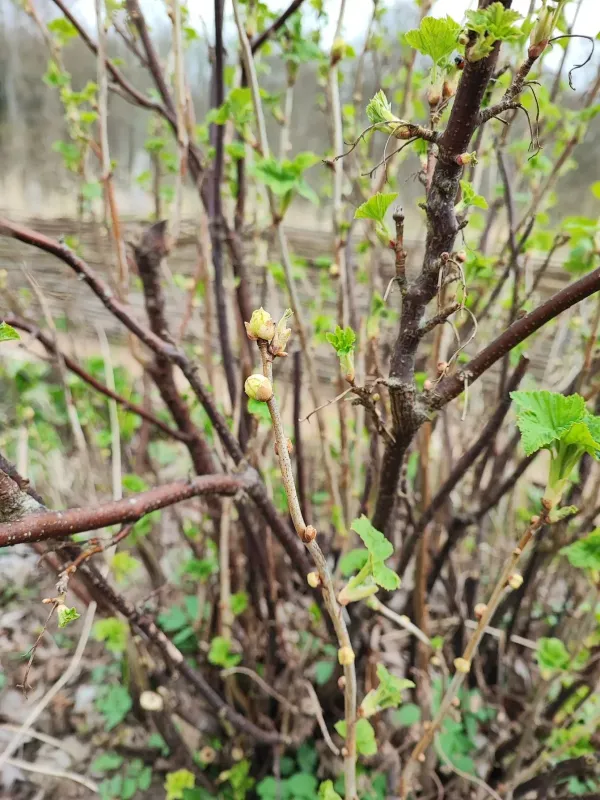
The most distinctive sign of infestation is the presence of enlarged, rounded buds known as "big buds," which resemble miniature heads of cabbage.
Unlike healthy, pointed buds, these infested ones fail to produce normal growth and often remain dormant or produce stunted, deformed leaves.
Plants affected by the reversion virus exhibit leaves with fewer lobes and serrations, accompanied by sterile, purple-colored flowers.
The bushes may look uneven, with some branches lacking leaves or showing delayed growth compared to healthy parts of the plant.
Careful inspection during the dormant winter period is the easiest way to detect these swollen buds before the migration begins in the spring.
Control measures
The most effective mechanical control is the systematic manual removal and destruction of all big buds before they open in early spring.
When a bush shows severe signs of infestation or virus symptoms, it should be removed entirely and burned to prevent the spread of mites to healthy plants.
Always use certified, mite-free nursery stock when planting new currants to ensure the long-term health of your garden.
Chemical control can be attempted using acaricides specifically during the peak migration period, though it requires multiple applications for efficacy.
Encouraging vigorous plant growth through balanced nutrition and proper pruning helps the bushes tolerate and resist mite pressure more effectively.
Taxonomy
- Latin name
- Cecidophyopsis
- Order
- Mites
- Family
- Eriophyidae
- EPPO code
- CECPSP
Discussion
No discussions yet — be the first.