
Catocala
Catocala
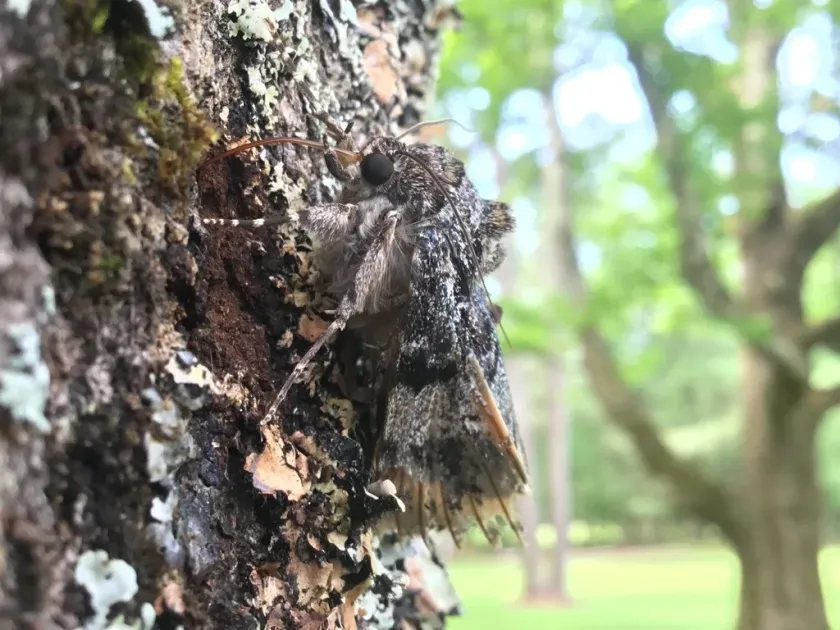
Description
How to identify
Catocala, commonly known as underwing moths, belongs to the family Erebidae. These large moths, with wingspans often exceeding 80–100 mm, are known for their striking contrast between camouflaged forewings and vivid, brightly colored hindwings.
The forewings typically feature intricate patterns of gray, brown, and black, which perfectly mimic the texture and color of tree bark. This camouflage makes them virtually invisible while they are resting on tree trunks during the day.
When disturbed, Catocala moths suddenly expose their hindwings, which are frequently banded with red, orange, yellow, or blue. This "flash" coloration is a defense mechanism intended to startle potential predators like birds.
The larvae, or caterpillars, are large and cryptically colored to blend in with the twigs and branches of their host plants. They often possess specialized tubercles and skin structures that enhance their mimicry of wood surfaces.
Their life cycle typically consists of a single generation per year, with the species overwintering as eggs. The eggs are laid in crevices of the bark of host trees, providing protection from harsh winter temperatures.
What it damages
The primary economic damage is caused by the adult moths. Unlike many other moth species, Catocala possess a strong, sclerotized proboscis capable of piercing the skin of ripening fruits, especially apples, pears, and stone fruits.
By piercing the fruit to feed on the juices, the moths create entry points for secondary pathogens. Fungi and bacteria easily colonize these wounds, leading to rapid rot and decay of the fruit while it is still on the tree.
The larvae feed on the foliage of various deciduous trees, including oaks, poplars, and willows. While their leaf-feeding typically does not kill the tree, significant defoliation can weaken the tree, especially if coupled with other environmental stressors.
In orchards located near woodland edges, Catocala outbreaks can result in severe damage to the crop. The intensity of the damage is often proportional to the density of the surrounding natural forest, which acts as a reservoir for the population.
Damaged fruits are unfit for commercial sale or long-term storage due to the internal rot that develops from the piercing points, significantly reducing the market value of the harvest for fruit growers.
When it appears
Adult moths are typically active from late summer through autumn, often ranging from July to September. This period aligns with the maturation of many fruit varieties, making the crop highly attractive to the feeding moths.
Larval development occurs in the spring and early summer, coinciding with the flush of new foliage. During this time, the caterpillars are most active in consuming leaves to fuel their rapid growth before pupation.
Temperature fluctuations can significantly impact the timing of the moth's emergence and the duration of their life stages. Warmer summers may lead to earlier appearances of adults in the orchard environment.
The autumn season serves as the crucial period for reproduction, as mated females seek suitable host trees to deposit their eggs. These eggs remain in a state of diapause through the winter, awaiting the return of spring temperatures.
Monitoring the seasonal activity of Catocala using pheromone or light traps allows growers to predict potential damage periods and implement timely protection measures before the fruit ripening phase reaches its peak.
Signs of infestation
The most diagnostic sign of a Catocala infestation is the presence of small, deep punctures on the surface of ripening fruit. These punctures are often accompanied by darkening or soft, rotting patches of tissue.
Observing the tree trunks during daylight hours may reveal resting moths, though they are difficult to spot due to their bark-mimicking forewings. Sudden movement near the tree often triggers them to fly, exposing their bright hindwings.
- Small piercing wounds on maturing orchard fruit.
- Presence of fruit rot originating from puncture points.
- Evidence of leaf tissue consumption on trees bordering forests.
- Moths visible near artificial light sources at night.
The detection of large, colorful moths around the orchard at night is a strong indicator of their presence. Light traps are the standard tool used by professionals to quantify the population density in the field.
Regular inspections of the orchard floor for fallen, rotting fruit can also provide clues about the extent of the damage, as many pierced fruits will drop prematurely due to the progression of fungal infections.
Control measures
Sanitation is a cornerstone of management: removing fallen, rotting fruit daily prevents the buildup of secondary pathogens and denies a feeding source to other pests that might coexist with Catocala.
Using light traps in the orchard during the adult activity phase is an effective non-chemical control method. It helps monitor population levels and reduces the number of mating adults in the vicinity of the trees.
Where infestation levels are high, targeted insecticide applications may be necessary. These should be timed according to monitoring data and applied in the evening when adult moths are active and feeding.
Biological controls, such as the use of Bacillus thuringiensis (Bt) products, can be effective against the larval stage if significant defoliation is observed on the trees earlier in the season.
Maintaining clear orchard borders and managing surrounding vegetation can help reduce the influx of adults from adjacent wooded areas, acting as a preventative measure for long-term orchard health.
Taxonomy
- Latin name
- Catocala
- Order
- Lepidoptera (butterflies)
- Family
- Erebidae
- EPPO code
- CATLSP
Discussion
No discussions yet — be the first.