
Casama
Casama
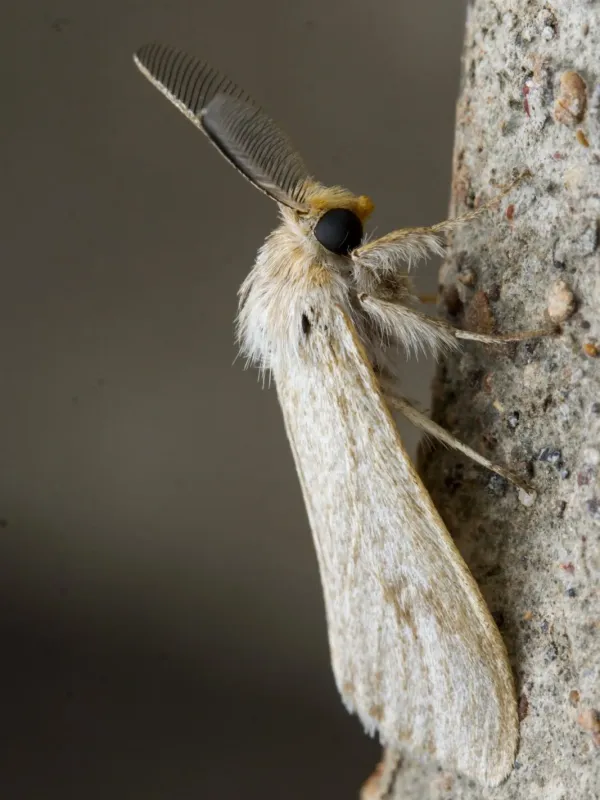
Description
How to identify
The Casama genus belongs to the Erebidae family, order Lepidoptera. Adult moths are characterized by their specialized wing coloration, which provides excellent camouflage in forest and garden environments.
Morphologically, adults often resemble bark or dried leaves, making visual identification in the field extremely difficult without using light traps.
Larvae (caterpillars) of this genus possess cryptic coloration that helps them avoid predation while feeding on host plant foliage.
The larvae go through several developmental instars, during which their size increases significantly, and their color patterns may shift to adapt to the plant host.
Accurate species identification often requires expert examination of the male and female genitalia, as many species within the family exhibit strong physical resemblance.
What it damages
This pest primarily attacks various deciduous trees and shrubs, including a range of ornamental and fruit-bearing species found in temperate regions.
Caterpillars feed on the leaf blades, often skeletonizing them or causing irregular edges, which leads to a decrease in the photosynthetic efficiency of the plant.
Severe infestations frequently lead to premature leaf drop, which puts the plant under stress and decreases its overall vigor and growth rate for the following season.
In forest nurseries, high populations of Casama can significantly stunt the growth of young seedlings, reducing their market value and survival rate.
Economic damage is largely caused by the loss of plant health and the increased susceptibility of weakened plants to secondary pest or disease attacks.
When it appears
The life cycle of Casama is highly synchronized with the phenology of its host plants, with larval activity peaking during the warm spring and summer months.
The species usually overwinter as a pupa, hiding in sheltered locations such as bark crevices, leaf litter, or the top layer of soil around the host plant.
Adult emergence typically occurs when ambient temperatures reach specific thresholds, followed by mating and egg-laying on the leaves of the host.
Depending on the climatic zone, the pest may produce one or more generations per year, with warmer climates favoring faster developmental rates.
Climate fluctuations, especially warm and dry springs, can accelerate the metabolic rate of the larvae, potentially leading to earlier crop damage.
Signs of infestation
The most prominent sign of a Casama infestation is the presence of chewed leaf margins and irregular holes in the leaf surface.
The accumulation of frass (caterpillar excrement) on the ground or on lower branches is a reliable indicator of active feeding by larvae in the canopy.
Silk webbing may be observed on the branches or between leaves, as larvae sometimes use silk to anchor themselves or create protected feeding zones.
Visible thinning of the foliage or crown density is a late-stage symptom indicating that the pest has been present for a significant duration.
- Irregularly eaten leaf margins
- Presence of larval frass on foliage
- Fine silk threads on stems and leaves
- Premature yellowing or shedding of leaves
Control measures
Integrated Pest Management (IPM) is recommended to control Casama populations effectively while minimizing environmental impact.
Cultural practices, such as removing leaf litter and scraping loose bark, can help destroy overwintering pupae and reduce the population for the next season.
Biological control agents, including parasitic wasps and entomopathogenic bacteria (e.g., Bacillus thuringiensis), can be highly effective when applied correctly.
Chemical control should be applied based on monitoring results, using selective insecticides that target the larval stage without harming beneficial predatory insects.
Regular monitoring with light or pheromone traps is essential for tracking population dynamics and timing applications to the most susceptible stages of the pest.
Taxonomy
- Latin name
- Casama
- Order
- Lepidoptera (butterflies)
- Family
- Erebidae
- EPPO code
- CASASP
Discussion
No discussions yet — be the first.