
Carychium
Carychium
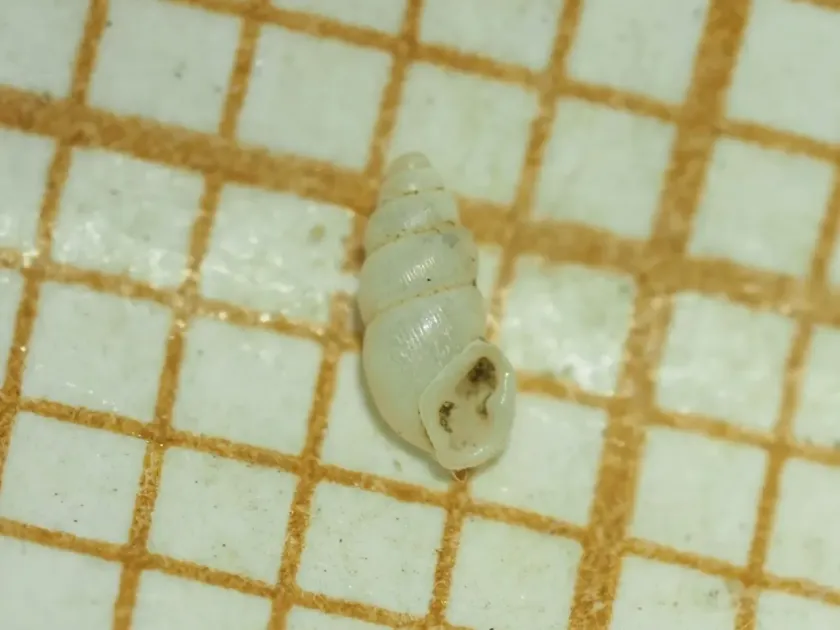
Description
How to identify
Carychium is a genus of minute land snails belonging to the family Ellobiidae. These are among the smallest air-breathing mollusks found in soil environments.
The shell of a Carychium is typically elongated, cylindrical, or spindle-shaped, usually measuring only 2 to 3 millimeters in length, making them very difficult to detect with the naked eye.
Taxonomically, these creatures fall under the order Basommatophora. They are hermaphroditic, allowing for rapid reproduction in environments that offer high moisture levels.
These snails are primarily found in leaf litter, damp moss, and soil, where they consume decaying organic matter, but they can adapt to agricultural settings if moisture is abundant.
Due to their size, many growers overlook them as potential pests, yet their ability to multiply quickly in closed environments like greenhouses makes them a subtle threat.
What it damages
While Carychium are not typically primary agricultural pests, their feeding activities can cause significant stress to young seedlings in greenhouse environments.
They feed by scraping the epidermal tissue of leaves, which leads to stunted growth, leaf deformation, and, in severe cases, the death of young and delicate plants.
The presence of these mollusks can be particularly harmful to ornamental plants grown in high-humidity conditions, where the soft tissues are easily accessible.
Beyond direct feeding damage, they act as vectors for fungal spores and bacteria, which enter the plant through the wounds created by the snail's radula.
Vegetable crops, especially leafy greens and herbs, are at higher risk when cultivated in environments that promote the buildup of damp organic debris.
When it appears
The activity level of Carychium is highly dependent on environmental moisture; they are most active during periods of high humidity and rainfall.
In greenhouses and indoor nurseries, these pests can remain active throughout the year as long as the irrigation regime maintains a consistently moist substrate.
Spring serves as a peak activity period when overwintered individuals begin feeding on freshly emerging seedlings, posing a threat to early-stage crops.
During dry summer months, they often retreat into deeper layers of the soil or hide beneath dense vegetation where moisture levels remain sufficiently high for survival.
Autumn brings a resurgence in surface activity due to cooling temperatures and increased precipitation, which aids in their dispersal across the garden bed.
Signs of infestation
Identifying Carychium infestation requires close observation; the most common sign is the appearance of tiny, pinpoint feeding scars on the leaves of young plants.
A thin, translucent silvery trail of mucus, often found on the soil surface or the base of stems, is a hallmark indicator of the presence of these gastropods.
The presence of empty, microscopic shells at the base of plants or within damp potting media is a definitive sign of an established population.
Secondary infections, such as soft rot or mold, appearing around the base of the plant often indicate that the tissue has been breached by feeding mollusks.
Checking the underside of pots or near moist irrigation zones in the early morning hours is the best way to spot these minute snails in action.
Control measures
Effective management begins with improving drainage and avoiding over-irrigation, as these snails require a very humid environment to thrive and move.
Sanitation is critical; remove all decaying organic matter, weeds, and debris from the greenhouse, as these provide both food and shelter for the snails.
Physical barriers, such as copper tape, sand, or diatomaceous earth, can create a hostile environment that discourages the movement of these minute pests.
When infestation levels are high, targeted applications of iron phosphate-based molluscicides can be effective while remaining relatively safe for the environment.
Maintaining adequate ventilation and air circulation is essential to ensure that the soil surface dries out regularly, which directly inhibits the development of Carychium populations.
Taxonomy
- Latin name
- Carychium
- Order
- Molluscs
- Family
- Ellobiidae
- EPPO code
- KARYSP
Discussion
No discussions yet — be the first.