
Alexia myosotis
Alexia myosotis
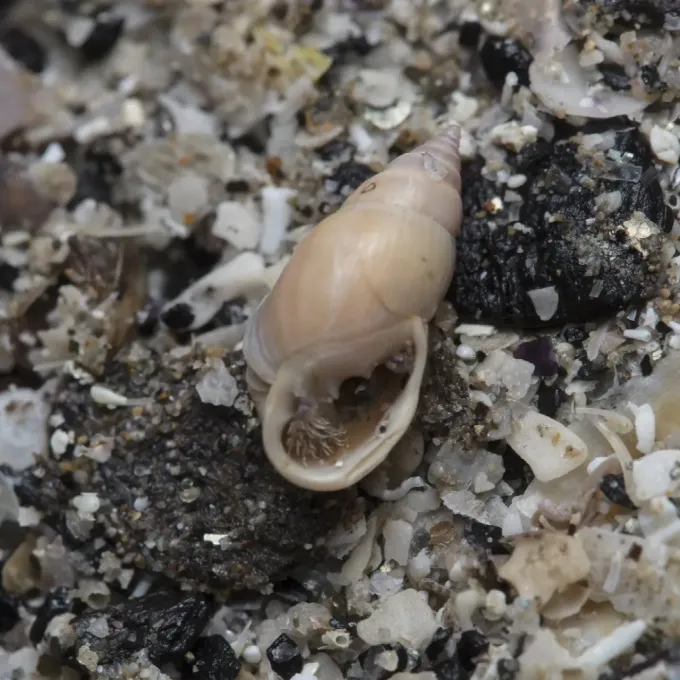
Description
How to identify
Alexia myosotis is a small insect belonging to the family Myrmecoxenidae. Adult individuals are characterized by their small size, elongated body shape, and specific coloration, which allows them to hide effectively in microenvironments.
This species leads a secretive lifestyle, making it difficult to detect during the initial stages of infestation. Morphologically, the insect is adapted to living in conditions of high humidity and the presence of fungal hyphae, which serve as its primary food source.
Systematically, this beetle belongs to the order Coleoptera. These insects are often found in plant debris, under bark, or in decaying plant parts where their larvae develop.
The external features of the imago include chitinized covers that protect the organism from temperature fluctuations and a developed mouth apparatus adapted for scraping organic tissues and mold.
The insect's development follows a complete metamorphosis cycle: egg, larva, pupa, and imago, with each stage being closely tied to a moistened substrate, which is a critical factor for population survival.
What it damages
The primary damage caused by Alexia myosotis lies in the destruction of plant tissues already weakened by secondary infections. The pest often settles where decomposition processes have already begun, further damaging the structure of plant cells.
The list of susceptible crops includes many ornamental species, especially those grown in greenhouses or in areas with excessive moisture. Roots, stems at the base, and lower leaves are commonly damaged.
The pest not only mechanically damages tissues but also acts as an active vector for spores of pathogenic fungi, which provoke the development of rot and wilting on healthy parts of the plant.
The greatest damage is inflicted on floral crops in protected ground, where high air humidity creates ideal conditions for the reproduction of both the pest itself and fungal diseases.
Mass reproduction of Alexia myosotis leads to the inhibition of crop growth, premature yellowing of leaves, and total loss of the commercial appeal of the ornamental plant.
When it appears
The activity of the pest is directly correlated with temperature conditions and humidity levels. The most favorable period is the spring-summer season, when sufficient moisture accumulates in the soil and plant debris.
In greenhouses and nurseries, the insect can reproduce year-round if the microclimate supports the development of mold fungi, which constitute the basis of this insect's diet.
In field conditions, population peaks occur during periods of prolonged rainfall, when the decomposition of organic matter in the root zone proceeds particularly intensively.
The imago overwinters in sheltered places — under fallen leaves, in crevices of buildings, or in the surface layer of soil, where a stable temperature is maintained.
With the onset of the first consistently warm days, the insects emerge from diapause and begin an active search for a food substrate to lay their eggs.
Signs of infestation
The first sign of infestation is the appearance of soft tissue patches on stems or roots. The plant begins to look stunted and loses turgor even with sufficient watering.
On the affected areas, one can notice a thin layer of mold, inside and around which the pests concentrate. This is a reliable indicator of the presence of the population.
Upon close inspection with a magnifying glass, small depressions and nibble marks are visible on the stems, often accompanied by tissue darkening due to the activity of associated microflora.
An indirect sign is the slowing of plant development compared to healthy specimens located under the same conditions, as well as premature dropping of the lower leaves.
When shaking or inspecting the root ball during transplanting, one can discover the beetles themselves, which move quickly, attempting to hide in the substrate.
Control measures
The primary measure is to normalize irrigation and improve soil aeration. Removing plant debris and maintaining cleanliness in greenhouses deprives the pest of its food base.
It is recommended to use drainage materials to improve water runoff, which prevents substrate acidification and the development of mold that attracts Alexia myosotis.
The use of biological preparations based on entomopathogenic fungi allows for the effective reduction of population numbers without chemical contamination of the products.
In cases of high infestation density, contact-intestinal insecticides authorized for use on ornamental crops are applied, with treatment focused on the root zone.
- Regular disinfection of tools and containers.
- Use of healthy planting material.
- Monitoring of substrate moisture.
Taxonomy
- Latin name
- Alexia myosotis
- Order
- Molluscs
- Family
- Ellobiidae
- EPPO code
- ALEXMY
Discussion
No discussions yet — be the first.