
Carpophthoromyia
Carpophthoromyia
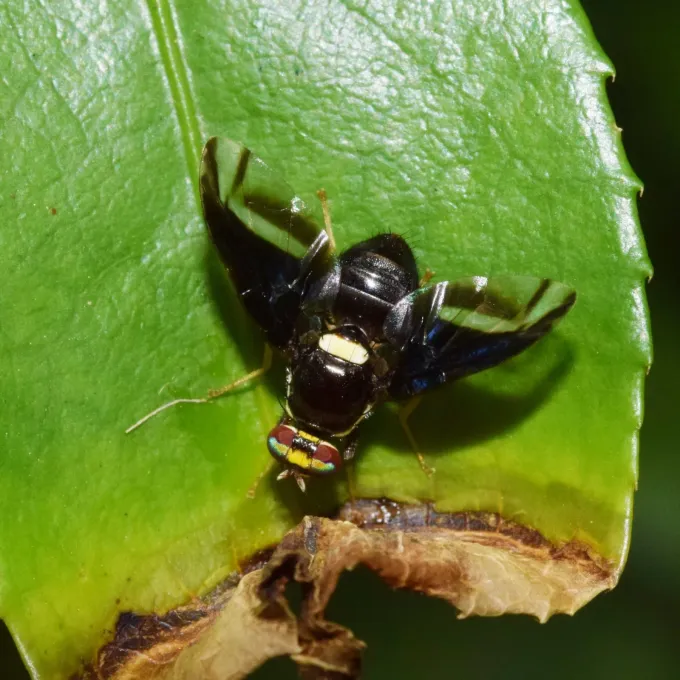
Description
How to identify
Carpophthoromyia is a genus of fruit flies belonging to the family Tephritidae. These insects are recognized by their intricate wing patterns and specialized behavior, which distinguish them from other common fruit-infesting Diptera species in their native ranges.
The adult flies possess a morphology adapted for survival and reproduction in orchard environments. Females have a robust ovipositor, which allows them to penetrate the tough skins of various host fruits to deposit eggs directly into the pulp.
The larvae are typical dipteran maggots, which go through several instars while feeding inside the fruit. Identification at the species level often requires expertise in taxonomy, as morphological traits can be subtle and require microscopic analysis of reproductive structures.
Systematically, they fall under the order Diptera. These flies are primarily of economic concern in African regions, where they act as significant pests for a variety of tropical and subtropical fruits, affecting both quality and marketability.
Understanding their behavior is crucial, as they have evolved to exploit specific niches within the host plant, often timing their reproductive cycles with the peak maturation phases of their preferred fruit species.
What it damages
The primary damage is caused by the larvae consuming the internal tissues of the fruit. This infestation leads to the internal breakdown of the fruit's structure, causing premature ripening, shriveling, and often detachment from the branch.
Economic losses can be substantial because infested fruit is generally discarded during harvesting and packing processes. Furthermore, market regulations regarding fruit flies are very strict, leading to trade restrictions for regions where these pests are prevalent.
Secondary infections are a major consequence of larval feeding. As the larvae tunnel through the fruit, they introduce bacteria and fungi that cause rapid decay and fermentation, making the entire fruit crop prone to rotting.
In cases of severe outbreaks, a high percentage of the harvest can become unmarketable. This necessitates early detection and rigorous orchard management to prevent the population from reaching epidemic levels throughout the growing season.
Host crops include various indigenous and exotic fruit trees, depending on the specific species of Carpophthoromyia. Their broad host range makes them persistent threats in polyculture environments or diverse orchards.
When it appears
The life cycle and activity of Carpophthoromyia are highly seasonal, dictated by the availability of host fruits. Adults typically emerge and begin mating when environmental conditions, particularly humidity and temperature, are favorable.
Reproductive activity coincides with the stage when fruit becomes susceptible to egg-laying. The development from egg to adult is relatively fast, allowing for multiple overlapping generations if conditions remain favorable throughout the year.
During the off-season or in unfavorable weather, the insect persists in the pupal stage. Pupation commonly occurs in the soil beneath host trees, providing a stable environment that protects the developing insect from predators and extreme climate shifts.
Environmental factors, such as rainfall patterns, play a major role in population surges. Moist conditions can facilitate pupal emergence and adult survival, leading to increased infestation levels as the fruit season progresses.
Farmers monitor for peak activity periods to plan control interventions. The onset of the rainy season often signals the start of the primary infestation period for many fruit fly species in this genus.
Control measures
Effective management begins with strict orchard hygiene, specifically the systematic removal and destruction of fallen fruit. Eliminating these reservoirs prevents larvae from completing their life cycle and entering the soil for pupation.
The deployment of bait traps is a standard practice for monitoring and population suppression. These traps use food-based attractants or pheromones to lure and kill adult flies before they can successfully lay eggs on the developing fruit.
Cultural methods, such as tilling the soil under the canopy, are highly effective. This practice exposes pupae to harsh surface conditions and natural predators, significantly reducing the number of flies that emerge for the next generation.
Chemical control should be applied judiciously, focusing on the protection of the crop during the most vulnerable development stages. Integrated Pest Management (IPM) strategies are preferred to minimize the impact on beneficial insect populations.
- Sanitary removal of infested fruits from the field.
- Use of attractant-based traps for monitoring adult activity.
- Soil cultivation to disrupt pupal development stages.
- Application of selective insecticides during high-risk windows.
- Maintaining field borders free of abandoned host trees.
Taxonomy
- Latin name
- Carpophthoromyia
- Order
- Diptera (flies)
- Family
- Tephritidae
- EPPO code
- CPPHSP
Discussion
No discussions yet — be the first.