
Carpomya
Carpomya
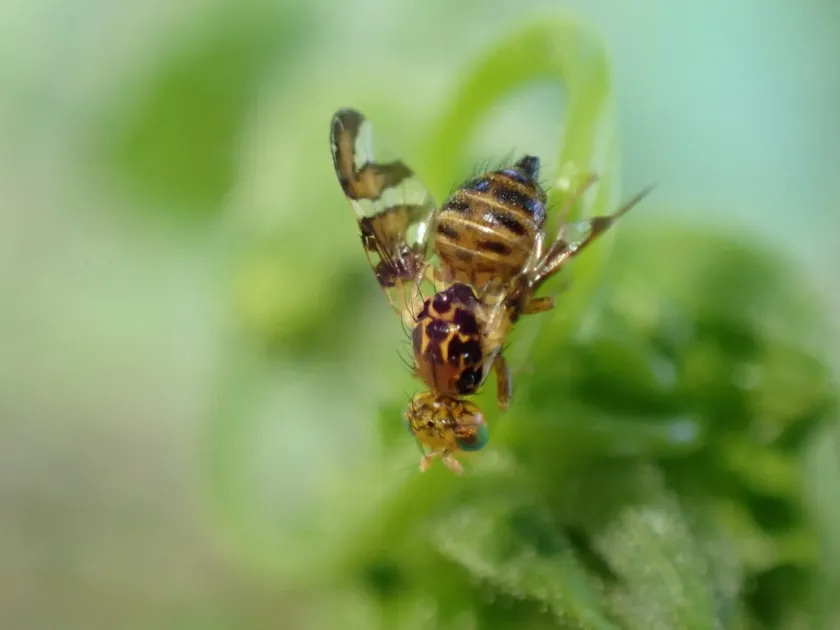
Description
How to identify
The genus Carpomya belongs to the Tephritidae family, also known as fruit flies, within the order Diptera. These flies are easily distinguished by their patterned wings and are often found in orchards and fields where their host plants grow.
Adult flies typically measure between 4 to 6 millimeters in length, exhibiting a yellowish to brownish coloration. Their heads are equipped with large compound eyes, which are essential for finding hosts and mates in diverse environments.
The larvae of Carpomya species are legless and maggot-like, usually appearing creamy-white. They are highly specialized for feeding within the internal tissues of developing fruit, which provides both nutrition and protection.
The life cycle undergoes complete metamorphosis, consisting of the egg, larval, pupal, and adult stages. The pupal stage commonly occurs in the soil, making the soil conditions a critical factor in the insect's survival and population density.
Early identification of adults is facilitated by the use of colored sticky traps, which are an essential tool for monitoring and timing the application of pest control measures.
What it damages
Carpomya species are notorious for damaging various horticultural crops, particularly melons and related cucurbits, as well as specific fruit trees depending on the species' host preference.
The primary damage is caused by the larvae, which burrow into the fruit shortly after hatching. As they feed, they create complex tunnels that destroy the fruit's internal architecture, rendering it unmarketable.
Secondary infections by bacteria and fungi often follow larval feeding, leading to rapid decay, fermentation, and the production of unpleasant odors, which makes the fruit entirely unsuitable for human consumption.
Severe infestations can lead to massive crop losses, sometimes destroying the majority of a harvest if effective management is not implemented in time to interrupt the pest's reproductive cycle.
Young, developing fruits are particularly vulnerable to attack, and larval feeding often leads to premature dropping or stunted growth, significantly impacting the overall yield of the plantation.
When it appears
Adults typically emerge from the soil in spring or early summer, following the first period of sustained warm temperatures. This timing is closely synchronized with the flowering and fruit-setting stages of the host plants.
The flies exhibit high reproductive activity throughout the warmer months, allowing them to complete multiple generations within a single growing season, provided that host fruits are continuously available.
Peak activity usually occurs during the early morning and late afternoon hours, when the flies are most active in flying, mating, and laying eggs on the surface of developing fruits.
As temperatures begin to drop in late summer or autumn, the larvae migrate out of the fruits and enter the soil to pupate, entering a state of diapause that allows them to survive the winter months.
Environmental factors such as humidity and rainfall can also influence the emergence timing, making local weather monitoring crucial for predicting the arrival of this pest in commercial orchards.
Signs of infestation
The first external sign of an infestation is the presence of small punctures on the fruit's skin, where the female has inserted her ovipositor to deposit eggs. Often, these spots may darken or indent over time.
Internal damage manifests as complex, irregular galleries or tunnels filled with frass and decaying tissue. When cut open, the fruit often shows distinct discoloration and soft, pulpy areas where the larvae have fed.
Affected fruits often turn yellow prematurely or show signs of abnormal softening compared to healthy fruits on the same plant. A distinct, foul odor may be noticed near heavily infested produce.
Premature fruit drop is a common symptom in orchards suffering from Carpomya. Any dropped fruit should be inspected immediately to identify the presence of larvae inside.
Regular visual inspections of the fruit surfaces and the use of insect traps are effective ways to spot adults and confirm the initiation of a new infestation cycle.
Control measures
- Practice crop rotation to prevent the buildup of pest populations in the same location.
- Perform deep autumn plowing to disturb the soil and expose overwintering pupae to the elements and predators.
- Utilize early-maturing cultivars to harvest the produce before the peak of the fly population density.
- Collect and dispose of all infested fruit promptly to prevent larvae from returning to the soil to pupate.
- Apply approved insecticides during the periods of maximum adult activity to reduce egg-laying potential.
Taxonomy
- Latin name
- Carpomya
- Order
- Diptera (flies)
- Family
- Tephritidae
- EPPO code
- CARYSP
Discussion
No discussions yet — be the first.