
Elm moth
Carpolechia fugitivella
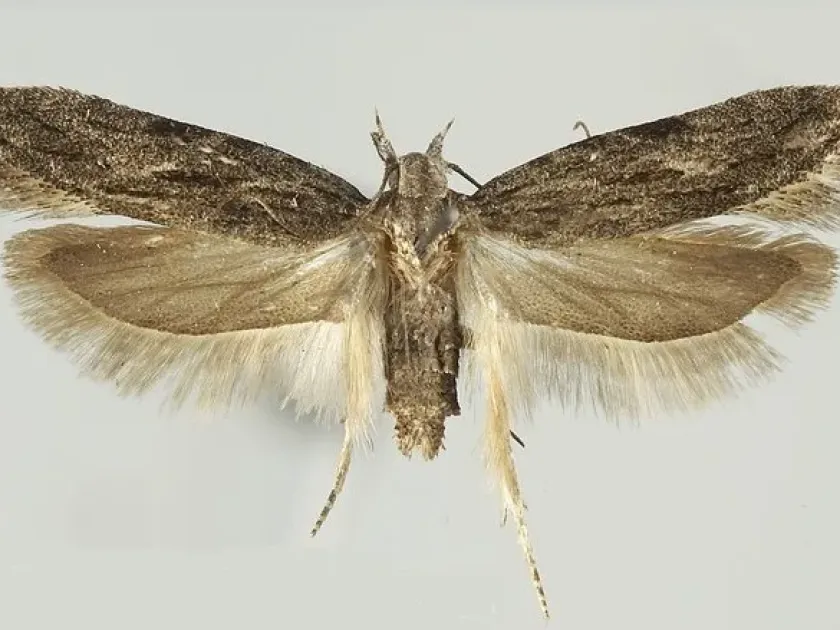
Description
How to identify
The elm moth (Carpolechia fugitivella) is a small moth belonging to the Gelechiidae family, widely known for its association with various species of elm trees (Ulmus).
Adult moths are characterized by their small size and specific wing structure, which features a distinct indentation on the outer edge, typical for this family.
The insect undergoes a complete metamorphosis involving four distinct stages: egg, larva, pupa, and adult. Each stage is adapted to survival on the host plant.
Entomologists identify these moths by their nocturnal activity and the subtle, greyish-brown coloration that provides excellent camouflage against tree bark.
Understanding their taxonomy is crucial for precise identification, as they share habitats with several other leaf-mining and leaf-rolling lepidopteran species.
What it damages
The primary host plants for this species are elm trees. Larvae are responsible for the vast majority of physical damage during their development.
Young larvae often target leaf buds upon emergence in the spring, which can stunt the development of new branches and reduce the tree's overall vigor.
As the larvae mature, they shift to skeletonizing the leaves, consuming the leaf tissue while leaving the veins intact, which significantly reduces the tree's photosynthetic capability.
High infestation levels lead to premature leaf drop and can weaken the overall health of the tree, making it susceptible to secondary infections like Dutch elm disease.
In ornamental landscapes, the aesthetic impact is severe, as the canopy becomes tattered and sparse due to the destruction caused by larval feeding.
When it appears
The life cycle begins in early spring when overwintered pupae or larvae emerge and align their activity with the budding stage of the elm trees.
Adult activity peaks during the summer months, involving mating and egg-laying processes on the fresh growth of the elm foliage.
Pupation occurs in protected areas, typically within the bark fissures, providing a safe haven during transitional weather periods.
The timing of generations can vary depending on the local climate, but generally, there is at least one main generation per year in temperate regions.
Strategic monitoring is recommended as soon as the first leaves begin to unfold, as this is the most critical window for preventative pest management.
Signs of infestation
The most prominent sign of infestation is the presence of rolled or folded leaves, which the larvae secure with silken threads to create protective retreats.
Frass (larval excrement) found inside these silk-lined nests is a definitive indicator of current larval presence and active feeding on the canopy.
When observing the tree from a distance, one might notice a thinning canopy or specific branches that appear discolored or skeletonized by localized larval clusters.
Premature autumn coloration of leaves, often accompanied by early shedding, is a late-season diagnostic feature of a severe infestation.
- Webbed leaf clusters;
- Skeletonized leaf patches;
- Accumulation of larval excrement in foliage;
- Localized branch dieback in severe cases.
Control measures
Integrated Pest Management (IPM) is the best approach, starting with the use of systemic insecticides for severe infestations in urban or nursery settings.
Biological control options, such as using Bacillus thuringiensis sprays, are highly effective against young larvae while preserving the local population of beneficial insects.
Sanitation is a vital cultural practice; pruning heavily infested branches and properly disposing of leaf litter can significantly reduce the overwintering population.
Ensuring the tree receives adequate irrigation and soil nutrients helps maintain its physiological defenses against stress and insect attacks.
Pheromone traps can be employed for both monitoring population density and disrupting mating cycles, acting as a non-toxic tool for garden management.
Taxonomy
- Latin name
- Carpolechia fugitivella
- Order
- Lepidoptera (butterflies)
- Family
- Gelechiidae
- EPPO code
- KARPFU
Discussion
No discussions yet — be the first.