
Cocoa clearwing moth
Carmenta theobromae
Description
How to identify
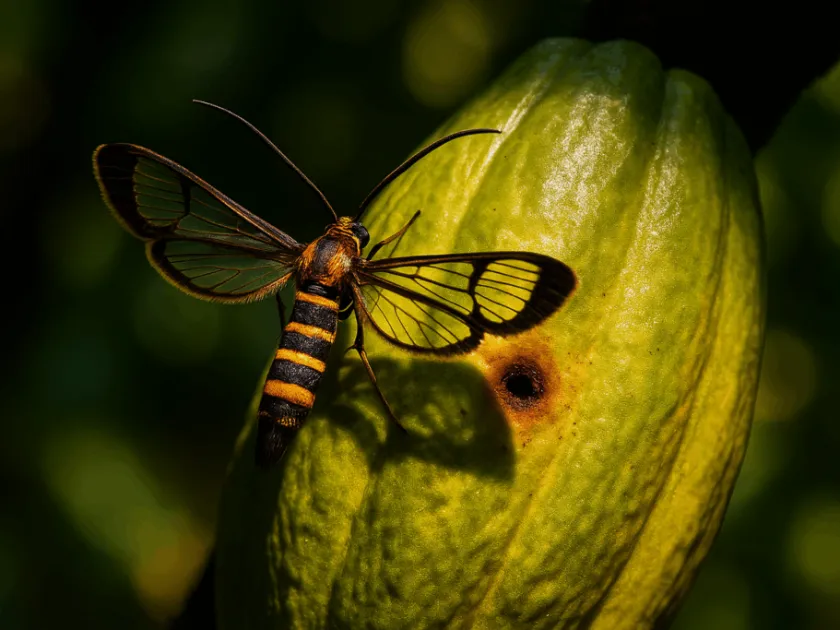
The Cocoa clearwing moth (Carmenta theobromae) is a member of the Sesiidae family. These insects are well known for their Batesian mimicry, as adults look remarkably like wasps or hornets, which helps them deter predators.
The adult moth features dark coloration with distinct bands and largely transparent wings. Its small size allows it to move discreetly through the dense canopy of cacao orchards, making detection quite difficult for farm workers.
The life cycle of this pest follows a complete metamorphosis: egg, larva, pupa, and adult. The larval stage is the primary cause of economic damage, as it spends its entire development cycle inside the plant tissues.
The pupal stage occurs within the larval galleries beneath the bark, protected from external weather conditions and many avian predators that might otherwise consume the insects.
Monitoring efforts usually focus on the use of pheromone traps placed throughout the plantation to track the activity of adult moths and time control interventions effectively.
What it damages
The primary host for Carmenta theobromae is the cacao tree (Theobroma cacao). The larvae are particularly damaging to young trees and the smaller branches of mature trees where the bark is accessible.
By boring into the inner bark and the cambium layer, the larvae create long, winding galleries. These tunnels disrupt the plant's vascular system, hindering the transport of water and nutrients throughout the tree.
Significant infestations can lead to partial or total dieback of affected branches. In severe cases, the structural integrity of the tree is compromised, leading to wind damage or breakage under the weight of cocoa pods.
The galleries created by the larvae also serve as entry points for various fungal and bacterial pathogens, which can exacerbate the tree's decline and lead to secondary infections.
The overall productivity of the plantation suffers as infested trees exhibit reduced pod production, lower cocoa quality, and a shortened lifespan compared to healthy, uninfested trees.
Signs of infestation
One of the earliest signs of infestation is the appearance of frass (larval waste) near the base of the tree or protruding from small holes in the bark, indicating active tunneling by larvae.
The bark often shows visible perforations, which may ooze sap or gum as part of the tree's defense response, creating visible streaks on the surface of the trunk or branches.
Upon closer inspection or peeling back a small layer of bark, you can see the larval galleries. These tunnels are often filled with dark waste and can be quite extensive, depending on the age of the infestation.
Affected branches frequently show signs of yellowing leaves, wilt, or premature senescence. The foliage loses its healthy green color as the branch dies off from the lack of nutrient flow.
In advanced stages, the death of the main stem or top of the tree is common, leading to a stunted growth pattern that makes the trees easily recognizable during routine field inspections.
Control measures
Mechanical control, including the pruning and immediate destruction of infested branches, is considered the most effective way to keep local populations of the pest under control.
Biological control involves the application of entomopathogenic fungi or specialized bacteria that target the larvae within their galleries without leaving toxic residues on the cocoa pods.
Chemical control with systemic insecticides may be necessary in high-pressure areas. These chemicals are absorbed by the tree and reach the larvae inside the bark; however, strict safety protocols must be followed.
Cultural practices are vital for prevention. Maintaining tree health through balanced fertilization and proper shade management helps trees withstand and recover from larval boring.
- Regular monitoring using pheromone-baited traps.
- Sanitary pruning of infested branches.
- Use of resistant or tolerant cacao varieties.
- Maintaining proper plantation hygiene to remove potential breeding sites.
Taxonomy
- Latin name
- Carmenta theobromae
- Order
- Lepidoptera (butterflies)
- Family
- Sesiidae
- EPPO code
- CRMTTH
Discussion
No discussions yet — be the first.