
Carmenta foraseminis
Carmenta foraseminis
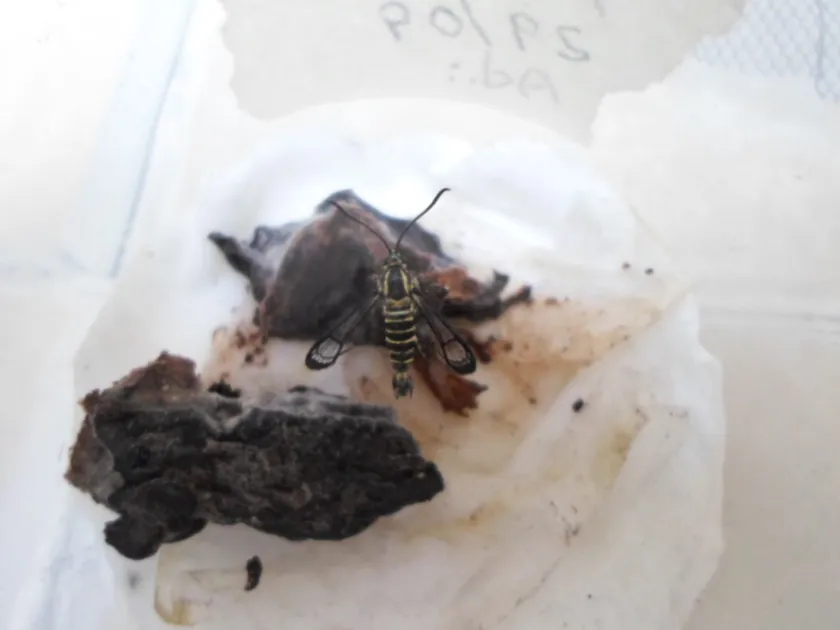
Description
How to identify
Carmenta foraseminis is a species of clearwing moth belonging to the Sesiidae family. These insects are known for their mimicry, as they resemble wasps or bees in appearance, which is a common trait among clearwing moths.
The adult moth features narrow, partially transparent wings that lack scales in certain areas, giving them a distinct look. They are primarily active during the day, which is when mating and egg-laying occur.
The larvae are typically creamy-white and possess a cylindrical body with a well-developed head, adapted for boring into plant tissues. They spend their entire development phase hidden inside the host plant.
The lifecycle follows a complete metamorphosis: egg, larva, pupa, and adult. Each stage is strictly synchronized with the phenological development of the host plant species.
Identifying this pest in the field can be difficult due to its cryptic nature, requiring careful inspection of reproductive plant organs to detect early signs of infestation.
What it damages
The primary damage is caused by the larvae, which feed on seeds and internal tissues within fruits or seed pods. This feeding activity leads to significant yield losses, particularly in seed production fields.
Apart from direct seed destruction, the entry holes created by the larvae serve as entry points for secondary pathogens, including various fungal and bacterial infections that cause rot.
Infested plants often remain symptomless until harvest time, when the damage is discovered during the threshing or inspection process, revealing the reduced quality of the harvest.
In cases of high population density, the pest can jeopardize a substantial portion of the seed stock, rendering the crop unsuitable for planting or commercial purposes.
Economic damage thresholds must be strictly monitored, especially in fields intended for seed production, where even minor infestation levels may warrant intervention.
When it appears
Adult moth emergence typically aligns with the flowering phase of host plants. This is the crucial window when females lay their eggs on or near the developing seed pods.
Larval development occurs during the seed filling and maturation stages. The larvae remain protected within the plant tissue until they are ready to pupate.
The pest overwinters as a larva, often within crop residues or the stalks of infested plants. This overwintering strategy ensures high survival rates throughout the cold season.
Pupation occurs in spring, leading to the emergence of the next generation of moths. In warmer climates, the lifecycle can be more rapid, potentially leading to increased pest pressure.
Environmental factors such as ambient temperature and humidity play a significant role in the survival rate of eggs and the overall activity levels of the pest throughout the growing season.
Signs of infestation
The most reliable signs of infestation are small entry holes on the surface of seed pods or stems, often accompanied by "frass" (larval excrement) resembling fine brown sawdust.
Cutting open an infested pod usually reveals damaged, hollowed-out, or malformed seeds, often along with the presence of the larva inside the fruit cavity.
Localized wilting or discoloration of specific plant parts can also serve as an external indicator that internal tissue damage is occurring.
- Entrance holes on seed pods.
- Accumulation of brown larval frass.
- Reduced seed viability and weight.
- Secondary rot infections at injury sites.
Systematic field scouting for these signs is essential to determine if management intervention is required to protect the integrity of the seed crop.
Control measures
Effective management begins with monitoring populations using pheromone traps, which helps identify the optimal timing for chemical applications.
Cultural control methods, such as the thorough removal and destruction of crop residues and deep plowing, are critical for eliminating overwintering larval populations.
Chemical treatments are effective only during the adult flight and egg-laying period, as larvae become protected once they bore deep into the plant tissue.
Implementing proper crop rotation and using high-quality, pest-free seed are vital practices to minimize the spread of this pest into new areas.
Integrated Pest Management (IPM) strategies, which combine cultural practices and selective insecticides, offer the best protection for seed crops against this clearwing moth species.
Taxonomy
- Latin name
- Carmenta foraseminis
- Order
- Lepidoptera (butterflies)
- Family
- Sesiidae
- EPPO code
- CRMTFO
Discussion
No discussions yet — be the first.