
Carmenta
Carmenta
Description
How to identify
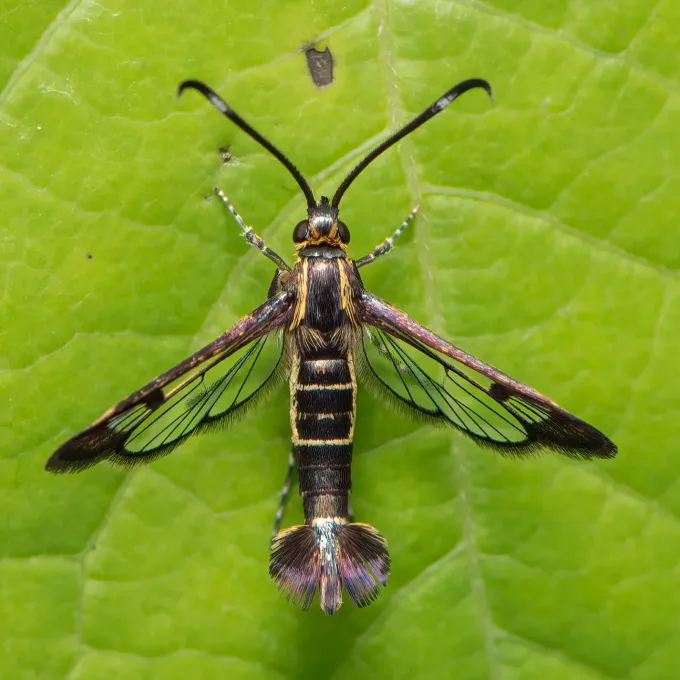
Carmenta is a genus of moths belonging to the family Sesiidae, commonly known as clearwing moths. These insects are masters of mimicry, often resembling stinging wasps or hornets.
The adult moths have transparent, glass-like wings with darkened borders and veins. Their bodies are typically slender, and they exhibit vibrant colors on the abdomen, which aids in their disguise.
The larval stage consists of white or cream-colored caterpillars with a dark head capsule. These larvae spend their entire developmental period hidden deep within plant tissues.
Identifying specific species within the genus is notoriously difficult due to their similarity to other clearwing moths. Entomologists often rely on pheromone lures for accurate classification.
The life cycle involves complete metamorphosis, including egg, larva, pupa, and adult stages. The larval stage is responsible for all significant structural damage to the host plant.
What it damages
Members of the Carmenta genus target a wide variety of woody plants and shrubs. They frequently infest fruit trees as well as many ornamental garden species.
Larvae bore galleries inside shoots, stems, and trunks. This boring activity disrupts the xylem and phloem, effectively hindering the plant's nutrient and water transport systems.
The physical damage caused by the larvae weakens the plant's overall structural integrity. This makes infested trees highly susceptible to wind breakage and secondary infections.
If left unmanaged, heavy infestations can lead to the death of individual branches or even the entire plant. This creates a significant threat to orchard yields and landscape aesthetics.
Typical host plants include:
- Fruit trees (various species)
- Ornamental shrubs
- Native woody plants
When it appears
Adult moths are typically active during the summer months, with peak flight activity occurring between June and August. Weather patterns play a crucial role in the timing of their emergence.
Eggs are deposited individually on the bark near potential entry points, such as pruning cuts or crevices. Larvae hatch and immediately begin boring into the inner wood.
Most Carmenta species overwinter as larvae within their tunnels. This provides them with insulation against cold temperatures and protection from many external predators.
Pupation occurs in the spring or early summer, following the final larval molt. Before emergence, the pupa pushes itself partially out of the exit hole to allow the moth to escape.
Depending on the species and environmental conditions, the life cycle may take one or two full years to complete, making control planning more complex.
Signs of infestation
One of the earliest signs of infestation is the presence of frass, which looks like sawdust or wood shavings, accumulating at the base of branches or stems.
Affected plants often show signs of premature wilting or yellowing of leaves. This is a direct consequence of the internal damage caused by the tunneling larvae.
Entry holes in the bark are often accompanied by sap flow or gumming. These openings are primary entry points for opportunistic fungi and bacterial pathogens.
Shoot dieback or localized stunting of growth is a common indicator. In young trees, the main trunk may show swelling or irregular deformities due to larval tunneling.
Inspecting the galleries by cutting into the wood usually reveals the presence of larvae or the empty silken pupal casings remaining after emergence.
Control measures
Sanitation is the most effective cultural control method. Carefully prune out and immediately destroy all infested branches to remove larvae before they emerge.
Monitoring with pheromone traps is essential for timing chemical applications. Sprays should be applied during the period of peak adult flight and egg-laying.
Systemic insecticides can be used on valuable trees to target larvae as they consume plant tissues. Consult local guidelines for the most effective and safe chemical options.
Biological control, including the use of entomopathogenic nematodes or specific bacteria, is gaining popularity for its ability to target larvae without harming beneficial insects.
Maintaining high plant vigor through proper irrigation and fertilization helps trees better withstand and isolate the damage caused by these borers.
Taxonomy
- Latin name
- Carmenta
- Order
- Lepidoptera (butterflies)
- Family
- Sesiidae
- EPPO code
- CRMTSP
Discussion
No discussions yet — be the first.