
Carcelia lucorum
Carcelia lucorum
Description
How to identify
Carcelia lucorum is a species of parasitic fly belonging to the Tachinidae family within the order Diptera. These flies, often called tachinids, have a greyish-black appearance with dense hair cover on their bodies.
The adults resemble common houseflies but are characterized by stronger bristles on the abdomen and thorax. Their large compound eyes are adapted for quickly locating caterpillar hosts for oviposition.
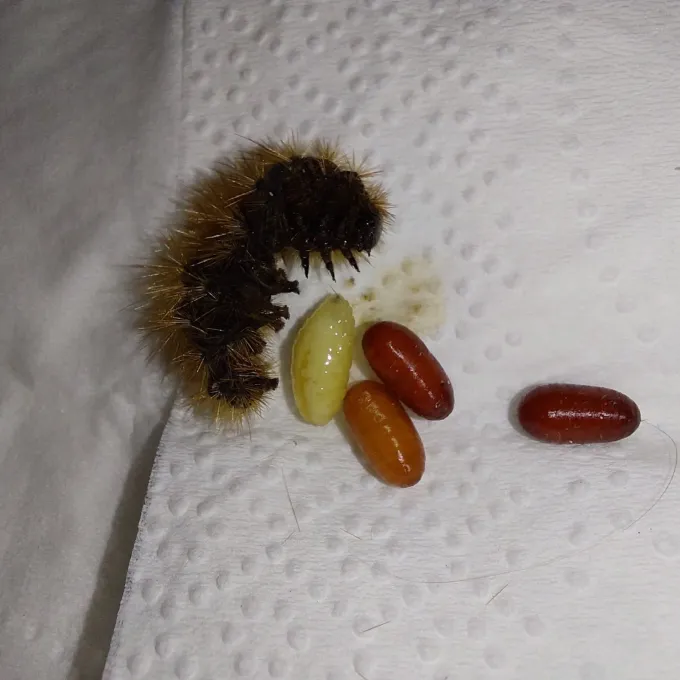
The larvae are endoparasitoids. They undergo several developmental stages inside the body of a lepidopteran host, feeding on internal tissues until the host eventually dies.
Unlike many pests, the role of Carcelia lucorum is complex; it functions as a specialized parasitoid that can exert significant pressure on host caterpillar populations.
Field identification is difficult due to the high morphological similarity between various tachinid species, often requiring laboratory examination of reproductive structures for accurate classification.
What it damages
The primary hosts of Carcelia lucorum larvae are caterpillars of various Lepidoptera species. These often include pests affecting vegetable and grain crops.
Hosts include species of cutworms, loopers, and certain leafrollers. By parasitizing the host from within, the larvae drain the host's vitality, halting its feeding and developmental progress.
While often beneficial as a natural biological control agent, in some agricultural systems, their unchecked reproduction can interfere with broader integrated pest management strategies.
The economic impact involves the potential disruption of biological pest control programs, especially if the fly attacks beneficial moth species or disrupts established ecological balances.
The internal damage caused by the larvae triggers irreversible physiological changes in the host, ensuring the mortality of the caterpillar or preventing its future reproduction.
When it appears
The flight period for Carcelia lucorum adults typically starts in late spring and continues throughout the summer, peaking in July and August when host abundance is highest.
Their life cycle is tightly synchronized with the population activity of their lepidopteran hosts. Females deposit eggs directly onto the host's body or near the food source.
A single generation can develop in three to five weeks, depending on temperature and humidity levels. Under optimal conditions, multiple generations can emerge within a single growing season.
Overwintering usually occurs at the puparium stage, buried in the soil or within organic plant debris, after the larvae exit the deceased host.
Seasonal fluctuations in their population are heavily influenced by environmental conditions and the availability of suitable host caterpillars for larval survival.
Control measures
Management strategies for Carcelia lucorum focus on limiting the use of broad-spectrum insecticides that inadvertently eliminate essential natural biological controllers.
Monitoring populations using pheromone traps can help track the activity of hosts and, by extension, the likely population density of the tachinid parasitoids.
Cultural control practices, such as deep autumn tillage, can destroy overwintering puparia in the topsoil, effectively reducing the carry-over population for the following season.
Biological control programs must be carefully calibrated to ensure that the suppression of host populations does not negatively affect the beneficial population of tachinid flies.
Regular entomological scouting is crucial to estimate the percentage of host parasitism, allowing agronomists to determine if chemical interventions are necessary or if biological control is sufficient.
Taxonomy
- Latin name
- Carcelia lucorum
- Order
- Diptera (flies)
- Family
- Tachinidae
- EPPO code
- CRCLLU
Discussion
No discussions yet — be the first.