
Carcelia cheloniae
Carcelia cheloniae
Description
How to identify
Carcelia cheloniae belongs to the Tachinidae family, order Diptera. Unlike typical plant pests, this species is a highly specialized parasitoid that plays a crucial ecological role.
Adult flies are of medium size and are covered in distinct bristles, which is a classic feature of tachinid flies used to protect themselves and sense the environment.
The life cycle of this insect is strictly dependent on the larvae of Lepidoptera, which serve as hosts for the developing fly larvae.
The female fly deposits eggs either on the leaf surface or directly onto the host caterpillar, ensuring that the offspring can successfully invade the host.
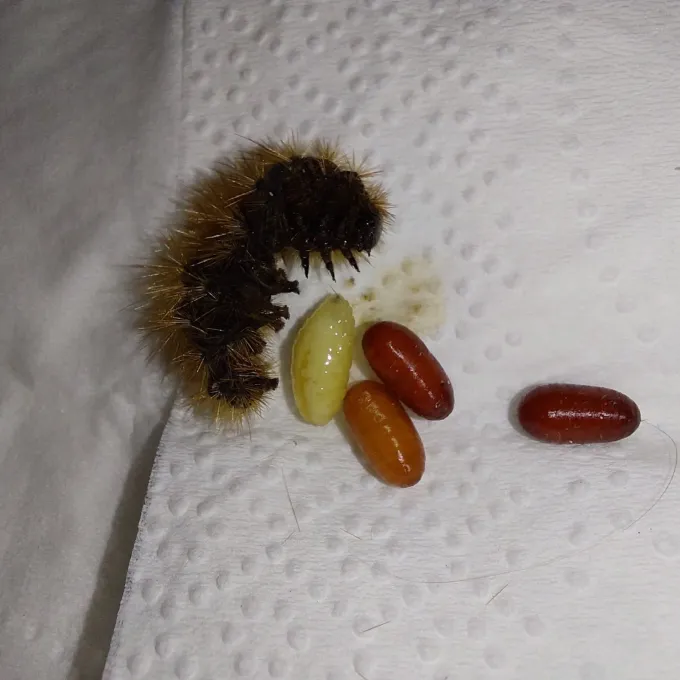
After hatching, the larvae enter the caterpillar, consume its internal tissues, and eventually pupate, typically in the soil or under leaf litter.
What it damages
Carcelia cheloniae does not cause damage to plants. In fact, it is considered a beneficial insect because it helps regulate populations of destructive leaf-eating larvae.
Its primary hosts are various species of caterpillars that are known to cause significant economic losses in orchards, vineyards, and agricultural fields.
By specializing in these pests, the fly acts as a natural biological control agent, keeping harmful insect populations below the economic injury level.
The activity of these parasitoids helps maintain ecological balance in managed crops, reducing the overall dependence on synthetic chemical pesticides.
Promoting the presence of this insect is a cornerstone strategy for sustainable agriculture and organic pest management practices.
When it appears
The activity of Carcelia cheloniae adults typically begins in the spring, aligning with the emergence of their host caterpillars.
Multiple generations may occur throughout the growing season, heavily dependent on climatic conditions and the availability of suitable host larvae.
Adults are most active during the day, particularly when searching for host caterpillars to oviposit their eggs on or near them.
The insect survives the winter by entering a state of diapause as a puparium, usually situated in the topsoil or among organic debris.
Spring emergence is triggered by rising soil and air temperatures, marking the start of the new annual cycle for this beneficial parasitoid.
Signs of infestation
Detecting Carcelia cheloniae is inherently difficult due to their small size, quick flight, and secretive behavior when interacting with hosts.
The most reliable sign of their activity is a gradual decline in the number of caterpillars on the plants, despite a previously high infestation level.
In cases of high parasitism, one might observe caterpillars that appear sluggish, unhealthy, or show distinct changes in their feeding habits.
Dissecting collected caterpillars in a laboratory setting can confirm the presence of fly larvae or puparia developing inside the host tissues.
The absence of severe defoliation in areas with high pest activity is often a positive indicator of natural enemy intervention.
Control measures
The strategy for managing Carcelia cheloniae is centered on conservation rather than elimination, as they are essential allies for the farmer.
It is vital to avoid or strictly limit the use of broad-spectrum insecticides, which are lethal to these beneficial parasitoids.
Planting flowering borders or cover crops provides the necessary nectar sources for adult flies, allowing them to live longer and reproduce more efficiently.
- Preserve undisturbed patches of soil for wintering.
- Adopt selective pest management techniques.
- Reduce chemical input to sustain biodiversity.
Monitoring the farm for pest outbreaks helps in deciding where chemical intervention can be avoided, thereby protecting the population of this fly.
Taxonomy
- Latin name
- Carcelia cheloniae
- Order
- Diptera (flies)
- Family
- Tachinidae
- EPPO code
- CRCLCH
Discussion
No discussions yet — be the first.