
Caper fly
Capparimyia savastani
Description
How to identify
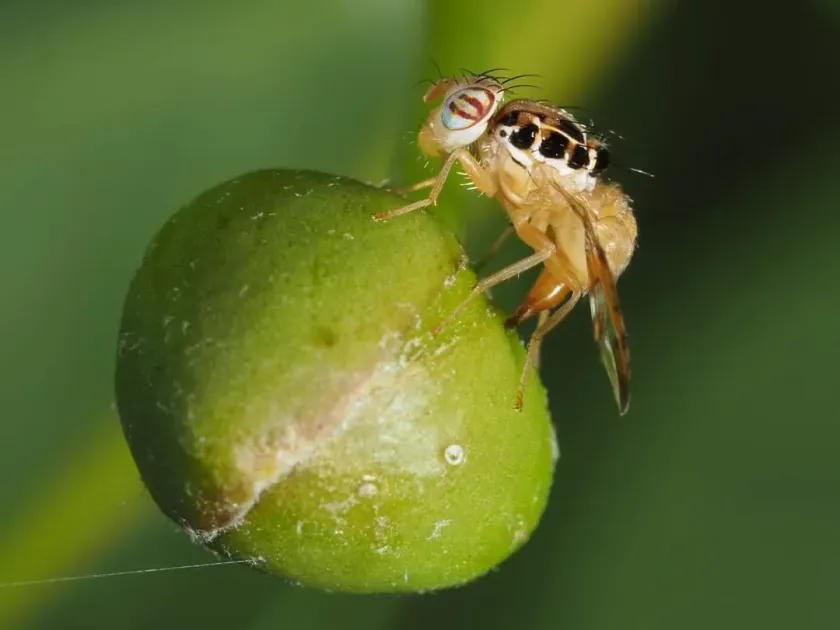
The Caper fly (Capparimyia savastani) belongs to the fruit fly family (Tephritidae) of the order Diptera. These flies are small insects characterized by distinct, patterned markings on their wings, which is a common trait among many members of this family.
The adult insect has a specialized ovipositor designed for inserting eggs into the tissues of the host plant. The larvae develop internally within the buds, making them largely protected from external predators and environmental exposure.
Identifying this species requires a certain level of entomological expertise, as it can be easily confused with other fruit fly species prevalent in the Mediterranean area. Accurate identification is usually confirmed by the specific damage patterns left on the caper plant.
The life cycle of the Caper fly is strictly synchronized with the phenology of the caper plant. The adult flies emerge and begin reproduction precisely when the host plants enter the budding stage, ensuring a high-quality food source for the next generation.
This pest is primarily found in regions where Capparis spinosa is grown. Its population dynamics are heavily influenced by local microclimates and the availability of both wild and cultivated host plants.
What it damages
The primary damage is caused by the larvae feeding inside the flower buds and young ovaries of the caper plant. By consuming the inner parts, the larvae render the buds completely useless for culinary purposes or market sale.
Heavy infestations can lead to premature abscission of buds, causing significant harvest losses. In severe cases, a high percentage of the potential crop can be destroyed before the harvest even begins.
The damage is not limited to the physical destruction of the bud. The feeding process leaves the plant tissues vulnerable to secondary infections and rot, which further compromises the quality of any remaining healthy parts of the plant.
Economic impact is measured not only by lost yield but also by the increased labor costs associated with sorting and grading the harvest to remove infested buds, which is often difficult due to the concealed nature of the damage.
Continual infestation over several seasons can weaken the caper bushes, reducing their overall vigor and future reproductive output, leading to long-term productivity issues for the plantation.
When it appears
The emergence of adult Caper flies typically coincides with the arrival of warm spring weather. As temperatures rise, the flies emerge from their overwintering pupal stage in the soil and begin searching for host plants.
The female flies lay their eggs directly into the developing buds. The larval development period is relatively short, allowing the insects to complete their transformation while the bud is still at its most nutrient-rich stage.
Once the larvae reach maturity, they exit the buds and drop into the soil beneath the plant to pupate. This pupal stage acts as a protective mechanism, allowing the species to survive unfavorable conditions.
Depending on the climatic zone, the Caper fly may produce multiple generations per growing season. This creates a continuous risk to the harvest and complicates management strategies for farmers.
Warm, stable weather patterns promote high reproductive rates, often leading to rapid population surges if not controlled in the early stages of the infestation.
Signs of infestation
The earliest sign of infestation is the appearance of tiny oviposition punctures on the surface of the buds. These marks are extremely subtle and often require a magnifying glass or sharp eyesight to detect.
As the larvae feed internally, the buds begin to show signs of stress. This includes yellowing, shriveling, and structural deformation, as the inner tissue is progressively destroyed.
- Premature dropping of buds from the plant branches.
- Visible darkened spots on the surface of the buds.
- Deformed or stunted growth of flower buds.
- Presence of internal tunneling and larval frass within the bud.
- Small exit holes on the dried remnants of the buds.
Regular field scouting is essential for early detection. Once signs of deformation become widespread, the harvest has often already been compromised by the developing larvae inside.
Control measures
The most effective cultural control method is the frequent and timely harvesting of buds. By picking the buds regularly, growers can remove the larvae before they exit the plant to pupate, effectively breaking the pest's life cycle.
Sanitation is critical; all fallen and damaged buds must be collected and destroyed immediately. This prevents the larvae from successfully reaching the soil to complete their pupation.
Pheromone traps are used to monitor the presence and population density of the adult flies. This data helps farmers determine the optimal timing for intervention and improves the overall efficiency of protection strategies.
Biological control agents, such as specific parasitic wasps or entomopathogenic fungi, are being researched to target the pupal stage in the soil, offering a more sustainable approach to population management.
Chemical control, if necessary, should focus on targeting the adult flies before egg-laying begins. Growers must carefully follow safety guidelines to ensure the final product remains safe for consumption.
Taxonomy
- Latin name
- Capparimyia savastani
- Order
- Diptera (flies)
- Family
- Tephritidae
- EPPO code
- CPMMSA
Discussion
No discussions yet — be the first.