
Capitites ramulosa
Capitites ramulosa
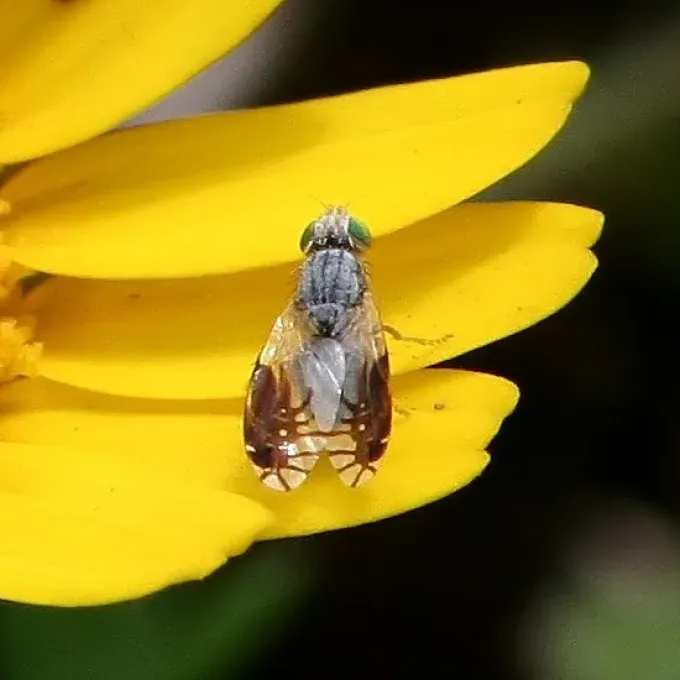
Description
How to identify
Capitites ramulosa is a species belonging to the Tephritidae family, commonly known as fruit flies. It is a specialized insect that predominantly targets plants within the Asteraceae family.
Adult flies are small, characterized by distinct wing patterns that provide camouflage against the floral structures of their host plants. These patterns are a key diagnostic feature for identification.
The insect follows a holometabolous life cycle, consisting of egg, larva, pupa, and adult stages. Females possess a robust ovipositor, allowing them to deposit eggs deep into the flower buds.
Larvae are legless, maggot-like creatures that typically dwell within the generative organs of the plant. Their development is strictly tied to the maturation of the flower heads.
Accurate identification of this pest requires an examination of morphological characteristics under magnification, often carried out by agricultural specialists during field surveys.
What it damages
The primary economic damage caused by Capitites ramulosa is the consumption of seeds within the flower heads. This directly impacts the yield of crops like sunflowers.
Larvae tunnel through the developing seeds, consuming the kernels and leaving behind frass. This leads to empty hulls and a significant reduction in the weight of the harvested crop.
The feeding sites created by the larvae serve as entry points for various fungal and bacterial pathogens, which can cause secondary rot of the entire head.
Damage is most severe when infestation occurs during the early stages of floral development. Premature harvesting may be necessary in extreme cases to minimize further losses.
Even moderate infestations can lead to substantial financial losses due to lower oil content and poorer quality of seeds in infected sunflower heads.
When it appears
The seasonal activity of this pest is closely aligned with the phenology of its host plants. Adults emerge in spring when the first buds begin to form.
Peak flight activity typically occurs during the summer months, favoring warm, dry, and calm weather conditions, which facilitate mating and egg-laying.
Depending on the climatic zone, the pest may complete one or two generations per year. The overwintering stage usually takes place as a pupa in the soil.
Monitoring for adults should begin at the start of the bud development phase, utilizing yellow sticky traps to track population density and timing of emergence.
Environmental factors such as soil temperature and moisture levels during the overwintering period can significantly influence the success of the following season's population.
Signs of infestation
Early signs of infestation include small, visible puncture marks on the bracts of the flower heads, made by females while laying their eggs inside.
Deformed or asymmetrical development of flower heads is a common indicator of internal larval activity, often visible before the heads fully open.
Upon inspection of the interior, the presence of frass and partially eaten seeds confirms the activity of the larvae within the floral receptacle.
Affected plants may show premature wilting or a general lack of vigor in the heads, which stands out compared to neighboring healthy plants.
The presence of adult flies resting on the floral disks during sunny hours is a clear signal that the pest is actively colonizing the field.
Control measures
Cultural control is the most effective approach, beginning with deep plowing of fields after harvest to bury and destroy overwintering pupae.
Crop rotation is essential; avoiding the continuous cultivation of Asteraceae on the same land prevents the long-term buildup of the pest population.
Chemical control can be implemented through the application of insecticides targeting the adult stage, specifically timed during the peak flight period before eggs are laid.
Biological control methods, such as the release of parasitoid wasps that target larvae, are being researched as sustainable alternatives to synthetic pesticides.
Maintaining clean fields by removing wild Asteraceae weeds around the perimeter helps reduce the available reservoir for Capitites ramulosa infestations.
Taxonomy
- Latin name
- Capitites ramulosa
- Order
- Diptera (flies)
- Family
- Tephritidae
- EPPO code
- CAPTRA
Discussion
No discussions yet — be the first.