
Picture-winged fly
Capitites
Description
How to identify
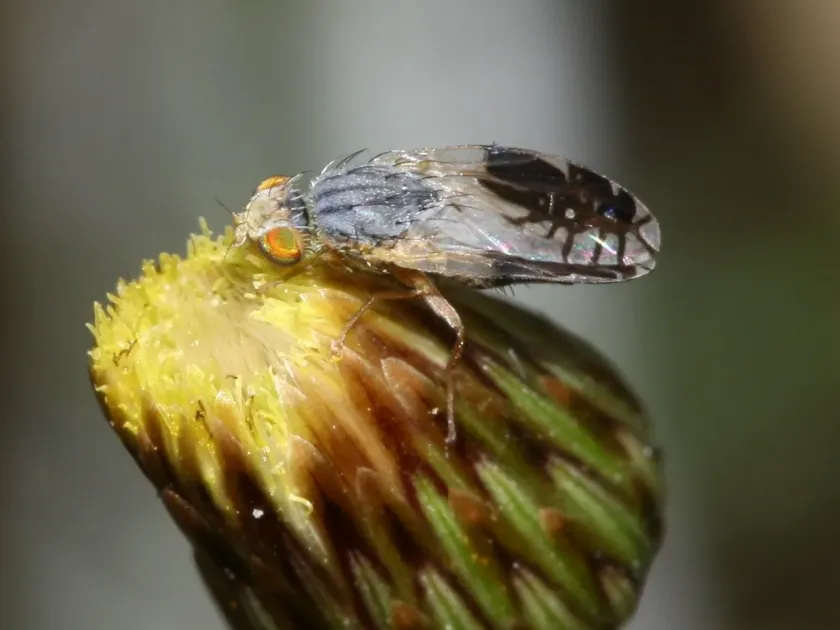
The picture-winged fly (genus Capitites) belongs to the Tephritidae family, order Diptera. These insects are named for the intricate, mottled, or patterned wing markings that distinguish them from other small flies.
Adult flies typically measure 4 to 6 mm in length. Their body coloration ranges from yellowish-brown to dark gray, providing excellent camouflage against the complex textures of flower heads.
The larvae are legless, maggot-like creatures with a whitish or yellowish hue, specifically adapted to live within the floral receptacles of their host plants, hidden from predators.
Identification is often difficult due to their small size and concealed life cycle. The presence of these flies is usually confirmed by spotting adults on blooming flowers or observing characteristic wing patterns.
Females are equipped with a well-developed ovipositor, which allows them to penetrate deeply into flower heads, ensuring their eggs are placed directly into optimal nourishment zones for the emerging larvae.
What it damages
This pest targets members of the Asteraceae family (daisy or sunflower family). It poses a significant threat to ornamental flowers, field crops, and various wild species that act as reservoirs.
Common host plants include chrysanthemums, asters, sunflowers, and various thistles. These plants are susceptible to severe infestation when environmental conditions favor the fly's population growth.
The damage is caused by larvae feeding on the interior tissues of the flower heads, including the disk florets and the developing achenes (seeds), effectively hollowing out the structure.
Heavy infestations lead to drastic reductions in seed yield and germination quality, making this pest particularly troublesome for seed production facilities and commercial floriculture.
Besides direct mechanical damage, the entry holes and tunnels created by larvae promote the entry of secondary pathogens, leading to fungal infections and rot that can destroy the entire bloom.
When it appears
The biological cycle of the Capitites fly is closely synchronized with the flowering phenology of its host plants. Adult activity typically peaks during the budding and early blooming stages.
Depending on local climate conditions, the development from egg to adult takes approximately 30 to 45 days. In warmer regions, the insect can complete two or three generations per season.
Overwintering usually occurs in the pupal stage, either within the debris of host plants or in the top layers of the soil, remaining dormant until the return of favorable temperatures.
Mid-summer is usually the period of highest infestation risk, as the density of blooming Asteraceae provides a vast resource for egg-laying and larval feeding.
Hot and dry weather patterns during the bud formation stage tend to accelerate the developmental cycles, leading to higher pest pressure and increased damage to floral structures.
Signs of infestation
Early symptoms of infestation include premature wilting or noticeable deformation of the flower heads, which often appear stunted or asymmetrical as they struggle to develop.
Upon dissecting the flower head, one may find dark granular frass left behind by the feeding larvae, alongside the larvae themselves, which are usually found deep within the receptacle.
Small pin-prick lesions on the petals are an early indicator of egg-laying activity by females, which can also serve as entry points for secondary bacterial or fungal infections.
- Deformed or asymmetrical flower heads
- Premature browning of petals
- Loss of seed or grain fill
- Visible tunnels within the floral base
- Presence of maggots inside the head
In advanced stages, the entire flower head may turn black and undergo decay, resulting in total loss of aesthetic or commercial value, which is easily visible to the observant grower.
Control measures
Integrated pest management begins with cultural practices, such as deep plowing in the autumn to disrupt and kill pupae overwintering in the soil surface.
Consistent removal and destruction of crop residues are essential, as these leftovers serve as the primary habitat and overwintering grounds for the next generation of pests.
The use of yellow sticky traps during the flight period allows growers to monitor the pest's activity levels and can help reduce the adult population in greenhouses or smaller plots.
Chemical control should be applied during the early budding phase, as this is the most critical window to prevent females from successfully depositing eggs into the flowers.
Biological control methods, including the release of specific parasitoid wasps that target tephritid larvae, can provide a sustainable way to suppress population growth without relying on heavy chemical use.
Taxonomy
- Latin name
- Capitites
- Order
- Diptera (flies)
- Family
- Tephritidae
- EPPO code
- CAPTSP
Discussion
No discussions yet — be the first.