
Picture-winged fly
Campiglossa albiceps
Description
How to identify
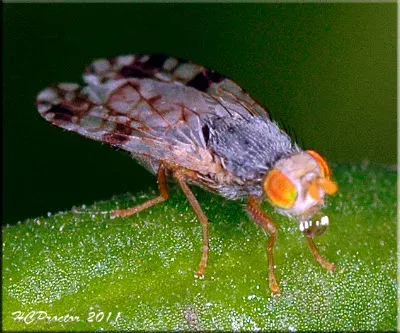
The Picture-winged fly (Campiglossa albiceps) belongs to the Tephritidae family, order Diptera. Adults are characterized by distinct, often intricate, wing patterns which give the group its common name.
The body coloration is typically brownish or yellowish, enabling the fly to blend into the inflorescences of its host plants, which is crucial for successful egg-laying.
Larvae are typical dipteran maggots—legless, creamy-white in color, and specialized for life inside the floral structures of various plant species.
The life cycle involves complete metamorphosis: egg, larva, puparium, and adult. The fly times its reproductive cycle with the flowering period of host plants.
Pupation usually occurs within the damaged flower head or in the immediate vicinity of the soil surface, providing protection against environmental fluctuations.
What it damages
This pest primarily infests plants within the Asteraceae family. Both ornamental crops and certain wild species act as reservoirs for the population.
Larvae feed internally on the floral receptacle and developing seeds. This feeding destroys the reproductive parts of the flower, significantly reducing seed viability.
Damage to the receptacle leads to stunted growth and disfigurement of the flower head. The affected parts often stop developing and lose their structural integrity.
The feeding activity creates entry points for secondary pathogens, such as fungi and bacteria, which can cause the flower head to rot prematurely.
The economic impact is severe for seed growers and ornamental nurseries, as the aesthetic quality and the seed production capacity are compromised.
Signs of infestation
The primary symptom is the deformation or asymmetry of flower heads. Affected heads appear distorted compared to healthy specimens.
Upon closer inspection of the inflorescence, one can often find larvae feeding inside, accompanied by dark excrement that indicates ongoing pest activity.
External signs include darkened spots or tiny exit holes on the exterior of the flower head, which are left behind when larvae or adults emerge.
A lack of viable seeds at the time of maturity is a major indicator that an infestation has occurred throughout the growing season.
Premature wilting and shedding of flower buds are also frequent indicators of heavy infestation, leading to overall plant decline in affected areas.
Control measures
Integrated Pest Management (IPM) is essential. Cultural practices, such as the destruction of crop residues and wild Asteraceae hosts, are the most effective preventive measures.
Deep autumn ploughing or soil cultivation helps destroy puparia overwintering in the soil, preventing the emergence of the next generation of adults.
Chemical control should be applied strictly during the peak flight period of the adults to intercept egg-laying. Systemic insecticides are preferred for effective results.
Monitoring the population using sticky traps allows for precise timing of interventions, reducing the need for indiscriminate chemical applications.
- Removal and disposal of infested flower heads.
- Sanitation of surrounding weed host populations.
- Application of systemic insecticides during budding.
- Regular inspection and scouting of crops.
Taxonomy
- Latin name
- Campiglossa albiceps
- Order
- Diptera (flies)
- Family
- Tephritidae
- EPPO code
- CAMGAL
Discussion
No discussions yet — be the first.