
Calliteara
Calliteara
Description
How to identify
The genus Calliteara, belonging to the family Erebidae, consists of moth species known as tussock moths. These insects are significant defoliators in forest ecosystems and orchards, with their larvae being the primary concern for agronomists.
Adult moths of this genus are generally inconspicuous, possessing brownish or grayish wings designed for camouflage on tree bark. Their body structure is adapted for stability during resting periods on vertical surfaces.
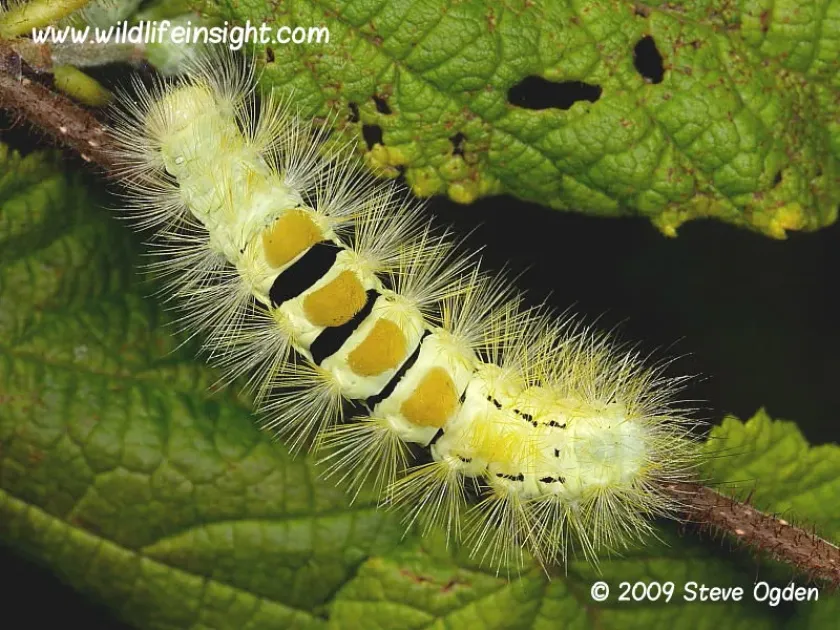
The larvae are highly distinct due to their dense tufts of hair, often referred to as "tussocks." These larvae frequently display vibrant patterns or colored stripes, which serve as a warning sign of their defensive, stinging hairs.
The life cycle involves egg, larva, pupa, and adult stages. Depending on the species and environmental conditions, they typically complete one generation per year, although warmer climates may influence this timing.
Understanding the life cycle is crucial for effective monitoring and timely application of management practices to minimize foliage loss in susceptible tree stands.
What it damages
Calliteara larvae primarily target broad-leaved deciduous trees. Preferred hosts include species such as oak, beech, birch, and various fruit-bearing trees found in commercial orchards.
Feeding damage starts with the consumption of buds and young leaves in early spring. As the larvae mature, they consume larger portions of the leaf blade, often leaving only the midribs and major veins behind.
Severe infestations can lead to complete defoliation of the canopy. This loss of foliage forces the tree to utilize its stored reserves to produce a second set of leaves, significantly weakening the tree's health.
Weakened trees become susceptible to secondary infestations, such as bark beetles and fungal pathogens, which can exacerbate the damage caused by the initial caterpillar attack.
For fruit orchards, the impact extends to the crop itself, as photosynthesis inhibition leads to reduced yield, stunted growth of fruits, and poor overall tree vigor for the subsequent season.
When it appears
The seasonal occurrence of Calliteara is strictly synchronized with the phenological stages of their host trees. Overwintered larvae typically emerge at the exact time when tree buds begin to break.
The peak feeding period occurs throughout May and June, as the larvae rapidly grow and accumulate the necessary energy reserves to transition into the pupal stage during the summer months.
Pupation takes place within cocoons, which are constructed in bark crevices or among folded leaves. This stage is relatively brief, lasting only a few weeks until the adult moths emerge to mate.
Adult flight activity generally peaks in late summer or early autumn. Females lay eggs that overwinter, ensuring the next generation is ready for the following spring’s budburst.
Climatic factors, specifically the temperature and humidity during the larval emergence period, play a critical role in determining the population density for the rest of the year.
Signs of infestation
The most immediate sign of a Calliteara infestation is the accumulation of frass (larval droppings) on the ground or on foliage beneath the infested branches.
Visual inspection of the canopy reveals skeletalized or ragged leaves. In cases of high larval density, large parts of the canopy may appear sparse or stripped due to the aggressive feeding behavior.
Pupal cocoons are often visible in bark fissures or at the base of branches. These cocoons are typically covered in hair shed by the larva during its final stages, making them look somewhat fuzzy.
Egg masses can be found on bark or the underside of leaves. These masses are often covered with setae from the female's abdomen, providing camouflage and physical protection against predators.
- Presence of hairy caterpillars on branches.
- Ragged or skeletonized leaves.
- Visible frass accumulation on the forest floor.
- Silky cocoons located in bark cracks.
Control measures
Biological control is highly effective for large-scale management. Products containing Bacillus thuringiensis target the larvae selectively without harming beneficial insects or the surrounding ecosystem.
For smaller orchard or garden settings, mechanical removal is a viable strategy. Hand-picking caterpillars and pruning infested branches during the dormant season significantly reduces the future population.
Chemical intervention should be reserved for severe outbreaks and applied only during the early larval stages when the caterpillars are most sensitive to contact and systemic insecticides.
Encouraging biodiversity by providing habitats for natural predators, such as insectivorous birds and parasitic wasps, provides long-term natural suppression of the pest population.
Cultural practices, including proper tree spacing and nutritional management, help maintain tree vigor, allowing plants to better withstand and recover from light to moderate defoliation pressure.
Taxonomy
- Latin name
- Calliteara
- Order
- Lepidoptera (butterflies)
- Family
- Erebidae
- EPPO code
- CAITSP
Discussion
No discussions yet — be the first.