
Grape rust mite
Calepitrimerus baileyi
Description
How to identify
The grape rust mite (Calepitrimerus baileyi) is a member of the Eriophyidae family, known as rust mites. These are microscopic pests, characterized by a spindle-shaped body and a yellowish-brown color.
Due to their tiny size, typically ranging from 0.15 to 0.2 mm, they are invisible to the naked eye. Identification in the field requires a high-magnification hand lens, while accurate diagnosis is usually performed via microscopic analysis.
The life cycle involves mated females overwintering in protected areas, such as under bud scales, in bark crevices of one-year-old shoots, or within the axils of dormant buds.
As spring temperatures rise, the mites emerge from their winter refuges and migrate to the newly developing buds, leaves, and young shoots to begin feeding.
These mites complete several generations per year. Warm, dry weather conditions significantly accelerate their reproductive rate, allowing population numbers to surge rapidly during the peak summer months.
What it damages
This pest primarily affects cultivated grapes (Vitis vinifera). The mites feed by piercing the epidermal cells of green plant tissues and consuming the internal cell contents.
The primary damage occurs on leaves and young shoots. This feeding activity disrupts the plant's physiological processes, causing significant stress and reducing the overall vitality of the vine.
When the mite density is high, they can cause serious damage to developing inflorescences, leading to poor fruit set, reduced berry size, and lower overall yields.
Severe infestations on foliage can stunt shoot growth, shorten internodes, and cause premature leaf drop, which negatively impacts the vine's ability to store carbohydrates for winter dormancy.
In addition to direct damage, the weakened condition of the plant makes it more susceptible to environmental stressors and other secondary pathogens that may enter through the damaged epidermis.
Signs of infestation
The most common sign of a Calepitrimerus baileyi infestation is the "rusting" effect. This manifests as brown, bronze, or reddish discoloration on the undersides of the leaves.
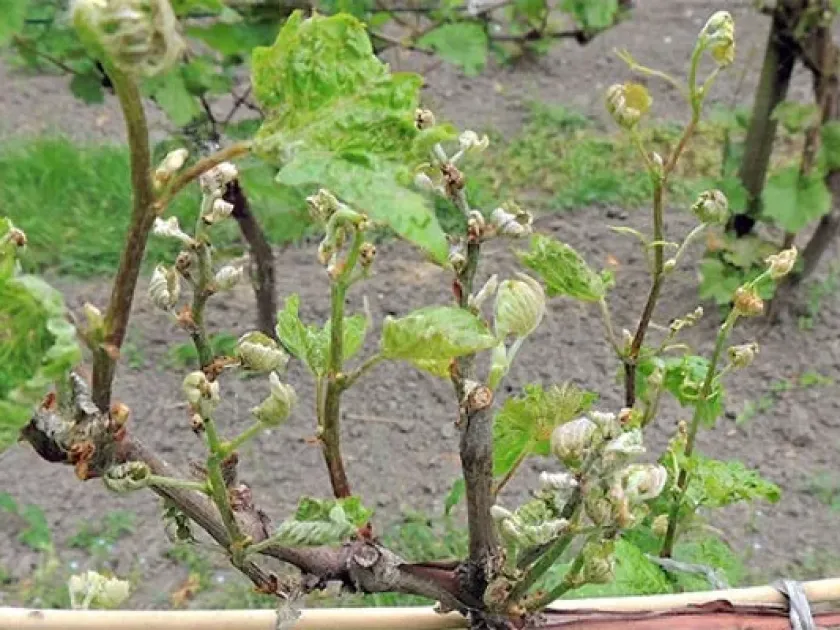
Affected leaves may become leather-like in texture, lose their pliability, and show signs of curling or deformation along the margins as the infestation progresses.
On young shoots, mite activity can result in necrotic spotting and cracking of the bark, which severely hampers the development of the vine's structure.
Visual symptoms often include stunted shoot tips and shortened internodes, giving the vine a characteristic dwarf appearance in heavily infested areas of the canopy.
Growers should monitor for these symptoms during the early stages of growth, as the lack of chlorophyll in damaged leaves directly correlates with reduced photosynthetic efficiency and poor vine health.
Control measures
Managing the grape rust mite requires an integrated approach. Cultural control methods, such as regular pruning and vine canopy management, help improve airflow and reduce the favorable conditions mites need for rapid population growth.
Removing and destroying highly infested shoots during the growing season can help keep localized populations under control before they spread throughout the entire vineyard.
Chemical control remains the most reliable method when thresholds are exceeded. Applications should be timed for the early spring during bud burst, when overwintered mites are most vulnerable.
To prevent resistance, it is crucial to rotate between acaricides with different modes of action. Always follow local agricultural guidelines for product safety and environmental regulations.
- Application of sulfur-based products during the dormant or early growth season.
- Use of targeted acaricides when monitoring shows pest population spikes.
- Maintaining healthy, well-nourished vines to improve natural resilience.
- Regular scouting for early indicators of "rusting" on the lower leaf surface.
Taxonomy
- Latin name
- Calepitrimerus baileyi
- Order
- Mites
- Family
- Eriophyidae
- EPPO code
- CALEBA
Discussion
No discussions yet — be the first.