
Caenurgina erechtea
Caenurgina erechtea
Description
How to identify
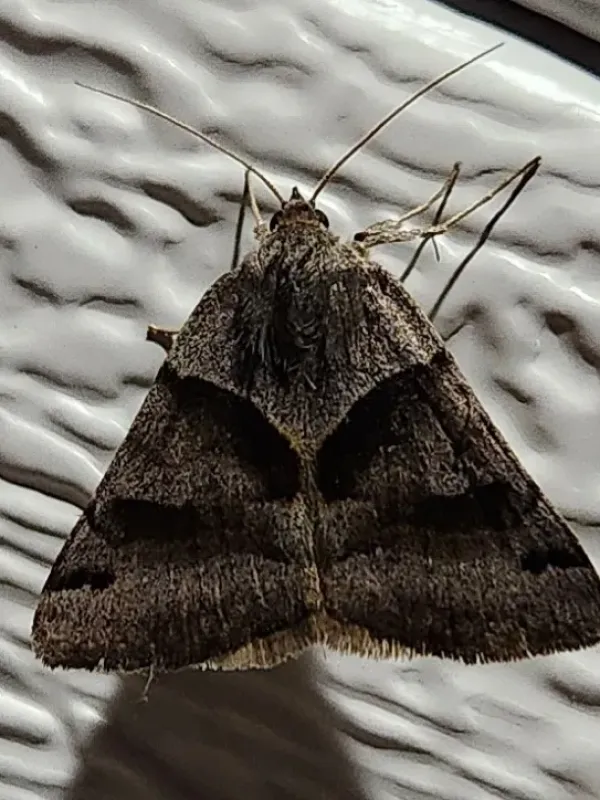
Caenurgina erechtea, commonly known as the forage looper, is a moth species belonging to the family Erebidae. It is a relatively common insect across North America.
The adult moth has a wingspan ranging from 30 to 45 mm, with forewings that display intricate brown, gray, and black patterns, resembling dry foliage.
The larvae are slender caterpillars that move with a looping motion similar to inchworms, which is a distinctive characteristic for field identification.
Pupae are generally dark brown and are found in the soil or protected by leaf litter, which serves as a safeguard against harsh environmental conditions.
Unlike many other noctuid moths, the adults are often active during the day, making them easier to spot when walking through forage fields.
What it damages
The forage looper primarily targets legume species, with alfalfa and clover being the most significant agricultural hosts for the larval stage.
Young larvae feed by skeletonizing the leaf tissues, leaving only the veins behind, which reduces the photosynthetic capacity of the plants.
As the caterpillars mature, they consume the entire leaf lamina, which can lead to significant biomass loss and reduced nutritional quality of the hay.
Heavy infestations can result in stunted plant growth and overall field thinning, significantly impacting both yield and crop vigor.
While soy crops are secondary hosts, the looper can cause localized economic damage if fields are in close proximity to heavily infested alfalfa stands.
When it appears
The life cycle of Caenurgina erechtea involves multiple generations per year, with the number of cycles depending on the local climate and temperature.
Adult moths typically emerge in late spring as temperatures rise, signaling the start of the breeding season for the first generation.
Larval activity is most intense during the summer months when forage crops are rapidly accumulating mass, providing a continuous food supply.
The population peaks often coincide with mid-summer harvests, making field monitoring essential before and after the first or second cut of alfalfa.
The species overwinters primarily as pupae in the soil, emerging once conditions become favorable in the following spring season.
Signs of infestation
Visual identification of infestation starts with observing jagged, skeletonized leaves and holes in the foliage of the middle and lower canopy layers.
The presence of adult moths flying in short, quick bursts when disturbed is a reliable indicator of a population present in the forage canopy.
Larval droppings (frass) on the leaves and stems are clear signs of feeding activity, especially when found in clusters on the plants.
A yellowing or browning appearance of the field, caused by intense leaf consumption, often alerts farmers to the need for field scouting.
Scouting using a sweep net is the standard method for quantifying larvae populations and determining the necessity of management interventions.
Control measures
Cultural control is highly effective, as early harvesting of alfalfa can physically remove larvae and interrupt their development cycle significantly.
Maintaining a diverse crop rotation strategy prevents the build-up of specialized pest populations and minimizes the attractiveness of the fields.
Biological control methods include the use of entomopathogenic fungi or bacteria, such as Bt, which provide targeted control without harming pollinators.
Chemical control should be reserved as a last resort, using selective insecticides applied during low bee-activity hours to protect beneficial insects.
- Timely mowing of forage fields.
- Using light traps for population monitoring.
- Preserving natural predators and parasitoids.
Taxonomy
- Latin name
- Caenurgina erechtea
- Order
- Lepidoptera (butterflies)
- Family
- Erebidae
- EPPO code
- CAENER
Discussion
No discussions yet — be the first.